



Pregnancy week 14: growth, sleep and changes in your body
Growth, swallowing and the developing kidneys
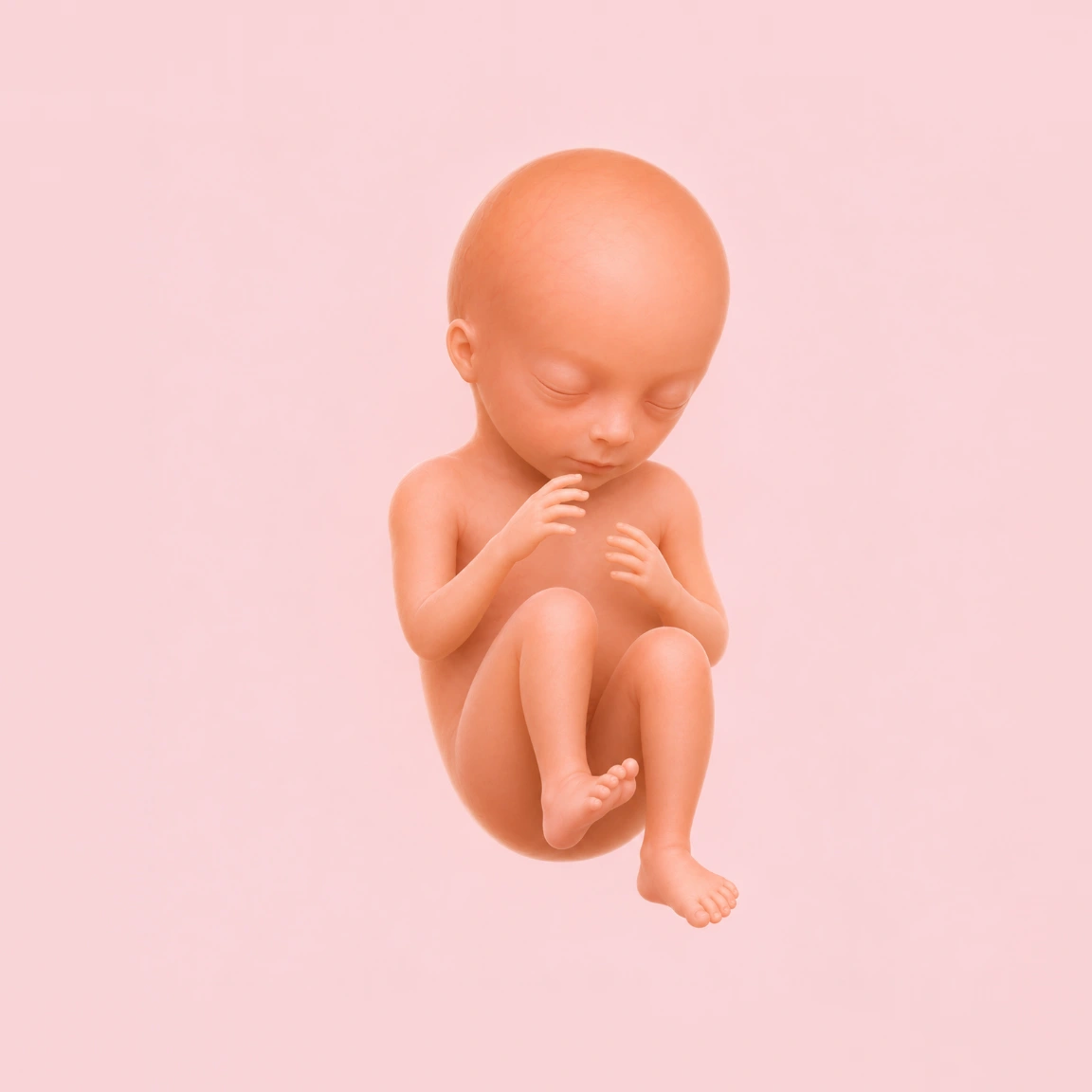
At 14 weeks counted from the first day of the last menstrual period, about twelve weeks have passed since fertilization. The National Health Service gives roughly 8.5 cm from head to bottom, comparable to a kiwi. This is not the length with the legs straight. The head becomes more rounded and gradually more in proportion to the body. The baby swallows small amounts of amniotic fluid, and the kidneys produce urine that returns to that fluid. Movements continue, but most people first feel them between 16 and 24 weeks.
Cord and placenta are omitted to show the complete isolated fetus.
Your body can change at its own pace
Some people feel less nauseated and more energetic now; others still feel tired or sick. The waist, breasts, skin and hair may change, and familiar clothes can feel tight. Choose clothes that feel comfortable rather than judging growth by bump size. Mention symptoms that limit daily life. Persistent tiredness or poor sleep deserves a conversation, especially if you also feel low, hopeless or no longer enjoy usual activities. There is support; you do not have to wait until after birth to ask.
Breast changes and the first milk
Your breasts are preparing for feeding. Some people notice a little yellowish fluid called colostrum, the first milk; others do not leak during pregnancy. The presence or absence of leakage does not tell you how much milk you will make after birth. Ask your clinician about any breast change that worries you. Do not try to express milk now without individual professional advice.
Digestion, constipation and hemorrhoids
For hard stools or difficulty passing them, try fibre-rich foods such as whole grains, vegetables, fruit, beans and lentils, enough water and suitable movement. Avoid straining. Constipation can contribute to hemorrhoids: swollen blood vessels around or inside the anus that may itch, hurt or bleed. Ask about any rectal bleeding rather than assuming its cause. Check before using a cream or laxative. If prescribed iron worsens constipation, ask about options; do not stop it on your own.
Do not ignore urinary symptoms
Burning when you pee, new urgency, cloudy urine or lower abdominal pain can suggest a urinary infection. In pregnancy, contact a clinician promptly for assessment rather than treating it yourself or waiting for the next routine visit. Fever, shaking chills, blood in the urine or pain in the back beneath the ribs need urgent medical advice. A clinician decides whether a urine test or pregnancy-suitable treatment is needed. Cranberry products do not treat an established infection.
Finding a comfortable way to sleep
At week 14, look for a position that feels comfortable; you do not need to force yourself to sleep only on your left side. The advice to go to sleep on either side becomes particularly important from 28 weeks, including naps. If you wake on your back, turn onto your side without panicking. A pillow between the knees or under the bump may help later. Wind down before bed and discuss ongoing insomnia with your care team.
Your next checks and everyday care
Check the results and next steps from your first scan and screening. Follow your local appointment schedule and ask about birth-preparation classes and feeding support. Eat varied meals with protein foods and suitable calcium sources; you do not need to eat for two. Follow your own supplement plan rather than stopping or adding products because a calendar week has changed. For an uncomplicated pregnancy, comfortable activity is usually helpful: start gently, drink water and adapt it to your health. Ask if restrictions apply to you.
When to seek urgent help
Get medical advice for any vaginal bleeding, persistent abdominal pain or vomiting that makes drinking difficult. Severe abdominal pain, heavy bleeding, fainting, or shoulder-tip pain with abdominal pain or bleeding need urgent assessment. Fever with urinary symptoms or back pain also needs prompt care.
How to read the size comparison
The food gives a rough sense of size. Its length and shape can vary. The photo is for comparison, and the number is an approximate length for this week of pregnancy. Growth and timing vary from one pregnancy to another.
Content details
- Study design
- Public clinical guidance on early pregnancy, with an original educational illustration prepared using artificial intelligence.
- Population and context
- Adults around 14 weeks pregnant.
- Evidence limitations
- The food gives a rough sense of size. Its length and shape can vary. The photo is for comparison, and the number is an approximate length for this week of pregnancy. Growth and timing vary from one pregnancy to another.
📚 Sources
- National Health Service — United Kingdom public health service — Best Start in Life — Week 14
- National Library of Medicine — MedlinePlus — Fetal development
- National Health Service — United Kingdom public health service — Your baby's movements
- National Health Service — United Kingdom public health service — Tiredness and sleep problems in pregnancy
- National Health Service — United Kingdom public health service — Urinary tract infections
- National Health Service — United Kingdom public health service — Piles in pregnancy
- Cambridge University Hospitals NHS Foundation Trust — Antenatal hand expression
- National Health Service — United Kingdom public health service — Best Start in Life — Week 16: Constipation
- National Health Service — United Kingdom public health service — Healthy eating in pregnancy
- National Health Service — United Kingdom public health service — Exercise in pregnancy
- National Health Service — United Kingdom public health service — Your antenatal care and appointments
- National Health Service — United Kingdom public health service — Ectopic pregnancy: Symptoms
Sources checked on: 6 November 2026