



Pregnancy week 15: growth, discharge and your next checks
Growth without a fixed timetable
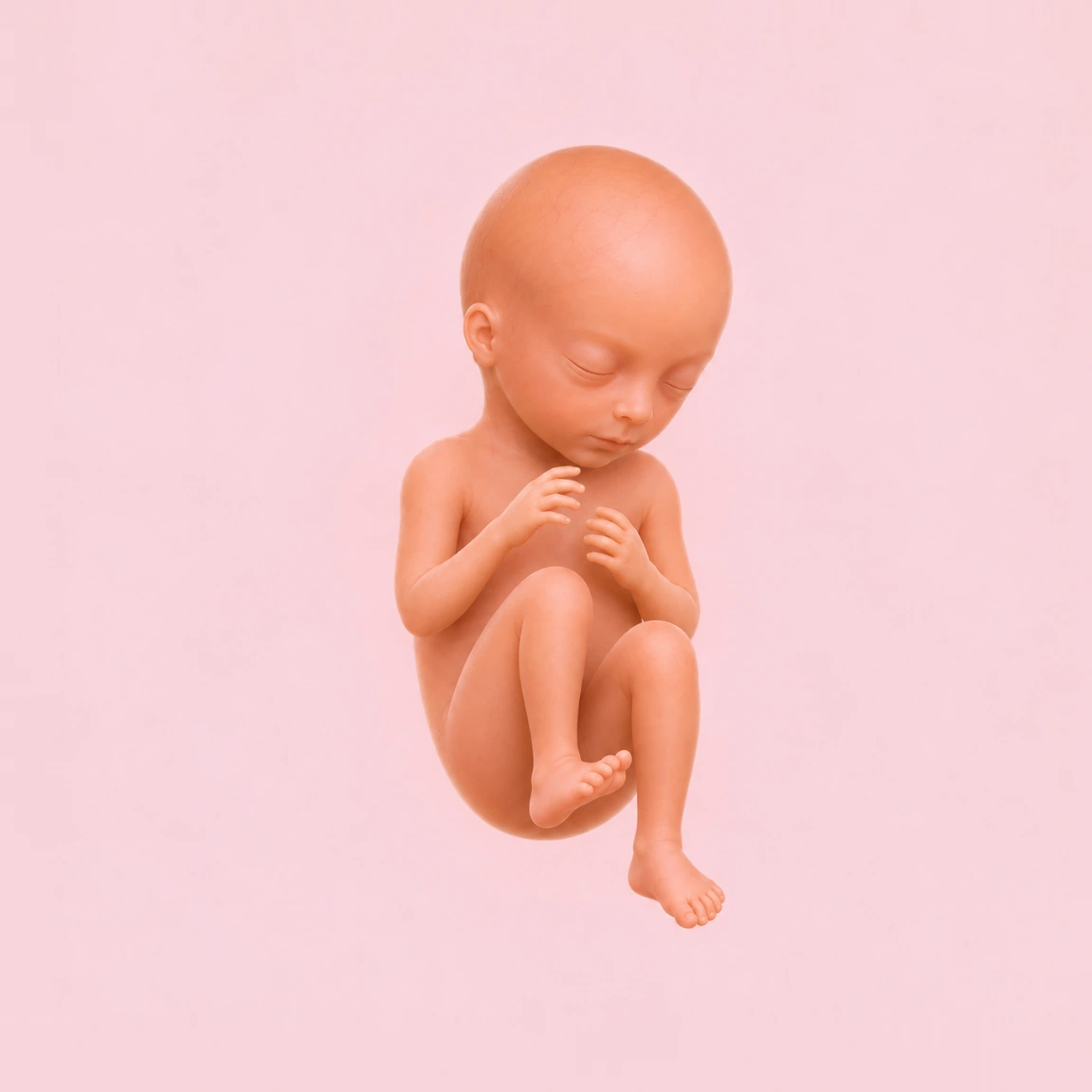
At 15 weeks from the first day of the last period, about thirteen weeks have passed since fertilization. The National Health Service gives about 10.1 cm from head to bottom, roughly an apple. This is not head-to-heel length. The skin is thin; muscles and bones keep developing. Fine hair begins to develop during this part of pregnancy. The baby moves and stretches, but first felt movements are usually between 16 and 24 weeks. A fruit comparison is approximate and cannot assess growth. Hearing develops gradually; do not use a claimed response to your voice as a wellbeing test.
Medical references are listed in Sources.
Your changing body and energy
You may have more energy and appetite, but nausea and tiredness do not end on one set day. Your waist and breasts may grow. Brief pulling pains at the sides of the abdomen can come from stretching ligaments that support the womb; resting may help. Do not assume persistent or strong pain has that cause. Tell your care team about marked tiredness, dizziness or symptoms that limit daily life. They can assess possible causes, including anemia, rather than having you start iron supplements on your own.
Vaginal discharge: what needs a check
More clear or milky discharge can be normal. A strong unpleasant smell, a change in color, soreness, itching or burning when you pee needs assessment. Thick white discharge with itching may be thrush, a yeast infection, but appearance alone cannot establish the cause. During pregnancy, ask a clinician before treating it. A suitable vaginal treatment may be advised. Do not self-treat with oral anti-thrush tablets. Choose comfortable cotton underwear and avoid perfumed products if they irritate you.
Itching that should not wait
Mild skin itching can happen as the body changes. An unperfumed moisturizer, loose clothing and a cool or warm bath may help. Very itchy skin, itching that worsens at night or affects the palms or soles needs urgent medical advice. It can be a sign of a liver condition called intrahepatic cholestasis of pregnancy. Do not wait for a routine appointment because you think week 15 is too early for a problem.
Screening and amniocentesis
Review your results and local screening timetable. Screening estimates a chance; it is not a diagnosis. In the English National Health Service pathway, the usual neck measurement for the combined test is at 11–14 weeks, so do not assume it remains available at 15. Ask which alternatives apply to you. Amniocentesis may be offered to diagnose selected conditions and is usually done at 15–20 weeks. It samples fluid through a needle guided by ultrasound. It is optional and has risks: the National Health Service quotes miscarriage in about 1 in 200 pregnancies after the procedure, with higher risk in multiple pregnancy. Discuss your own risk, what the test can find and the choice to decline. Age alone does not decide for you.
Food, movement, intimacy and rest
Eat varied meals with protein foods and suitable calcium sources; eating for two is unnecessary. Follow your own supplement plan and check before adding high doses. Gentle regular activity can help; adapt it to your health and watch your balance as your bump grows. Ask for a seat when needed. Sex is usually safe in an uncomplicated pregnancy, but follow any individual restrictions and stop if it hurts. There is no obligation to feel desire. Find a comfortable sleep position; from 28 weeks, go to sleep on either side, including naps. Ask about birth preparation and feeding support.
When to ask for urgent help
Seek advice for vaginal bleeding, persistent abdominal pain, fever, burning when you pee, or vomiting that prevents drinking. A watery leak also needs assessment. Heavy bleeding, severe pain or fainting needs urgent care. After amniocentesis, contact the maternity team urgently for bleeding, leaking fluid, fever, contractions or persistent pain. A home heartbeat device cannot confirm that everything is well.
How to read the size comparison
The food gives a rough sense of size. Its length and shape can vary. The photo is for comparison, and the number is an approximate length for this week of pregnancy. Growth and timing vary from one pregnancy to another.
Content details
- Study design
- Public clinical guidance about the second trimester, with an authentic credited archive photograph.
- Population and context
- Adults around 15 weeks pregnant.
- Evidence limitations
- The food gives a rough sense of size. Its length and shape can vary. The photo is for comparison, and the number is an approximate length for this week of pregnancy. Growth and timing vary from one pregnancy to another.
📚 Sources
- National Health Service — United Kingdom public health service — Best Start in Life — Week 15
- National Library of Medicine — MedlinePlus — Fetal development
- National Health Service — United Kingdom public health service — Your baby's movements
- National Health Service — United Kingdom public health service — Thrush in pregnancy
- National Health Service — United Kingdom public health service — Itching in pregnancy
- National Health Service — United Kingdom public health service — Screening for Down's syndrome, Edwards' syndrome and Patau's syndrome
- National Health Service — United Kingdom public health service — Amniocentesis
- National Health Service — United Kingdom public health service — Healthy eating in pregnancy
- National Health Service — United Kingdom public health service — Exercise in pregnancy
- National Health Service — United Kingdom public health service — Iron deficiency anaemia
- National Health Service — United Kingdom public health service — Tiredness and sleep problems in pregnancy
- Tommy’s — Sex in pregnancy
- National Health Service — United Kingdom public health service — Your antenatal care and appointments
Sources checked on: 6 November 2026