




Menopause hot flashes and night sweats. What can help without hormones?
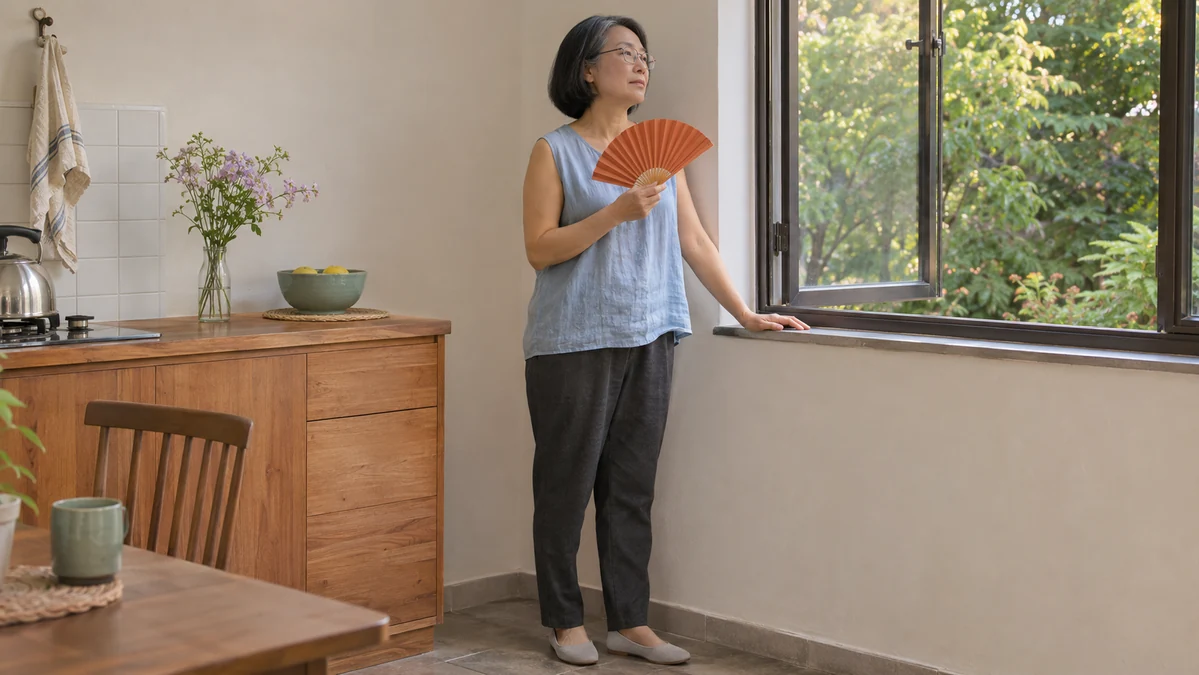
A hot flash can start with a sudden rush of heat across your face, neck or chest. You might sweat, flush or feel chilled as it passes. At night you may wake with damp pajamas and struggle to fall asleep again. If that happens often, it’s reasonable to ask for help. Options are available for people who prefer to avoid hormones or have medical reasons to do so.
What to bring to your appointment
For a few days, note how often you have hot flashes, when they happen and whether they wake you or interrupt what you’re doing. Bring your medication list. Mention sweats that are new or unusual, especially if you also have fever or are losing weight without trying. Your clinician can check whether the symptoms fit menopause and whether anything else needs evaluation.
Getting more comfortable in the moment
Dressing in layers and keeping the room cool can make an episode easier to get through. Try changing one habit at a time, such as cutting back on alcohol if it seems to trigger your flashes. These steps can help you feel more comfortable. Evidence that they make flashes happen less often is limited. If symptoms disrupt daily life, ask about options with evidence of benefit.
Nonhormone treatments with evidence
Cognitive behavioral therapy teaches ways to manage distress and the disruption hot flashes cause, including sleep problems. Clinical hypnosis also has research support. Some medicines originally used for other conditions, including certain antidepressants and gabapentin, can reduce hot flashes. Gabapentin can cause sleepiness or dizziness. Tell your clinician if you take tamoxifen because some antidepressants can interfere with how it works.
Fezolinetant, a nonhormone drug developed for hot flashes, is available in some countries. In rare cases it can cause serious liver injury. Blood tests are needed before starting and during treatment according to the local prescribing information and your clinician’s instructions. Drug approvals and availability vary by country.
Fezolinetant acts on the brain’s temperature-control system. As estrogen levels decline during menopause, signaling involving a protein called neurokinin B changes. The medicine blocks one part of this signaling rather than replacing estrogen. Being nonhormonal does not remove the need to check your health history, other medicines and liver function.
Choosing what to try
Hormone therapy is generally the most effective treatment for hot flashes. The decision also depends on your medical history and preferences. To narrow down the options, explain which problem you most want to solve, such as sleeping through the night or getting through a workday. Ask how long to wait for improvement and which side effects to report. Check with your care team before taking supplements. Products labeled natural can still interact with medicines.
What can make one medicine a better fit
Other health concerns can guide the choice. Low-dose paroxetine and venlafaxine are examples of antidepressants studied for hot flashes. Paroxetine can interfere with tamoxifen, and another option may fit better. Oxybutynin has also been studied. It can cause a dry mouth or constipation, and your clinician will consider the other medicines you take. Bring a list rather than starting any of these medicines on your own.
If you take fezolinetant and develop yellow skin or eyes, dark urine, unusual itching, nausea or vomiting, unusual tiredness, loss of appetite or abdominal pain, contact your prescriber immediately. The US FDA also instructs patients with signs of liver injury to stop the medicine immediately. Ask beforehand how to arrange liver tests and whom to contact between checks. Follow the local medicine information and your prescriber’s safety instructions.
What to expect from behavioral approaches
Cognitive behavioral therapy and clinical hypnosis are structured approaches. Ask how to find a trained professional and how you’ll measure progress. Weight loss may help some people with excess weight, although the evidence is less strong. Yoga, acupuncture and meditation may help with other goals. Current guidance does not recommend them as reliable treatments to reduce hot flashes.
What the hypnosis research actually tested
A 2025 randomized trial in 250 postmenopausal women tested 20 minutes of self-guided audio hypnosis daily for six weeks, compared with white-noise recordings. Both groups improved, and some outcomes favored hypnosis, including how much hot flashes disrupted daily life. Follow-up lasted 12 weeks; most participants were White and highly educated. Longer-term benefits and results in other populations remain uncertain. Ask whether a proposed program follows a studied protocol.
Content details
- Population and context
- Adults with hot flashes or night sweats during the menopause transition.
- Evidence limitations
- Treatment choices and availability depend on health history, other medicines and location.
📚 Sources
- Mayo Clinic News Network — Can hot flashes and night sweats in menopause be treated without hormones?
- Mayo Clinic — Hot flashes: Diagnosis and treatment
- The Menopause Society — The 2023 nonhormone therapy position statement
- U.S. Food and Drug Administration — FDA adds warning about rare occurrence of serious liver injury with use of Veozah (fezolinetant)
- Baylor University — Self-Guided Hypnosis Significantly Reduces Menopausal Hot Flashes
- European Medicines Agency — Veoza: Product information
- Elkins and colleagues, JAMA Network Open — Self-Administered Hypnosis vs Sham Hypnosis for Hot Flashes: A Randomized Clinical Trial
Sources checked on: 21 November 2026