



Baby movements: get checked promptly if they are fewer, weaker or stop
If your baby is moving less than usual, the movements feel weaker or they have stopped, contact your maternity service immediately and follow its instructions for assessment. Call even at night, after an otherwise straightforward pregnancy or after a reassuring check earlier that day. You do not have to prove the difference with a kick count before asking for help. If you simply feel something is wrong, say so, even when you cannot explain exactly why.
What to say when you call
Start with how many weeks pregnant you are, what feels different and when you first noticed it. For example: “I’m 30 weeks pregnant. My baby’s movements have felt weaker than usual since this morning. I was checked yesterday.” If you’re unsure when it started, say so and call now. The maternity team will tell you where to go and what to do next.
Getting to know movements through pregnancy
Most people first notice movements between 16 and 24 weeks. In a first pregnancy, this may be after 20 weeks. Early sensations may feel like fluttering or swirling; later you may notice kicks, rolls, stretches and pushes. Contact your clinician if you have never felt movements by 24 weeks. Frequency and strength generally increase until around 32 weeks, then remain roughly similar through the rest of pregnancy and during labour. Babies should not routinely move less because they are running out of room.
There is no single normal daily number for every baby. Learn what is usual for yours. The 2026 Royal College of Obstetricians and Gynaecologists guideline finds insufficient evidence to recommend formal counting with fixed numerical thresholds. Follow any individual plan your team gives you, while remembering that a count or an app must not delay contact when movements are reduced, weaker or absent.
Be specific about what feels different
Updated Tommy’s and National Health Service England information focuses on fewer, weaker or stopped movements. A different place for kicks or a different active time is not the same as a reduction. Research summarized by Tommy’s has not linked increased movement alone to adverse outcomes. If a burst of activity is followed by movements stopping, get checked because they have stopped. Being busy, the baby’s position or an anterior placenta can affect what you notice, but these explanations should not be used to dismiss a reduction from what is usual for you.
Why an assessment matters
Reduced movements can sometimes signal that a baby is not receiving enough oxygen or nutrients, or another problem requiring care. The symptom does not establish the cause or predict inevitable loss. Tommy’s reports that in around half of stillbirths the parent had noticed reduced movements. That statistic is about pregnancies ending in stillbirth; it is not the risk of stillbirth among everyone who reports reduced movements. These associations do not make a parent responsible for a loss. The practical message is to seek assessment each time.
Do not postpone calling to try a cold drink, something sweet or other methods to make the baby move. A brief response does not show that a problem has resolved. Do not use a home Doppler, handheld monitor, stethoscope or phone app for reassurance. Hearing a heartbeat at home cannot establish that the baby is well.
What the maternity team may check
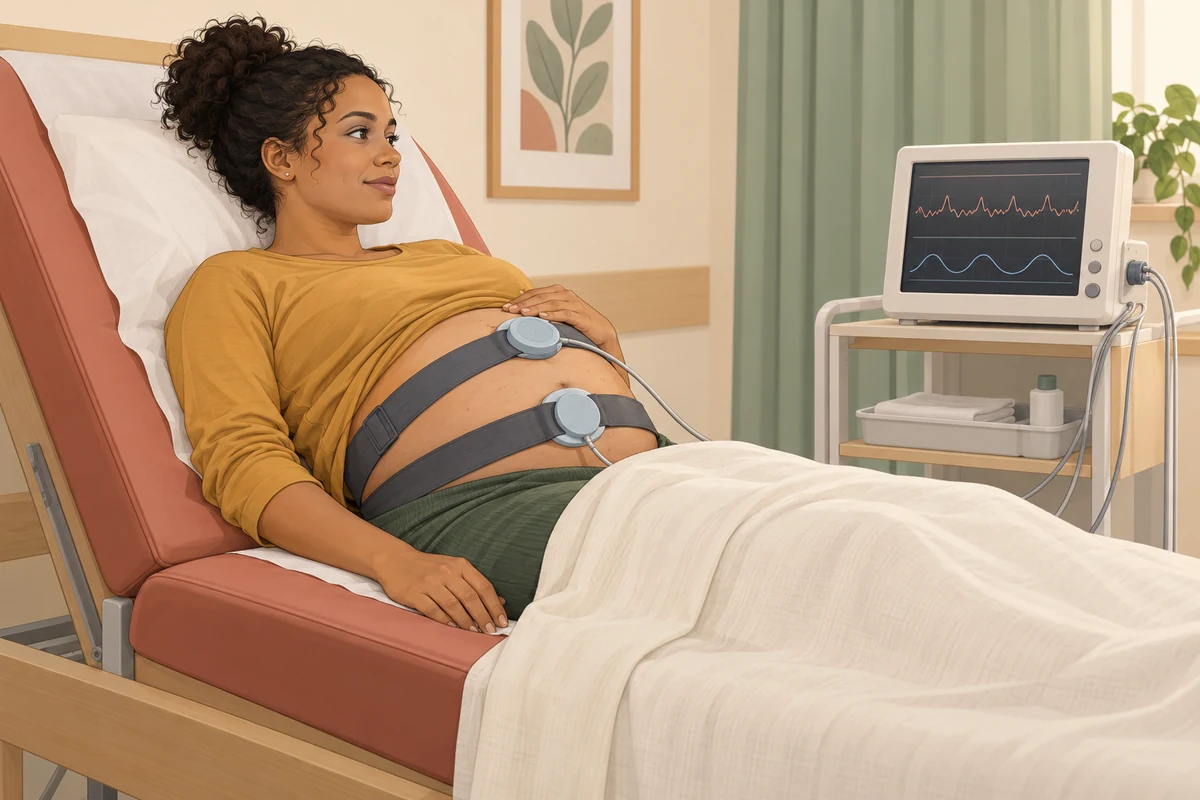
Assessment depends on gestational age and the clinical situation. Staff ask about movements and pregnancy history, check the fetal heartbeat and may assess bump size, blood pressure and urine. The 2026 UK specialist guideline recommends computerized cardiotocography from 26 weeks and 0 days, after confirming the fetal heartbeat, to look for acute problems; earlier assessment uses an age-appropriate approach. This explains a British pathway, not a universal promise about every facility. Ask the team to explain any different plan. Further monitoring, ultrasound assessment of growth and fluid, or discussion of birth may be appropriate according to findings and risks. A report of reduced movements does not automatically mean induction is needed.
Before going home, understand the plan
Ask what the checks showed, whether anything remains uncertain and whom to contact. Reassuring tests describe that moment. If movements are still reduced or weaker, tell staff before leaving; if tests show a problem, ask for a clear plan. Contact the maternity service again immediately for a further episode, however often it happens. If away from home, seek advice from the nearest maternity service. Much of the cited evidence concerns singleton pregnancies; twins or more need an individual plan, with the same prompt contact for concerns about reduced, weaker or absent movements.
Content details
- Study design
- Institutional patient guidance and specialist consensus, not an original study. The Royal College of Obstetricians and Gynaecologists guideline was first published online April 27, 2026. Tommy’s and National Health Service England leaflet and messaging were updated in 2026; the National Health Service page was reviewed July 8, 2024.
- Population and context
- General fetal-movement awareness and prompt assessment, with particular relevance to late pregnancy. Much of the evidence concerns singleton pregnancies. The described 26-week monitoring pathway is British and does not replace an individual local plan.
- Evidence limitations
- Reduced movements are a warning symptom, not a diagnosis. There is no universal normal kick count. Associations with stillbirth do not establish parental blame or the individual risk among people reporting reduced movements. Reassuring tests reflect the time of assessment.
📚 Sources
- National Health Service — public health service, England — Your baby’s movements
- Tommy’s and National Health Service England (NHS England) — pregnancy research charity and public health service, United Kingdom — Feeling your baby move is a sign that they are well
- Royal College of Obstetricians and Gynaecologists — medical professional college, United Kingdom — Reduced Fetal Movements Green-Top Guideline No. 57
- Tommy’s — pregnancy research charity, United Kingdom — Baby movements in pregnancy
- Tommy’s — pregnancy research charity, United Kingdom — Talking about reduced fetal movements with women and birthing people
Sources checked on: 30 October 2026