



Pregnancy week 1: before conception
There is no embryo yet
Week 1 starts on the first day of the last menstrual period. This is the starting point used to count a pregnancy, even though conception normally happens later. The egg cell and sperm have not yet joined to form the first cell of a new embryo. There is no fetal length or weight to report at this stage.
The cell that comes before the embryo
The ovaries contain immature egg cells. An egg develops within a small fluid-filled structure called a follicle. Hormones guide the process that will lead to ovulation: the release of an egg from an ovary. An egg cell alone is not an embryo. Fertilization is a separate step that may happen after release.
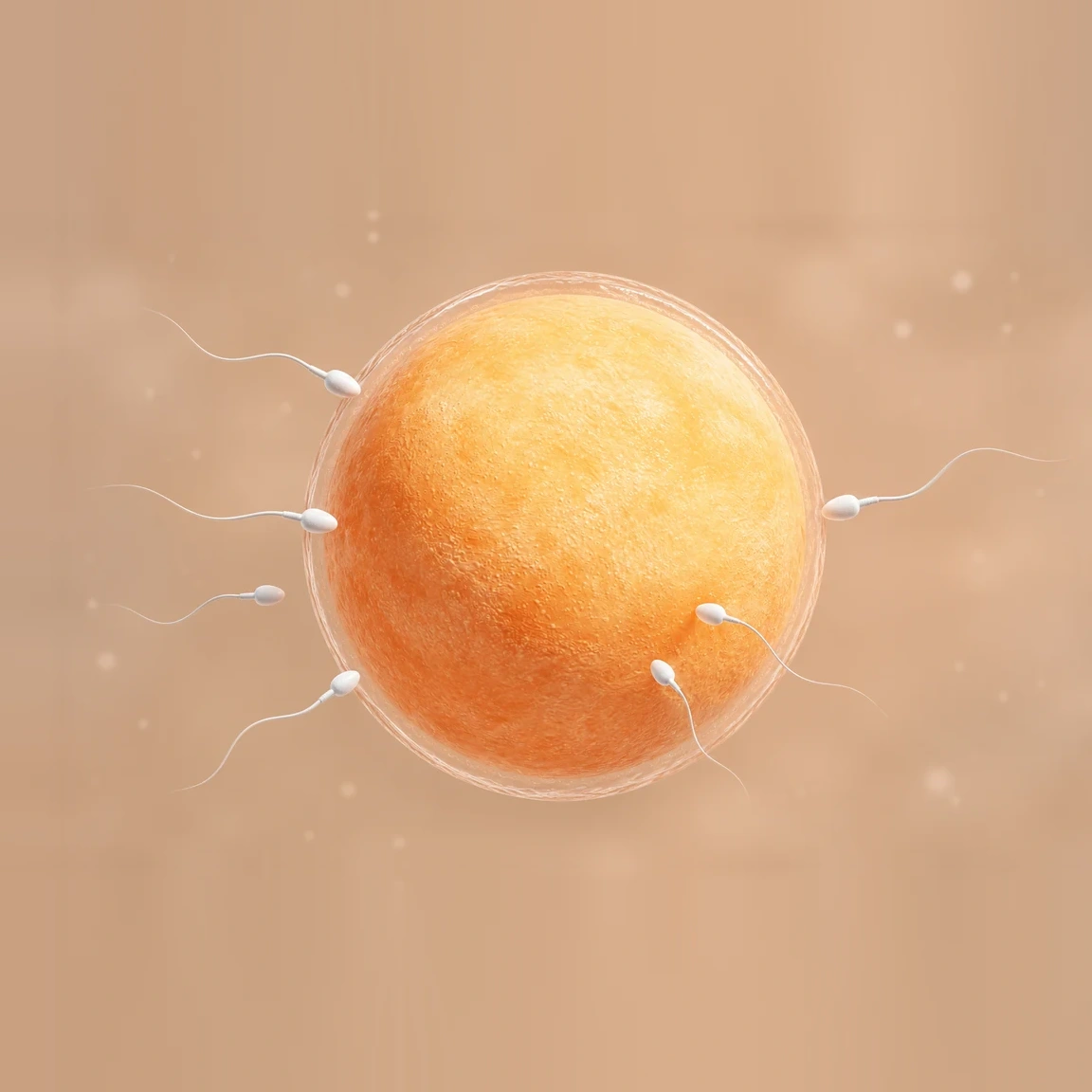
What the opening image shows
Sperm approaching an egg illustrate the meeting that may lead to fertilization. The picture is an enlarged educational view of a later event. It does not mean that an embryo already exists during week 1, and the number of sperm shown does not predict fertilization.
Understanding the timeline
In a 28-day cycle, ovulation often occurs around day 14. The timing varies, so the calendar does not identify an exact day of conception. Weeks counted from the last period and days counted from fertilization describe two different timelines. Keeping them separate helps explain the development shown in the following guides.
MyMedNest / OpenAI — Original 3D educational illustration created with AI. Medical references for developmental anatomy are listed in Sources.
Content details
- Study design
- Original developmental guide based on the listed medical and embryology references.
- Population and context
- Adults following development before birth, week by week.
- Evidence limitations
- Developmental timing varies. The numbered guide and enlarged image do not date or diagnose an individual pregnancy.