




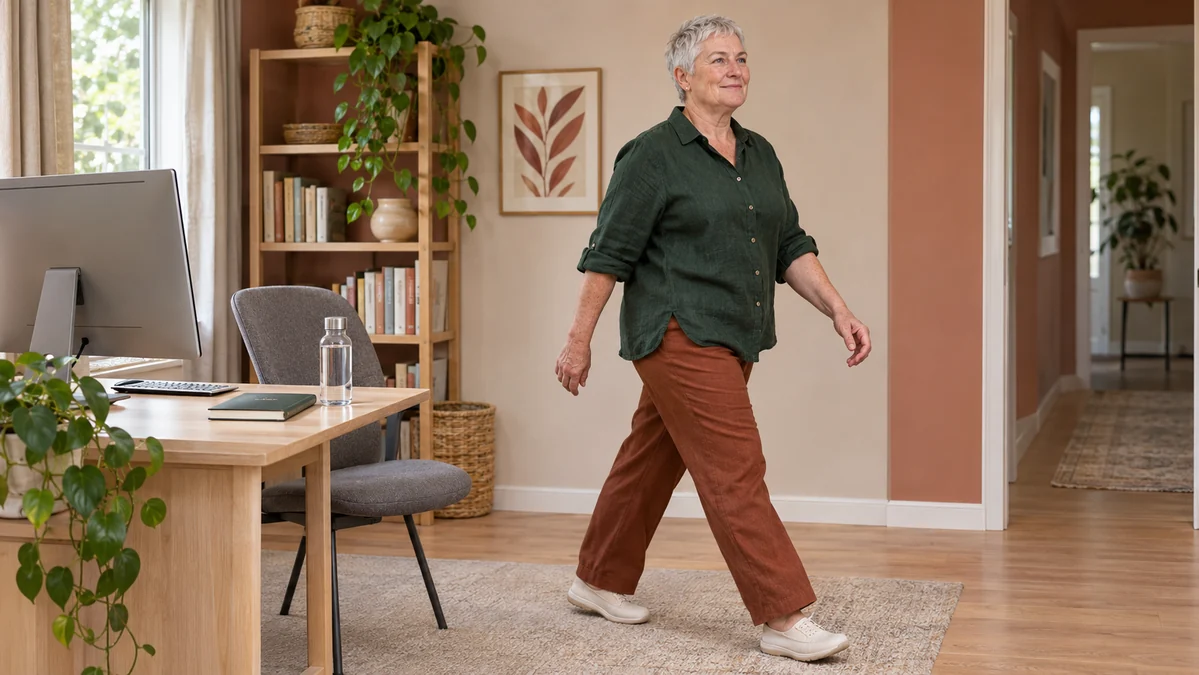
Sitting for long stretches? Try adding movement breaks
Work, travel and leisure can all keep us sitting for long stretches. Studies link long sitting with a higher risk of heart problems, high blood pressure and high blood sugar. One practical change is to break up the longest stretches with short chances to move.
Pick a cue that repeats
Mayo Clinic suggests a short break every 30 minutes as a starting point. Try getting up when a call ends, taking a few steps to refill your water bottle or walking during an informal conversation. If you stay seated, shift position and gently move your arms if that feels comfortable.
Alternate positions
If you have an adjustable desk, switch between sitting, standing and taking a few steps on breaks. How much standing still on its own helps reduce risks linked with sitting remains unclear. Use position changes as a chance to move when you can, so you spend less time in one posture.
Fit the break into your day
Start with a break you can repeat and tie it to something you already do. These breaks add to the physical activity you get during the week. If your mobility is limited, choose movements consistent with advice you have received and ask a health professional about adaptations if you are unsure.
Decide what you will do on the break
After a half hour of reading, get up and walk a short loop before returning to your desk. If you work on the phone, choose a call where you can move without losing focus. It is easier to repeat a break when you know what to do and when to do it. Start with one cue in the morning. Add another after lunch once the first one feels routine.
Fit the breaks into a more active week
A short, light movement break interrupts a long stretch of sitting. It does not automatically count as moderate exercise. As a reference for adults ages 19 to 64, the National Health Service in the United Kingdom recommends at least 150 minutes of moderate activity or 75 minutes of vigorous activity per week, or an equivalent mix. Brisk walking is moderate when you breathe faster and can still talk but would struggle to sing. Choose a pace that suits your abilities and increase it gradually.
The same guidance recommends exercises that strengthen the main muscles on at least two days a week. Spread physical activity across four or five days, or every day. If you have not exercised for some time or have health conditions or concerns, ask for advice before starting an exercise program. Movement breaks add to this broader plan.
Use 30 minutes as a starting point
Observational studies link long periods of sitting with health risks. The people studied also differ in overall activity, health, and working conditions. These studies make it hard to specify one break interval for everyone. Use the reminder as a practical cue. In a meeting or on public transit, look for the next convenient and safe opportunity to change position and move.
Content details
- Study design
- Public health and patient guidance, not a clinical trial. Mayo Clinic sitting-risk answer: March 26, 2025; Mayo Clinic work-activity story: January 19, 2017; National Health Service exercise-benefits page: last reviewed August 15, 2024; adult 19-to-64 guideline: last reviewed May 22, 2024. Complete main pages read November 19, 2026. Linked studies, the video and its separate script not independently reviewed.
- Population and context
- General information for adults who sit for long periods. The quoted weekly exercise figures refer specifically to National Health Service guidance for ages 19 to 64; activity needs to fit individual abilities and health.
- Evidence limitations
- General guidance. Movements and frequency should suit individual mobility.