



When stress sticks around: what you can try and when to get help
A deadline, a money problem or an argument can leave you feeling tense. That is stress. It is a normal reaction when something feels hard or unsafe. A short burst can help you act. If the pressure keeps coming back, it can wear you down.
What does stress feel like?
You might sleep badly, snap at people or struggle to focus. Your muscles may feel tight. You might get a headache, an upset stomach or eat more or less than usual. Stress and anxiety can feel alike. Stress often starts with something that is happening. Anxiety can show up even when there is no immediate threat. These signs alone do not tell you the cause. Get new, severe or lasting physical symptoms checked.
Make the pressure more specific
For a few days, keep a short note of when the pressure rises, what is happening and what changes in your sleep or concentration. For example, you might notice that worry builds after late work messages and carries on into bedtime. The point is to spot a pattern you can describe, rather than label every difficult feeling as an illness.
Then choose one demand to address. Decide what needs doing now and what can wait. If two deadlines clash, ask which task should come first. If you are caring for someone, ask a trusted person for one specific kind of help. You cannot control every source of pressure. A coping exercise does not remove an unsafe situation or an unmanageable workload.
Pick one small step
Try to eat regular meals, drink water, move each day and get up around the same time. If news or social media keep you tense, take a break. Cut back if you drink a lot of caffeine. Using alcohol or drugs to get through the day can make things worse. Write down what happened and what helped. Talk to someone you trust. A short walk with them is a good place to start.
Try slow breathing if it feels comfortable
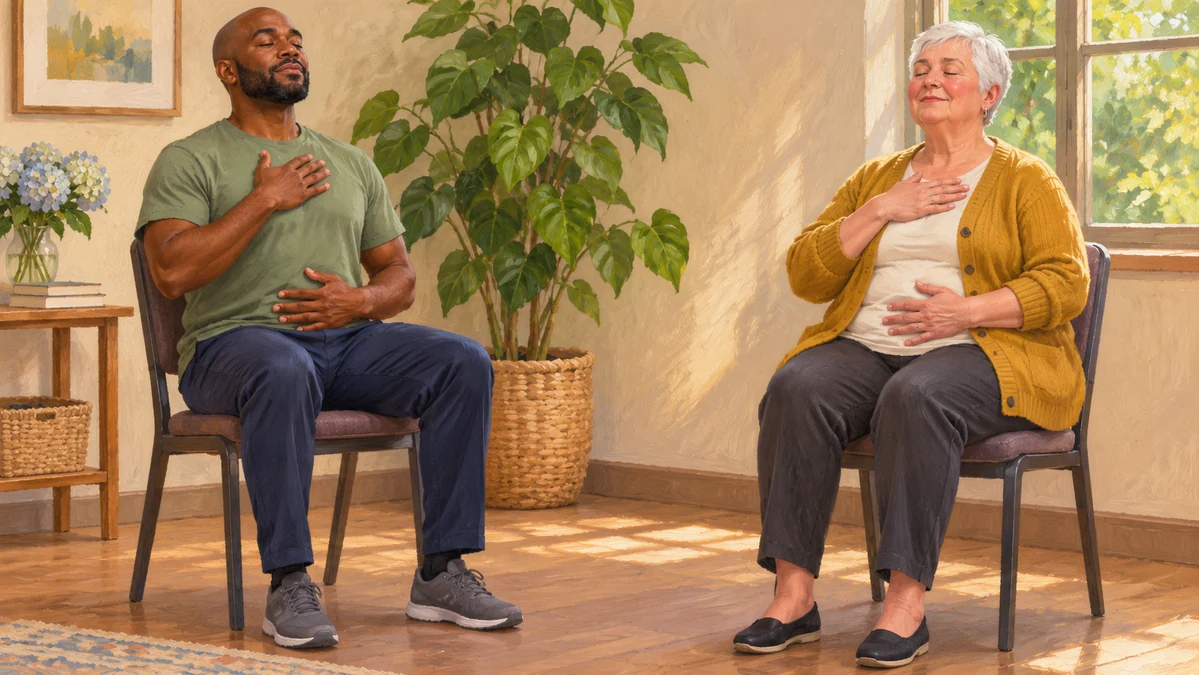
Sit or lie down. Put one hand on your chest and the other on your belly. During a gentle breath, try to let the hand on your belly rise while the hand on your chest stays relatively still. Let the air out slowly. Do not force deep breaths. Stop if you feel dizzy or uncomfortable. This is one way to pause when you feel tense.
If watching your breathing makes you uncomfortable, choose another way to pause. Notice the feel of your feet on the floor or pay attention to the sounds around you. Different approaches suit different people. These exercises aim to ease tension for a while; they do not replace care when symptoms persist.
When should you ask for help?
Talk to a health professional if the stress or worry keeps coming back, feels too hard to manage, stops you from doing things or gets in the way at home or work. They can help work out what is happening. If you have an anxiety disorder, talking therapy or medicine may be options.
When arranging a visit, describe when the changes began, how often they happen and what has become harder at home or work. Bring your notes and a list of medicines and supplements. Mention alcohol or other substances you use to cope. Ask what the next step will be and what to do if things get worse.
If you are thinking about harming yourself, seek urgent support from a healthcare professional or a crisis service. If there is immediate danger or you think you may act, contact local emergency services now.
Content details
- Study design
- Public health guidance from the World Health Organization and the National Institute of Mental Health, with a practical example from the National Institutes of Health.
- Population and context
- Adults looking for everyday ways to handle stress and signs that it is time to ask for help.
- Evidence limitations
- The same signs can have different causes. Breathing exercises may ease tension for some people. They cannot diagnose or treat an anxiety disorder on their own.
📚 Sources
- World Health Organization — global public health agency — Stress
- National Institute of Mental Health — I’m So Stressed Out! Fact Sheet
- National Institutes of Health — United States medical research agency — NIH News in Health — Feeling Stressed?
- National Institute of Mental Health — Tips for Talking With a Health Care Provider About Your Mental Health
Sources checked on: 20 November 2026