



Pregnancy week 12: growth, the first scan and what screening means
Growth and the developing placenta
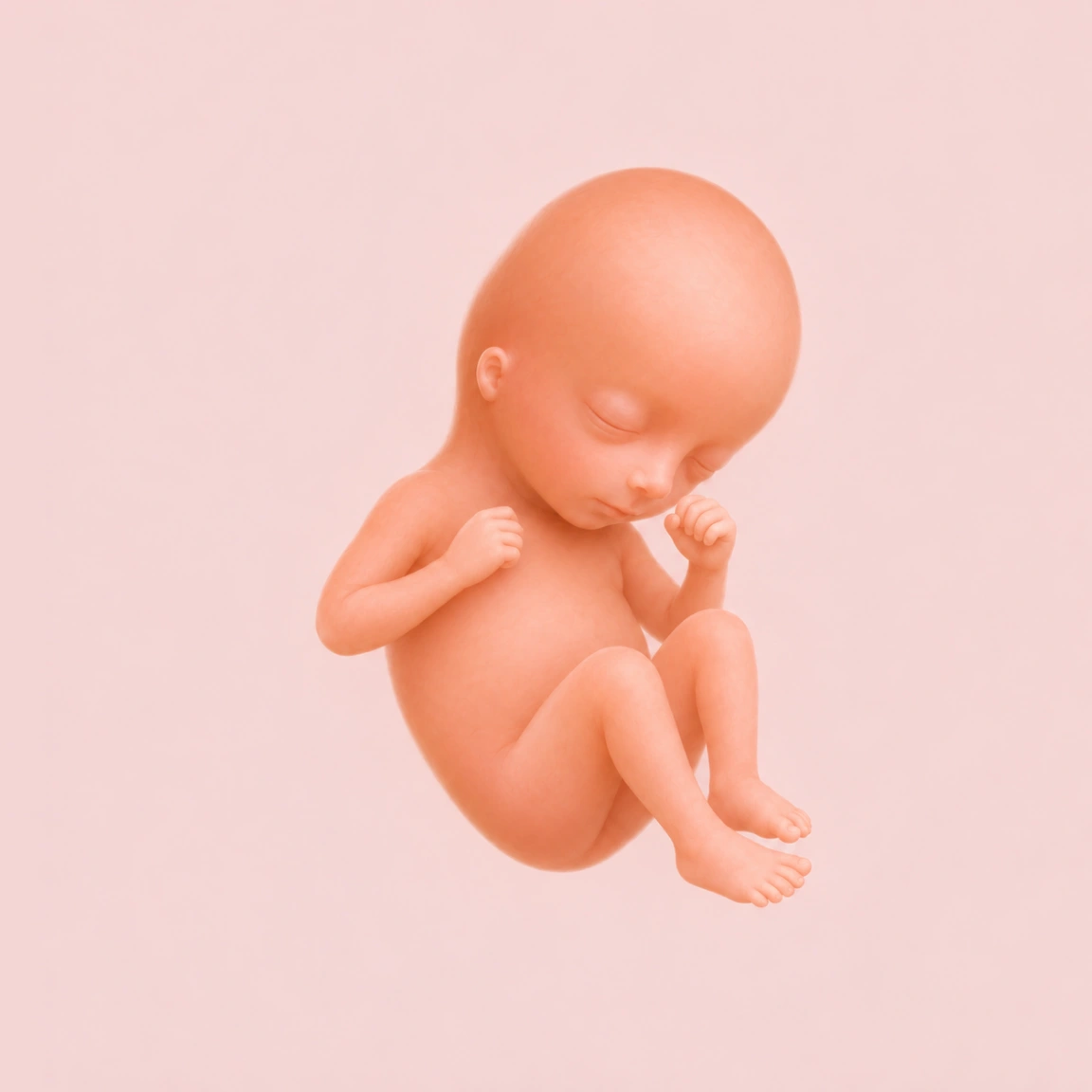
At 12 weeks counted from the first day of the last menstrual period, about ten weeks have passed since fertilization. The National Health Service gives around 5.4 cm from head to bottom as a rough size, comparable to a plum. It is not the length with the legs straight, and individual measurements vary. The head is still large. Muscles and organs continue to develop, and parts of the skeleton begin to harden into bone. The placenta supports the developing baby, supplying nutrients and removing waste through the connection with the umbilical cord.
Changes in your body
Your waist and breasts may change, but the size of your bump does not measure fetal growth. Nausea and tiredness may start to ease, though this does not happen for everyone at the same time. Some people still have bloating, heartburn, sore breasts or changes in appetite. Symptoms alone cannot confirm that the pregnancy is healthy. Tell your care team about ongoing vomiting, repeated dizziness or worry that makes daily life difficult.
Preparing for the first scan
The appointment often called the 12-week scan is not always held on the exact twelfth week. Follow your local service’s schedule. It can help estimate the due date, check where the pregnancy is developing, see whether there is more than one baby and assess development. A due date is an estimate, not a promise about the day of birth. Ask whether you need a full bladder and how to prepare. No ultrasound can rule out every condition.
Screening is a choice, not a diagnosis
In England, the combined screening test includes a blood test at 10–14 weeks and an ultrasound neck-fluid measurement at 11–14 weeks. The measurement is called nuchal translucency. Together they estimate the chance of Down’s, Edwards’ and Patau’s syndromes, conditions involving chromosomes, the cell structures that carry genetic information. A higher-chance result is not a definite diagnosis. Discuss the result and your options. Depending on the situation, these may include another screening blood test, a diagnostic test such as chorionic villus sampling or amniocentesis, or no further tests. Your own country’s pathway may differ.
The additional screening blood test is called non-invasive prenatal testing (NIPT). It still does not give a diagnosis. Chorionic villus sampling examines cells from the placenta, usually at 11–14 weeks. Amniocentesis samples the fluid around the baby, usually from 15 weeks. These diagnostic procedures carry risks, including miscarriage. Ask a specialist to explain the benefits, risks and timing for you.
Food, weight and everyday support
You do not need to double your portions at this stage. Aim for varied meals with vegetables, fruit, whole grains, protein foods and suitable sources of calcium. Ask for advice if nausea or a restricted diet makes eating difficult. Weight gain varies, and the plan should take your health and starting weight into account. Do not start a weight-loss diet on your own during pregnancy. Bring questions about food, supplements and the scan to your next appointment. You can also ask for emotional support.
When to seek help
Contact your care team for bleeding, pain that does not settle or vomiting that makes drinking difficult. Severe abdominal pain, heavy bleeding, fainting, or shoulder-tip pain with abdominal pain or bleeding need urgent assessment. Do not wait for a routine visit.
How to read the size comparison
The food gives a rough sense of size. Its length and shape can vary. The photo is for comparison, and the number is an approximate length for this week of pregnancy. Growth and timing vary from one pregnancy to another.
Content details
- Study design
- Public clinical guidance on early pregnancy, with an original educational illustration prepared using artificial intelligence.
- Population and context
- Adults around 12 weeks pregnant.
- Evidence limitations
- The food gives a rough sense of size. Its length and shape can vary. The photo is for comparison, and the number is an approximate length for this week of pregnancy. Growth and timing vary from one pregnancy to another.
📚 Sources
- National Health Service — United Kingdom public health service — Best Start in Life — Week 12
- National Library of Medicine — MedlinePlus — Fetal development
- National Health Service — United Kingdom public health service — Your antenatal care and appointments
- National Health Service — United Kingdom public health service — 12-week scan
- National Health Service — United Kingdom public health service — Screening for Down's syndrome, Edwards' syndrome and Patau's syndrome
- National Health Service — United Kingdom public health service — Healthy eating in pregnancy
- National Health Service — United Kingdom public health service — Weight gain in pregnancy
- National Health Service — United Kingdom public health service — Vomiting and morning sickness
- National Health Service — United Kingdom public health service — Ectopic pregnancy: Symptoms
- National Health Service — United Kingdom public health service — Chorionic villus sampling
- National Health Service — United Kingdom public health service — Amniocentesis
Sources checked on: 5 November 2026