



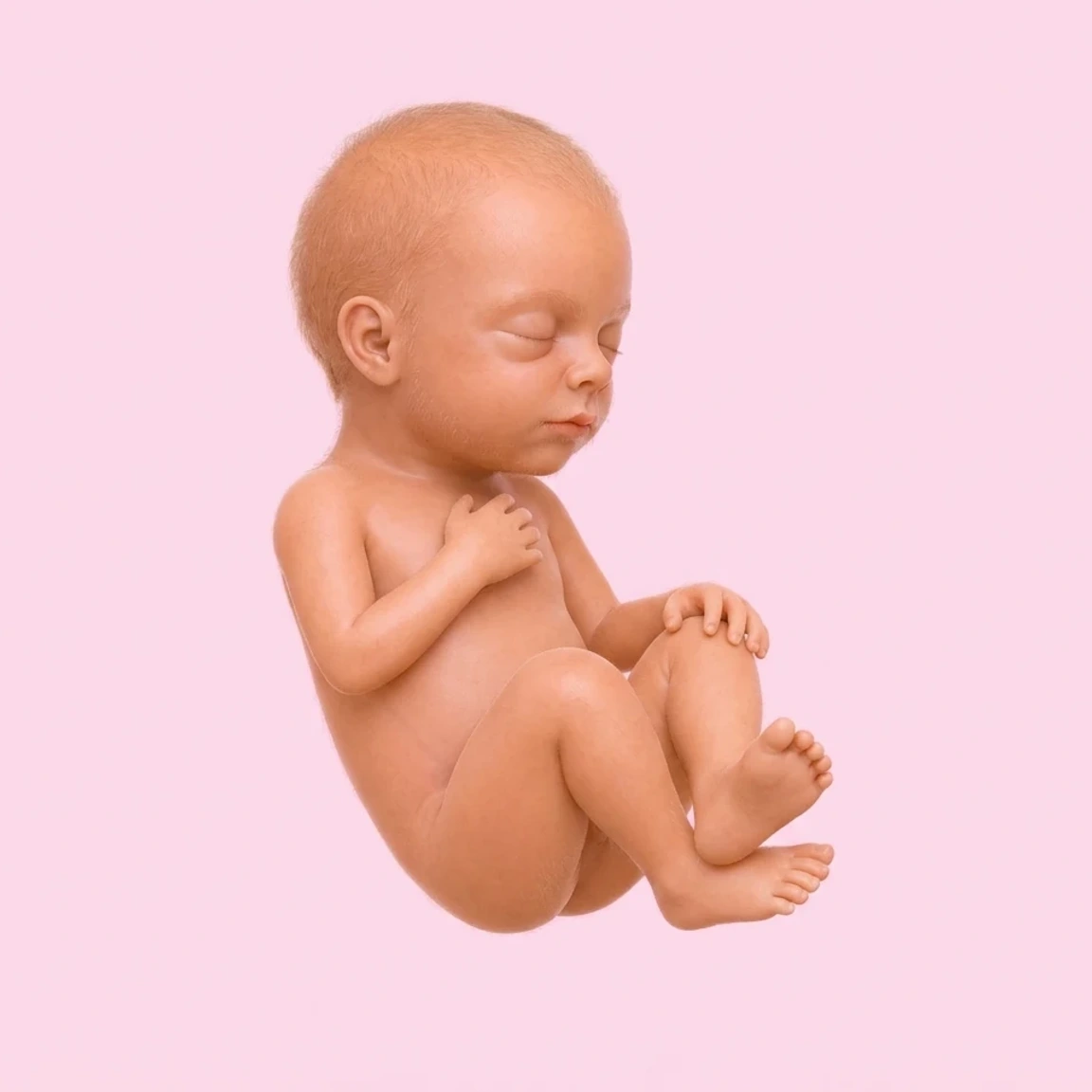
Week 23 of pregnancy: Limb growth, movement and lungs
Changing body proportions
Around this week, the arms and legs look more in proportion with the rest of the body. The baby can curl up, stretch and move its limbs. Some kicks may become easier to notice over the coming weeks.
Lungs and blood cells
Between weeks 23 and 25, smaller airways in the lungs are developing. Bone marrow, the soft tissue inside bones, begins to make blood cells during this period. The baby also starts to store fat.
What the length means
The number is a rough head-to-heel length, as if the legs were extended. In the womb, the baby often bends the knees and changes position. The bend makes the figure look shorter even as the body grows.
How to read the size comparison
The food gives a rough sense of size. Its length and shape can vary. The photo is for comparison, and the number is an approximate length for this week of pregnancy. Growth and timing vary from one pregnancy to another.
Content details
- Study design
- Public medical guidance on fetal development around gestational week 23.
- Population and context
- Readers looking for fetal development information around week 23.
- Evidence limitations
- The food gives a rough sense of size. Its length and shape can vary. The photo is for comparison, and the number is an approximate length for this week of pregnancy. Growth and timing vary from one pregnancy to another.
📚 Sources
- National Health Service — Best Start in Life — Week 23
- National Library of Medicine — MedlinePlus — Fetal development
Sources checked on: 7 November 2026