




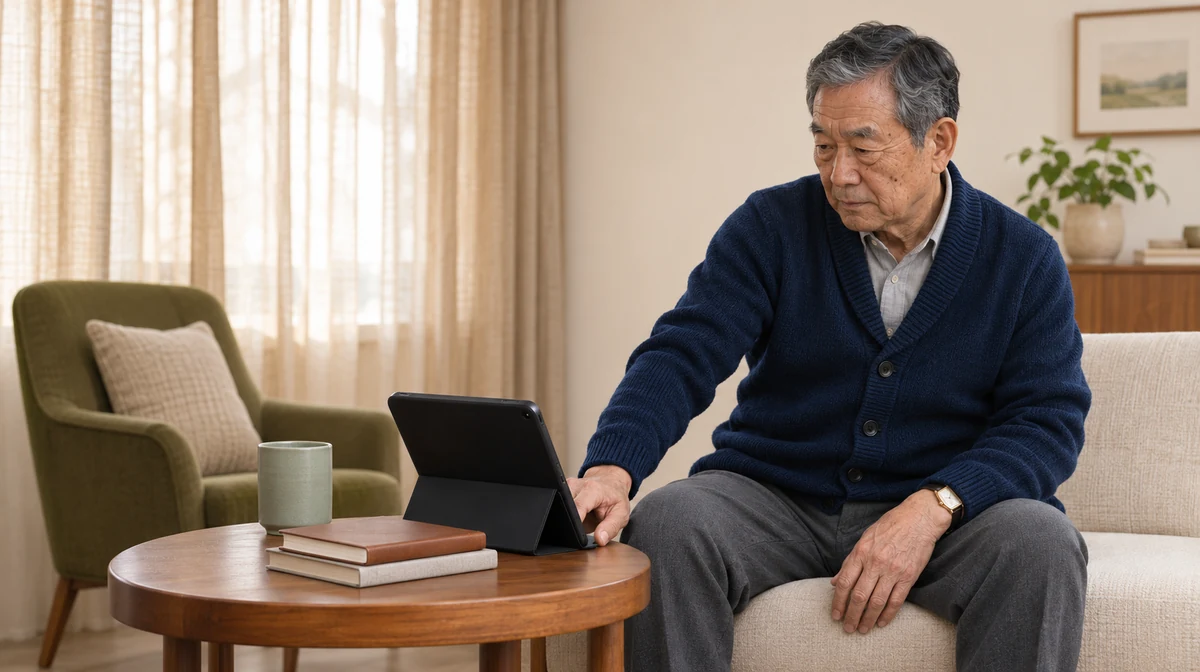
Video exercise and nutrition support. What changed on a cognitive test?
A program combining video exercise sessions and nutrition support improved scores on a cognitive test in a study published October 27, 2026, in Age and Ageing. Two public health centers in South Korea randomly assigned 140 adults ages 60 to 80 with cognitive difficulties identified by screening and preserved independence. Seventy joined the program and 70 received usual services.
What the participants did
For six months, people in the program joined two hour-long sessions a week with instructors supervising by live video. Sessions combined aerobic activity, resistance-band exercises and balance training. Participants also received a nutrition assessment, individualized advice and a protein supplement. The trial assessed the package as a whole.
What the comparison showed
At six months, improvement on the MoCA-K, the Korean version of a test that measures abilities such as memory and attention, was 2.3 points greater in the program group. The 95% confidence interval ran from 1.4 to 3.1 points. At 12 months, the difference had narrowed to 1.1 points. No adverse events were reported as related to the program.
Questions that remain
The test measures cognitive function at a point in time. The trial did not test whether the program prevents dementia or which component contributed to the result. Participants needed to be able to use a smartphone. South Korean public funding supported the trial. One author disclosed consulting for the supplement manufacturer.
What the program offered beyond video calls
A dietitian assessed participants in person at the start and gave individual nutrition advice. The protocol also included a supplement taken twice a day, supplying 16 grams of protein daily. Instructors led the movement sessions live. The researchers logged attendance and asked participants to report supplement use. Usual health promotion services formed the comparison, so the trial evaluated the whole package.
Reading the six- and twelve-month results
Of the 140 participants, 136 completed the six-month assessment and 127 the twelve-month follow-up. At one year the cognitive score difference was 1.1 points, with a 95% confidence interval of 0.3 to 2.0 points. It was smaller than at the end of the program. The researchers also observed favorable results on some secondary measures, including a questionnaire about independence in daily activities. The main outcome was change in the cognitive score.
Who the findings speak to most directly
Participants lived with cognitive difficulties found through screening and still managed daily activities independently. The selection required being able to use a smartphone and take part in sessions. The findings tell us less about people who need substantial help or lack access to the same technology. They can inform the design of similar services. The trial does not establish a protein dose or exercise routine to follow on your own.
Content details
- Study design
- Two-group randomized trial at two public health centers.
- Population and context
- Older adults with screening-identified cognitive difficulties and preserved independence.
- Evidence limitations
- The program combined exercise and nutrition support. The trial did not isolate the effects of individual components.