



Pregnancy week 20: ultrasound, growth and important checks
Halfway, with a different way to measure
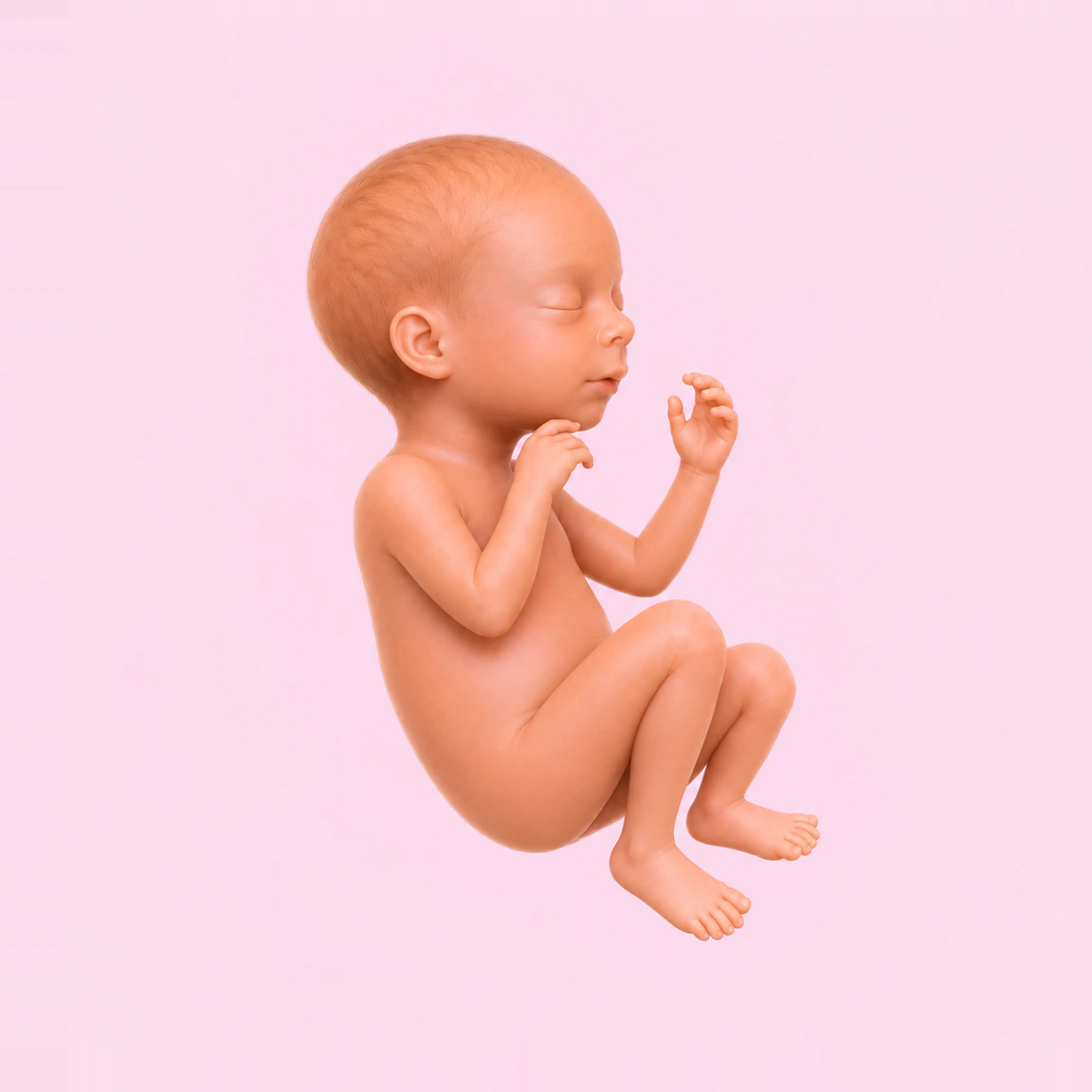
At 20 weeks from the last period, fertilization was usually about eighteen weeks ago. This is roughly halfway through a forty-week pregnancy, not a guaranteed birth date. The National Health Service gives about 25.6 cm from head to heel, roughly a banana. Earlier guides used head-to-bottom length. The bigger number mainly reflects a different measure, not a sudden growth spurt. A pale greasy coating, vernix, helps protect the skin in amniotic fluid. The baby moves and practices sucking. Brain, lungs and other systems still need much more development.
Cord and placenta are omitted to show the complete isolated fetus.
What the detailed ultrasound checks
The detailed scan examines structures including the brain, spine, heart, face, kidneys and abdomen. It also assesses growth and the placenta. In England the screening programme offers it at 18 weeks plus 0 days to 20 weeks plus 6 days; local schedules differ. It cannot detect every condition. Unclear views may require another appointment, and unexpected findings need explanation and specialist advice. Finding the baby’s sex is not guaranteed or the main purpose. You can discuss whether to accept screening and any further tests.
Movements and additional Doppler scans
First movements are usually noticed between 16 and 24 weeks, sometimes after 20 in a first pregnancy. Tell your team if you have felt none by 24 weeks. Once the usual pattern is familiar, reduced or changed movement needs immediate advice. A home heartbeat device cannot replace assessment. A uterine artery Doppler measures blood flow in arteries supplying the uterus. It may be offered when growth or pre-eclampsia risk warrants closer monitoring. It is a clinical risk assessment, not a diagnosis from one number or a routine purchase for everyone.
Planning whooping cough vaccination
Ask about your local vaccination schedule. Vaccination during pregnancy passes protective antibodies through the placenta and helps protect newborns from whooping cough. In England it is offered around 20 weeks, from 16 weeks, ideally before 32. In the United States, the Centers for Disease Control and Prevention recommends it during each pregnancy at 27–36 weeks, preferably earlier in that window. Do not transfer one country’s timing automatically to another. Discuss your record, allergies and any earlier dose with the team. The baby still needs routine vaccines after birth.
Cramps, backache and nosebleeds
Gentle activity, ankle movements, supportive shoes and avoiding painful loads may help discomfort. Ask about treatment if pain limits daily life; you do not have to endure it. One swollen, warm, painful or discolored leg needs prompt assessment for a clot. For a nosebleed, sit leaning forward and pinch the soft part of the nose for 10–15 minutes, breathing through your mouth. Get urgent help if it continues, is heavy or causes weakness or breathing difficulty. Persistent or severe abdominal pain, bleeding, leaking fluid, fever or repeated tightenings also needs prompt care.
Itching and blood pressure: symptoms to report
Itching has several causes. Moisturizer may ease dry skin, but intense itching, itchy palms or soles, or symptoms worse at night need urgent advice because of possible pregnancy cholestasis, a liver condition. Do not treat it only by drinking more water. Blood pressure and urine checks can find problems without obvious symptoms. Pre-eclampsia is more likely from 20 weeks onward. Severe headache, vision changes, pain below the ribs or sudden swelling of the face or hands needs immediate assessment. Sudden breathlessness, chest pain or fainting is an emergency.
Medicines and everyday plans
Check medicines with a clinician or pharmacist. From around 20 weeks, anti-inflammatory painkillers such as ibuprofen can harm fetal kidneys and lower amniotic fluid levels; do not use them unless specifically advised. Prescribed low-dose aspirin for particular pregnancy conditions is a separate case: do not stop it on your own. Continue comfortable activity and rest, and ask about safe pain relief. You can start a list of birth questions and hospital documents without packing everything now. Check work arrangements and benefits locally; rules from another country may not apply.
How to read the size comparison
The food gives a rough sense of size. Its length and shape can vary. The photo is for comparison, and the number is an approximate length for this week of pregnancy. Growth and timing vary from one pregnancy to another.
Content details
- Study design
- Public clinical guidance on second-trimester pregnancy with an original AI-assisted educational illustration.
- Population and context
- Adults around 20 weeks pregnant.
- Evidence limitations
- The food gives a rough sense of size. Its length and shape can vary. The photo is for comparison, and the number is an approximate length for this week of pregnancy. Growth and timing vary from one pregnancy to another.
📚 Sources
- National Health Service — United Kingdom public health service — Best Start in Life — Week 20
- Health Service Executive — 17 to 20 weeks pregnant
- National Library of Medicine — MedlinePlus — Fetal development
- Government of the United Kingdom — 20-week screening scan — Fetal anomaly screening programme handbook
- National Health Service — United Kingdom public health service — 20-week screening scan
- Salisbury National Health Service Foundation Trust — Uterine Artery Doppler Ultrasound Scan
- National Health Service — United Kingdom public health service — Your baby's movements
- Government of the United Kingdom — Whooping cough vaccination in pregnancy guide
- Centers for Disease Control and Prevention — United States public health agency — Vaccinating Pregnant Patients
- National Health Service — United Kingdom public health service — Common health problems in pregnancy
- National Health Service — United Kingdom public health service — Nosebleed
- National Health Service — United Kingdom public health service — Itching in pregnancy
- National Health Service — United Kingdom public health service — Pre-eclampsia
- United States Food and Drug Administration — FDA recommends avoiding use of NSAIDs in pregnancy at 20 weeks or later because they can result in low amniotic fluid
- National Health Service — United Kingdom public health service — Exercise in pregnancy
- National Health Service — United Kingdom public health service — Back pain in pregnancy
- Centers for Disease Control and Prevention — United States public health agency — Understanding Your Risk for Blood Clots with Pregnancy
Sources checked on: 6 November 2026