



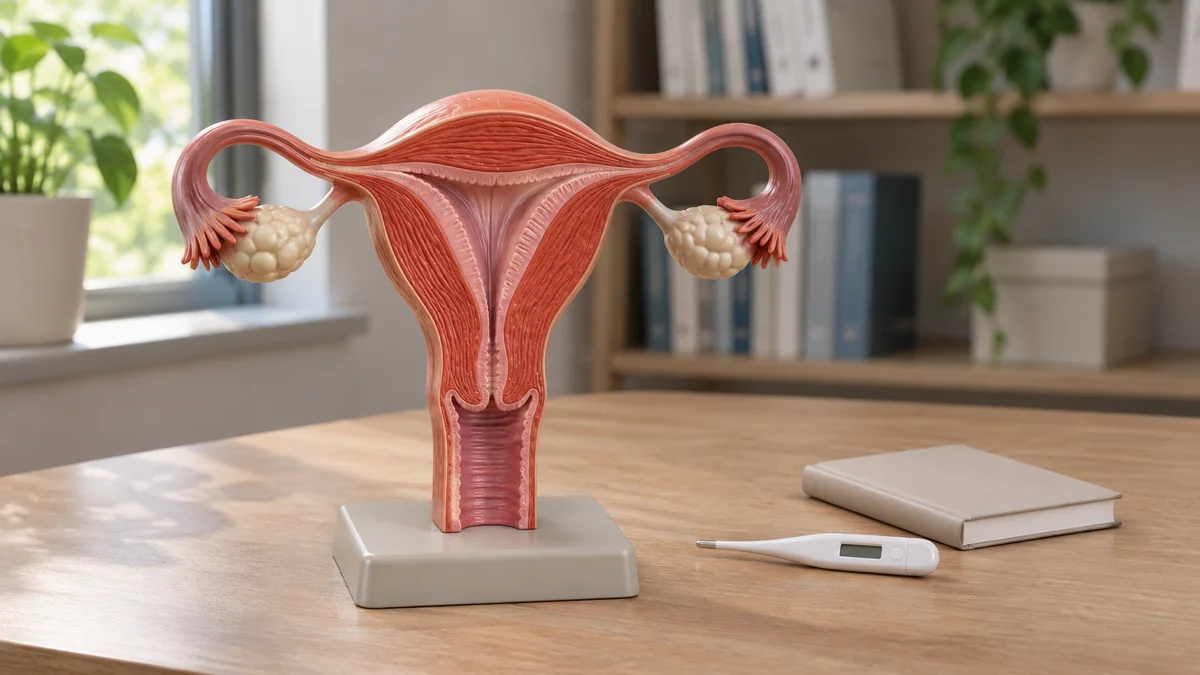
Cervical mucus and basal temperature: making sense of your cycle
Cervical mucus can help you recognize days when pregnancy is more likely. Your temperature at rest, measured when you wake up, may show signs that ovulation has already happened. Looking at both can help you understand your cycle. They cannot confirm pregnancy or tell you on their own whether you are fertile.
You do not need a perfect chart every month. The aim is to understand your own pattern, without turning every change into a warning sign or making sex feel like a compulsory appointment.
First, where does the mucus come from?
The cervix is the lower part of the uterus that connects to the vagina. Its glands produce mucus, which changes in response to hormones. Around ovulation, when an ovary releases an egg, thinner mucus helps sperm pass through. At other times, thicker mucus also acts as a barrier.
Visible discharge is not just cervical mucus. It may include other vaginal secretions, arousal fluid, or semen left after sex. A single observation, especially after intercourse, can therefore be hard to interpret.
Changes you may notice through the month
Some people notice a few drier days after their period. Discharge may then become sticky or creamy, often white or cloudy. As ovulation approaches, rising estrogen tends to make mucus more plentiful, watery, clear, and slippery.
The comparison to raw egg whites describes the stretchy texture sometimes seen on fertile days. After ovulation, progesterone tends to make secretions less watery and more scant or thick. These stages are a general guide: you may not notice all of them, and they will not always happen on the same days.
Day 14 is not a universal deadline. Ovulation can shift even in fairly regular cycles. And not seeing very stretchy mucus does not automatically mean you cannot conceive.
Observe without checking constantly
You can record whether you feel dry or wet, along with the color and texture of discharge on your underwear or at the vaginal opening. Wash your hands first if you choose to examine it with your fingers. You do not need to locate your cervix or insert tools. A simple paper diary or app can hold your observations.
Use plain descriptions such as “dry,” “creamy,” “watery,” or “slippery.” Also note periods, sex, medicines, and symptoms that might affect what you see. Two or three cycles can help you learn your pattern, but keeping a diary does not by itself make this a reliable birth control method.
If you are trying to get pregnant
The fertile window generally includes the five days before ovulation and ovulation day itself. Sperm can survive for up to five days in the reproductive tract. Clear, slippery mucus is a useful clue that this window may be approaching or already underway.
Having sex every one to two days during the fertile window can improve the chance of conception. You do not need to chase one exact hour or wait for “perfect” discharge. If tracking becomes stressful or makes sex difficult, your healthcare professional can help you find an approach that feels manageable.
Basal temperature: look for a pattern
This is your temperature at rest, measured when you wake up, before getting out of bed or starting activities. Use a thermometer that can detect small changes. Take your temperature the same way each day, ideally at about the same time. Record it without placing too much weight on one morning’s result.
After ovulation, there may be a small rise, often less than 0.5°F (0.3°C). Slightly higher readings lasting at least three days are consistent with ovulation having already happened. Temperature does not show exactly when the egg was released or predict the best time for sex in real time. A temperature chart is not routinely recommended as a test in an infertility evaluation, particularly when the menstrual history suggests regular ovulation. You do not need a perfect chart before asking for care.
Fever, illness, some medicines, alcohol, and disrupted sleep can affect readings. Note these circumstances: one spike does not equal ovulation. Even a temperature that stays high is not enough to confirm pregnancy.
What apps and ovulation tests add
An app can help store your information, but a calendar-based prediction is still an estimate. Urine ovulation tests look for a rise in luteinizing hormone, or LH, which often comes before the egg is released. A positive result suggests ovulation may be near; it does not prove that it actually happened.
Breastfeeding, irregular cycles, changes in hormonal birth control, infections, and some medicines make these signs harder to read. If you want to avoid pregnancy, do not use this guide to decide which days are “safe.” Fertility awareness methods require specific instruction and do not protect against sexually transmitted infections.
White or yellow: color alone is not enough
Clear or white discharge without an unpleasant smell or discomfort is often normal. It can be creamy or thick at different points in the cycle. A slight yellow tinge can occur, but a new or persistent change needs to be considered alongside other symptoms.
Contact a healthcare professional for a bad smell, unusual green or yellow discharge, itching, burning, painful urination, lower abdominal pain, or bleeding between periods or after sex. Appearance and color cannot tell you which treatment to use: different infections can cause similar symptoms.
Before a period and in early pregnancy
The amount of discharge can change before a period, and some people notice more of it. An increase in clear or milky-white discharge is also common during pregnancy. These changes overlap: white mucus cannot reliably distinguish pregnancy from an approaching period. A pregnancy test is needed to confirm pregnancy.
The mucus plug that develops in the cervix during pregnancy is different from the discharge you track for ovulation. It may come away toward the end of pregnancy. If you are pregnant and have vaginal bleeding, contact your maternity care team promptly. Fever or significant pain together with unusual discharge needs timely medical assessment.
Dryness and menopause
Lower estrogen levels during menopause can reduce lubrication. Dryness and painful sex can also happen while breastfeeding or when taking certain medicines. They are not a measurement of fertility, and you do not have to simply put up with them. Vaginal moisturizers, lubricants, and clinician-recommended treatments may help.
Avoid internal douching and irritating scented products; wash the outside gently. Arrange a visit for persistent dryness, unusual discharge, or bleeding. Do not start supplements or change medicines to “improve mucus” without discussing it with a professional.
When to ask for help conceiving
In general, a fertility evaluation is recommended after twelve months of regular sex without birth control if you are under 35, or after six months at age 35 or older. If you are over 40, ask for advice sooner: a more immediate evaluation may be appropriate, rather than automatically waiting six months. Seek advice sooner for missing or very irregular periods, a known condition that may affect fertility, or a specific concern about either partner. Your diary can help at the appointment, but it cannot replace an assessment of both partners.
Content details
- Population and context
- Adults learning about their cycles or trying to conceive; not an individualized birth control protocol.
- Evidence limitations
- Cycle signs vary between people and months. Mucus, temperature, and apps cannot diagnose pregnancy, infection, or infertility. General guidance does not guarantee conception.
📚 Sources
- Cleveland Clinic — Cervical Mucus
- Mayo Clinic — Basal body temperature for natural family planning
- American Society for Reproductive Medicine — Optimizing natural fertility: a committee opinion (2022)
- National Health Service — Vaginal discharge
- National Health Service — Natural family planning
- National Health Service — Vaginal discharge in pregnancy
- National Health Service — Vaginal dryness
- American Society for Reproductive Medicine — Fertility evaluation of infertile women: a committee opinion (2026)
Sources checked on: 14 November 2026