


When cancer comes back: tests, treatment and second opinions
If a test suggests your cancer may have come back, ask what is known and what could clarify the result. Write down who to contact between visits. If you want, bring someone who can listen with you and help you remember the answers.
MyMedNest editorial guide · Sources checked:
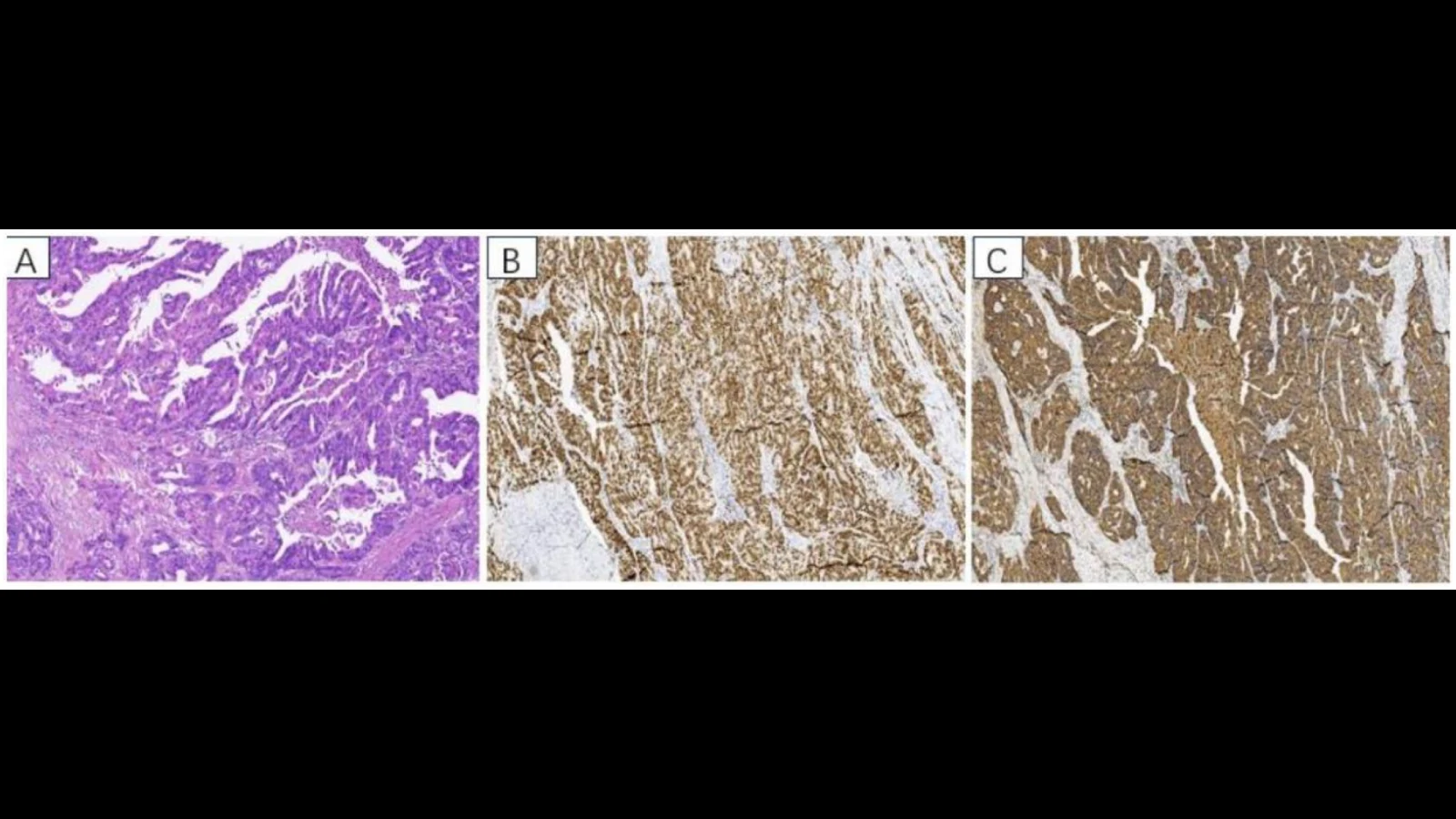
Image source and reuse details
Source: Recurrent rectal cancer cured by transsacral prone longitudinal incision combined with bilateral gluteus maximus “kite” flap filling: a case report — Figure 3. Proportionally reduced and framed in WebP. All three panels and the original stains are preserved.
In this guide
What recurrence means
Cancer that comes back after a period when tests could not find it is called a recurrence. It is local if it returns at or near the original site. It is regional if it appears in nearby tissue or lymph nodes. If it reaches a distant part of the body, it is a distant recurrence and forms metastases.
Sometimes tests find a new cancer that started in different cells. If the original cancer was still there and keeps growing during treatment, your doctor may call it progression. These terms describe different situations and can affect your choices.
Source: National Cancer Institute — Recurrent Cancer: When Cancer Comes Back
What to report between checkups
Your follow-up plan depends on the cancer, past treatment and your health. Ask which changes matter for you. If you have new, lasting or worsening pain, swelling, bleeding or another symptom, contact your care team. Tell them when it began and how often it happens.
Symptoms can have many causes. Surgery or radiation can also change how an area looks on a scan. Ask which problems need a call right away and what number to use when the clinic is closed.
Source: National Cancer Institute — Recurrent Cancer: When Cancer Comes Back · National Cancer Institute — Follow-Up Medical Care
How doctors confirm a recurrence
The team compares old and new reports. They may order blood tests or scans such as a CT or MRI. Sometimes they suggest a biopsy, which takes a small sample of tissue. It can help tell recurrence apart from a new cancer or changes caused by past treatment.
When needed, your team checks how far the cancer has spread now. This is called restaging. The stage at your first diagnosis stays in your medical history. Ask what new information your team needs to choose care now.
Source: National Cancer Institute — Recurrent Cancer: When Cancer Comes Back · National Cancer Institute — Follow-Up Medical Care · Frontiers in Oncology — Recurrent rectal cancer cured by transsacral prone longitudinal incision combined with bilateral gluteus maximus “kite” flap filling: a case report
How treatment is chosen
Surgery or radiation may be an option if the cancer has returned in a limited area. Other people need medicines that work in several parts of the body. The type of cancer, time since the first treatment, past care and your health all matter. Ask if the goal is to remove the cancer, control it or ease symptoms.
Medicines are approved for specific uses. In the United States, sacituzumab govitecan is approved on its own as a first treatment for certain adults with inoperable, locally advanced or metastatic triple-negative breast cancer. The use applies when certain medicines that act on the immune system are unsuitable. Ask what is approved for your cancer in your country.
Source: National Cancer Institute — Recurrent Cancer: When Cancer Comes Back · United States Food and Drug Administration — FDA approves sacituzumab govitecan-hziy as monotherapy and in combination with pembrolizumab for first-line treatment of triple-negative breast cancer · United States Food and Drug Administration — Trodelvy (sacituzumab govitecan-hziy) — Full Prescribing Information
What researchers are studying
A clinical trial can compare treatments, look for a better way to choose them or test the effects of a new drug. Ask what the trial aims to learn, what extra visits or tests it involves and what other choices you have.
The phase 1B/2 trial NCT06330064 is studying ifinatamab deruxtecan in selected groups with solid cancers that have come back or spread. The study is recruiting overall. Joining depends on cancer type, previous treatment and the site. The study is looking at benefits and risks. Its estimated completion in 2028 is a planning date and can change.
Support and daily life
Fear of recurrence can grow before checkups or after getting a report. Ask when to expect results, who will explain them and whom to contact if waiting makes it hard to sleep or do daily tasks. Your center can put you in touch with someone trained to support people with cancer.
Supportive care can ease pain, tiredness, sleep or eating problems during treatment. If you are losing weight, ask for a nutrition assessment. Ask your team what activity is suitable and talk with them before taking vitamins or supplements. No food or supplement has been proven to stop cancer from coming back.
Source: National Cancer Institute — Adjustment to Cancer: Anxiety and Distress · National Cancer Institute — Palliative Care in Cancer · National Cancer Institute — Nutrition During Cancer Treatment · National Cancer Institute — Popular Diets, Supplements, and Cancer
How to prepare for a second opinion
Look for a team that treats your original cancer and has experience with recurrences. Gather your diagnosis date, reports, original scans, past treatments and new results. Ask how to send records securely and whether the center needs a tissue sample that has already been taken.
Search by country, city or postal code. Check which office takes second-opinion requests and which contact is for your referring doctor. For an urgent problem during treatment, use the urgent contact given by your care team.
Find a center for a second opinion →
Source: Istituto Europeo di Oncologia — IEO Second Opinion · Gustave Roussy — Deuxième avis médical · Memorial Sloan Kettering Cancer Center — MSK Offers Second Opinions for Cancer Diagnosis: 9 Things Patients Should Know
Questions to take to your appointment
- Is the recurrence confirmed, or is it still a possibility?
- Where has it come back, and do I need another test or a biopsy?
- How would treatment differ from the first time?
- What benefits, risks and timelines can I expect?
- What changes should I report before my next visit?
- How can I get a second opinion or learn about a trial?
Sources and verification
- National Cancer Institute — Recurrent Cancer: When Cancer Comes Back
- National Cancer Institute — Follow-Up Medical Care
- United States Food and Drug Administration — FDA approves sacituzumab govitecan-hziy as monotherapy and in combination with pembrolizumab for first-line treatment of triple-negative breast cancer
- United States Food and Drug Administration — Trodelvy (sacituzumab govitecan-hziy) — Full Prescribing Information
- United States National Library of Medicine — ClinicalTrials.gov — A Study to Evaluate the Efficacy and Safety of Ifinatamab Deruxtecan (I-DXd) in Subjects With Recurrent or Metastatic Solid Tumors (IDeate-PanTumor02)
- National Cancer Institute — Adjustment to Cancer: Anxiety and Distress
- National Cancer Institute — Palliative Care in Cancer
- National Cancer Institute — Nutrition During Cancer Treatment
- National Cancer Institute — Popular Diets, Supplements, and Cancer
- Istituto Europeo di Oncologia — IEO Second Opinion
- Gustave Roussy — Deuxième avis médical
- Memorial Sloan Kettering Cancer Center — MSK Offers Second Opinions for Cancer Diagnosis: 9 Things Patients Should Know
- Frontiers in Oncology — Recurrent rectal cancer cured by transsacral prone longitudinal incision combined with bilateral gluteus maximus “kite” flap filling: a case report
Sources checked: 2026-11-21