


Urethral cancer: diagnosis, treatment and specialist pathways
Urethral cancer is rare, and the right treatment depends on where it starts, its cell type and how far it has spread. Some localized tumors can be removed while preserving nearby organs. Others need combined treatment. Start by confirming the tissue diagnosis and discussing the options with an experienced multidisciplinary team.
MyMedNest editorial guide · Sources checked:
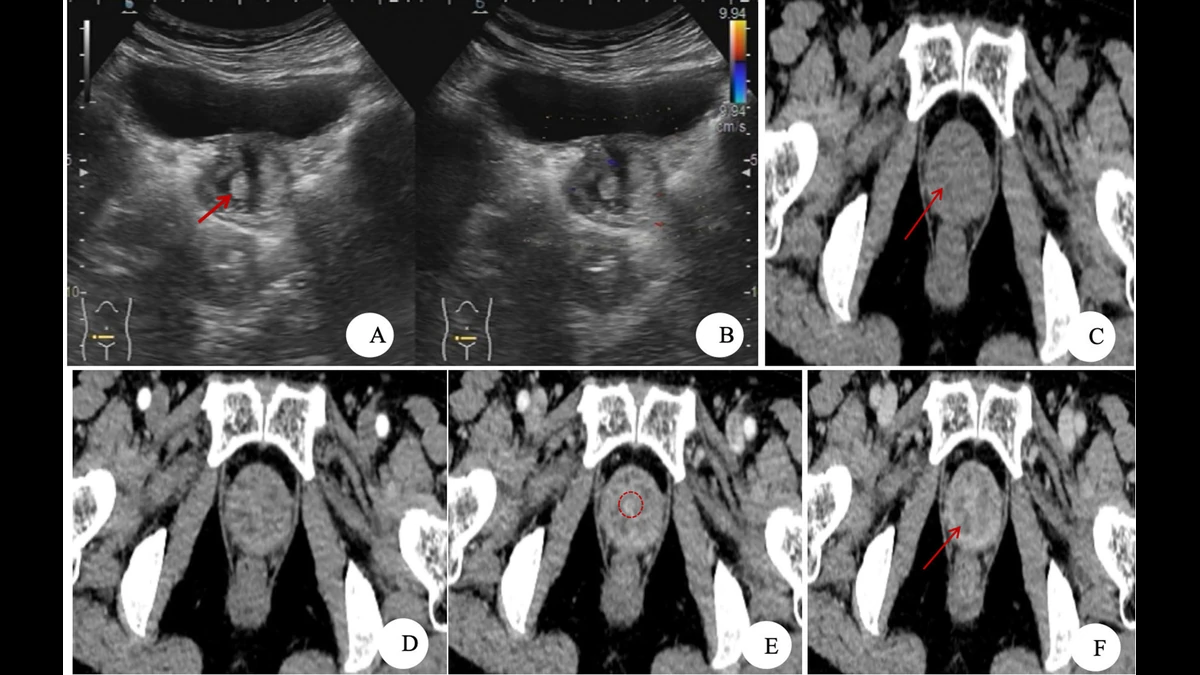
Image source and reuse details
Source: Case Report: Primary clear cell adenocarcinoma of the urethra—imaging features and literature review — Figure 1. Complete 1772 × 1115 image proportionally reduced to 1073 × 675, centered in 1200 × 675 with black margins of 63 pixels left and 64 right. WebP conversion only. All six panels and original annotations preserved; no clinical crop, recoloring, diagnostic retouching or enlargement.
In this guide
First distinguish the urethra, the ureter and the cancer type
The urethra carries urine from the bladder to outside the body. It is different from the ureters, which connect the kidneys to the bladder. Primary urethral cancer begins in this outlet tube. Cancer spreading into it from a neighboring organ, or returning there after bladder cancer, needs its own assessment.
The main tissue types are urothelial carcinoma, squamous carcinoma and adenocarcinoma. Their frequency varies between populations and anatomical sites. A urothelial cancer in the part passing through the prostate is not the usual prostate adenocarcinoma. Confirming these distinctions prevents a treatment plan being copied from the wrong disease.
Source: National Cancer Institute — United States — Urethral Cancer Treatment (PDQ®) — Health Professional Version · National Cancer Institute — United States — Urethral Cancer Treatment (PDQ®) — Patient Version · European Association of Urology — Primary Urethral Carcinoma — Epidemiology, Aetiology and Pathology
Blood or a changing urine stream needs assessment
Possible signs include blood in urine, bloody discharge from the urethra, burning, a weak or interrupted stream, difficulty starting, leakage, pelvic pain or a new lump near the urethra or groin. Infection and narrowing can cause similar symptoms. A persistent or unexplained change still needs investigation.
Do not assume repeated urinary symptoms are always infection. Ask what happens if symptoms continue after treatment. Inability to pass urine, heavy bleeding, fever with chills or severe pain needs urgent care rather than a routine appointment. Early disease may cause few symptoms, so their absence does not exclude cancer.
Source: National Cancer Institute — United States — Urethral Cancer Treatment (PDQ®) — Patient Version · Universitätsspital Zürich — Switzerland — Harnröhrenkrebs — Urethrakarzinom
Risk factors do not identify a single cause
Chronic inflammation, urethral narrowing, a history of repeated instrumentation or catheter irritation, and previous pelvic radiation have been associated with this cancer. Urethral diverticula, which are pockets connected to the urethra, and repeated urinary infections are relevant in some women. Associations do not prove the cause in an individual.
Human papillomavirus can be associated with some tumors, but it does not explain every urethral cancer or reveal when infection occurred. Do not remove a medically necessary catheter yourself. There is no established population screening program; regular care for known urinary problems and prompt assessment of new changes remain important.
Source: European Association of Urology — Primary Urethral Carcinoma — Epidemiology, Aetiology and Pathology · Universitätsspital Zürich — Switzerland — Harnröhrenkrebs — Urethrakarzinom
How the diagnosis is established
Assessment includes your medical history, examination of the urethral opening and nearby tissues, and groin lymph nodes. A pelvic or rectal examination may be appropriate. Urine tests check blood or infection; cytology looks for abnormal cells, but a negative result cannot reliably exclude urethral cancer.
Urethrocystoscopy uses a thin instrument to inspect the urethra and bladder. A biopsy supplies tissue for diagnosis and helps check for a separate bladder tumor. Some masses lie around the urethra rather than growing into its visible lining. Persistent findings may need further imaging or a differently guided biopsy even after an apparently normal internal view.
Source: European Association of Urology — Primary Urethral Carcinoma — Diagnostic Evaluation and Staging · National Cancer Institute — United States — Urethral Cancer Treatment (PDQ®) — Patient Version
Ask for expert review of the tissue
The pathology report should identify the cancer type, whether it invades deeper tissue, and relevant cell features. If tissue was removed, ask whether the edges are clear. Involvement of blood vessels, lymph vessels or nerves can matter. Expert review is especially useful for uncommon or mixed cell types.
For clear cell adenocarcinoma, the team must consider whether the tumor truly began in the urethra or came from another organ. Special tissue stains can help. No single blood marker establishes all these diagnoses, and a positive immune marker does not guarantee immunotherapy works. Ask which findings change your choices.
Source: European Association of Urology — Primary Urethral Carcinoma — Diagnostic Evaluation and Staging · European Association of Urology — Primary Urethral Carcinoma — Epidemiology, Aetiology and Pathology · Li Yang and colleagues — Frontiers in Oncology — Case Report: Primary clear cell adenocarcinoma of the urethra—imaging features and literature review
Understand the location and stage before choosing treatment
A pelvic magnetic resonance scan helps define the tumor and nearby structures. Computed tomography of the chest, abdomen and pelvis looks for spread; urinary-tract imaging may be included. Additional scans are selected for a particular question rather than ordered automatically. Images complement the biopsy and examination.
Distal means closer to the outside opening; proximal means closer to the bladder. The TNM record describes local invasion, regional nodes and distant metastases. Ask which staging edition applies: current European guidance incorporates an updated classification, while older resources may use another edition. Do not mix their stage tables or interpret a stage as a personal life expectancy.
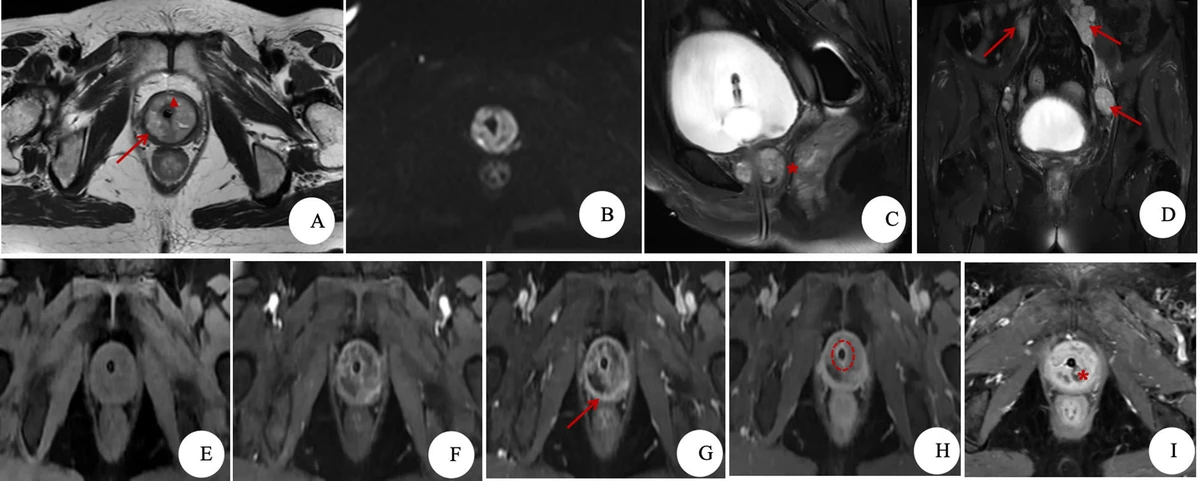
Image source and reuse details
Source: Case Report: Primary clear cell adenocarcinoma of the urethra—imaging features and literature review — Figure 2. Whole 1949 × 781 image reduced proportionally to 1200 × 481 and converted to WebP. All nine panels, labels, arrows and markers preserved; no cropping, recoloring, diagnostic retouching or enlargement.
Source: European Association of Urology — EAU Guidelines on Primary Urethral Carcinoma — Limited Update March 2026 · European Association of Urology — Primary Urethral Carcinoma — Diagnostic Evaluation and Staging
An experienced team is particularly valuable for a rare cancer
The European Association of Urology recommends expert-centre discussion for advanced urethral cancer. Urology, medical oncology, radiation oncology, pathology and imaging should work together. Reconstructive surgery, stoma care, rehabilitation, nutrition and psychological or sexual-health support may also be needed.
Ask whether the goal is cure, prolonged control or relief of symptoms, and what is known specifically about your cell type. Discuss alternatives and a second opinion before an irreversible major operation when time permits. Supportive and palliative care can accompany active cancer treatment; they do not mean treatment has been abandoned.
Source: European Association of Urology — Primary Urethral Carcinoma — Disease Management · European Association of Urology — EAU Guidelines on Primary Urethral Carcinoma — Limited Update March 2026 · National Cancer Institute — United States — Palliative Care in Cancer
Localized cancer in men: preserving the penis when safe
Selected tumors near the distal urethra may be treated by removing only the affected urethral segment. The surgeon must be able to obtain clear tissue edges, including careful assessment around the proximal margin. Superficial lesions may have other local approaches, but these require reliable staging and close follow-up.
A deeper or more extensive tumor may require part or all of the penis or other involved structures to be removed. This is not necessary for every urethral cancer. Ask exactly what will be removed, how urine will leave the body, what reconstruction is possible and how the plan balances cancer control with function.
Source: European Association of Urology — Primary Urethral Carcinoma — Disease Management · National Cancer Institute — United States — Urethral Cancer Treatment (PDQ®) — Patient Version
Localized cancer in women: weigh preservation against recurrence
Removing the urethra is a standard surgical approach when criteria for safe organ preservation are not met. In selected distal tumors, a smaller operation may preserve it if clear margins are possible. Discuss the risk of local recurrence and whether additional treatment or later surgery could be needed.
Local radiation is another option in selected cases, including external treatment or brachytherapy delivered close to the tumor. Preserving an organ does not guarantee normal continence or painless function. Narrowing, fistulas and tissue damage are possible. Ask about bladder control, urinary reconstruction and the expected effect on vaginal and sexual comfort.
Source: European Association of Urology — Primary Urethral Carcinoma — Disease Management · National Cancer Institute — United States — Urethral Cancer Treatment (PDQ®) — Patient Version
Locally advanced disease often requires more than one treatment
When cancer extends into nearby tissues or regional nodes, a team may combine medicines, surgery and radiation. For some patients, cisplatin-based chemotherapy before surgery can help form a curative plan. Much of the urethral evidence comes from retrospective series, so apparent benefits are less certain than in large randomized trials.
Histology guides the sequence. For predominantly urothelial cancer, specialists may draw on bladder-cancer guidance, but a perioperative drug indication limited to muscle-invasive bladder cancer does not automatically become an approval for every primary urethral tumor. Ask what is direct evidence, what is extrapolated and whether the treatment is within the local authorized indication.
Source: European Association of Urology — Primary Urethral Carcinoma — Disease Management · European Association of Urology — EAU Guidelines on Primary Urethral Carcinoma — Limited Update March 2026
Squamous cancer: combined treatment may preserve genital organs
Radiation given with chemotherapy can be considered for selected locally advanced squamous urethral cancers. Fluorouracil with mitomycin has been used to strengthen the radiation effect. The aim can be cure with organ preservation, followed by close checks and discussion of salvage treatment if needed.
The evidence includes small, nonrandomized series, such as the study by Marissa Kent and colleagues. A complete response means no detectable tumor at assessment; it does not ensure permanent cure or preserved function. Discuss skin, bowel, urinary and sexual effects, and testing for fluoropyrimidine toxicity risk before treatment.
Source: European Association of Urology — Primary Urethral Carcinoma — Disease Management · Marissa Kent and colleagues — Journal of Urology — Combined chemoradiation as primary treatment for invasive male urethral cancer
Urothelial cancer in the prostatic urethra follows a specific pathway
The urethra passes through the prostate, but urothelial cancer there differs from prostate adenocarcinoma. Selected noninvasive tumors or carcinoma in situ may be managed by transurethral removal and bacillus Calmette-Guérin treatment, called BCG, placed into the urinary tract under specialist supervision.
The depth and extent of involvement are crucial, including whether disease affects ducts or invades the supporting prostate tissue. Invasive, extensive or BCG-unresponsive disease may require removal of bladder and prostate with lymph-node surgery. BCG is not a general medicine for every urethral cancer. A specialist should explain why preservation is or is not appropriate.
Source: European Association of Urology — Primary Urethral Carcinoma — Disease Management · European Association of Urology — EAU Guidelines on Primary Urethral Carcinoma — Limited Update March 2026
Adenocarcinoma and other rare types need individualized decisions
Adenocarcinoma, including the clear cell form, is uncommon and does not automatically follow the urothelial or squamous treatment plan. Surgery may be central when disease is localized. Expert pathology and multidisciplinary review help establish its origin, extent and reasonable options when it is advanced.
There is no single proven drug regimen for every rare subtype. The scan illustrations in this guide come from one published clear cell case, not a treatment trial. A response or survival reported in an individual case cannot establish that a medicine is approved or effective for all people with the same label.
Source: European Association of Urology — Primary Urethral Carcinoma — Epidemiology, Aetiology and Pathology · Li Yang and colleagues — Frontiers in Oncology — Case Report: Primary clear cell adenocarcinoma of the urethra—imaging features and literature review · European Association of Urology — EAU Guidelines on Primary Urethral Carcinoma — Limited Update March 2026
Lymph nodes and local recurrence
Enlarged groin or pelvic nodes need careful assessment; their significance depends on the tumor site and findings. Surgery, radiation or systemic treatment can be considered. Removing all apparently normal groin nodes preventively is not routine for everyone. Selected resectable node-positive squamous cancers may benefit from node surgery.
A suspected return of cancer should be confirmed and restaged. Selected local recurrences can be treated with salvage surgery or radiation; distant spread usually needs another strategy. Ask about wound healing, leg swelling from lymphatic damage, previous radiation limits and the likelihood of controlling disease without unacceptable harm.
Source: European Association of Urology — Primary Urethral Carcinoma — Disease Management · European Association of Urology — Primary Urethral Carcinoma — Diagnostic Evaluation and Staging
Medicines for advanced urothelial cancer
Enfortumab vedotin is an antibody carrying a cell-killing medicine; pembrolizumab helps the immune system attack cancer. Their combination is authorized in the United States for advanced or metastatic urothelial cancer. The European first-line indication specifies unresectable or metastatic disease in adults eligible for platinum-containing chemotherapy. This is not a blanket treatment for pure squamous cancer or adenocarcinoma.
Local access is a separate question. Italy has a reimbursement pathway for that specific first-line combination with eligibility requirements; another country may differ. If it is unsuitable, platinum chemotherapy and other subsequent options may be considered according to previous treatment and health. Ask about expected benefit, alternatives, side effects, costs and the current national indication.
Source: Food and Drug Administration — United States — FDA approves enfortumab vedotin-ejfv with pembrolizumab for locally advanced or metastatic urothelial cancer · Food and Drug Administration — United States — PADCEV — Prescribing information, revised July 2026 · European Medicines Agency — European Union — Padcev — Product information, updated November 2026 · European Association of Urology — EAU Guidelines on Primary Urethral Carcinoma — Limited Update March 2026 · Agenzia Italiana del Farmaco — Italy — Attivazione web e pubblicazione schede di monitoraggio — Registro PADCEV KEYTRUDA Carcinoma Uroteliale
When molecular testing may open another option
For selected advanced urothelial cancers, a susceptible FGFR3 alteration can support discussion of erdafitinib after previous systemic treatment under the United States indication. It is not recommended there for a person eligible for an immune checkpoint inhibitor who has not yet received one. A gene name alone is insufficient: the exact change and treatment history matter.
Rare findings such as deficient DNA repair with high microsatellite instability, or an NTRK gene fusion, can sometimes meet criteria for treatment across tumor sites. These are different from simply finding a positive immune stain. Confirm the test, cancer type, national label and monitoring requirements; molecular profiling does not guarantee an effective or locally available drug.
Source: Food and Drug Administration — United States — FDA approves erdafitinib for locally advanced or metastatic urothelial carcinoma · Food and Drug Administration — United States — Verified Clinical Benefit — Cancer Accelerated Approvals; pembrolizumab MSI-H/dMMR solid tumors · European Medicines Agency — European Union — Vitrakvi — therapeutic indication and conditional authorisation
What a major urothelial trial tells us, and what it does not
The original 2024 EV-302 report described an open-label randomized study of 886 patients: 442 received enfortumab vedotin–pembrolizumab and 444 platinum chemotherapy. At median follow-up of 17.2 months, median overall survival was 31.5 versus 16.1 months, and time without progression was 12.5 versus 6.3 months. The death hazard ratio was 0.47, with a 95% confidence interval of 0.38–0.58.
Treatment-related severe events, grade 3 or higher, occurred in 55.9% versus 69.5%. The study was funded by Astellas Pharma US and others. These are historical group results for advanced urothelial cancer, not a urethral-only comparison or extra months promised to an individual. The hazard ratio compares risk over follow-up, not the percentage cured. Ask how directly the evidence fits your diagnosis.
Source: Thomas Powles and colleagues — The New England Journal of Medicine — Enfortumab Vedotin and Pembrolizumab in Untreated Advanced Urothelial Cancer · Food and Drug Administration — United States — FDA approves enfortumab vedotin-ejfv with pembrolizumab for locally advanced or metastatic urothelial cancer · Food and Drug Administration — United States — PADCEV — Prescribing information, revised July 2026 · European Association of Urology — EAU Guidelines on Primary Urethral Carcinoma — Limited Update March 2026
Current trials are questions, not promised future cures
Two National Cancer Institute-sponsored studies were recruiting at this check. MODERN, NCT05987241, is a randomized phase 2/3 study using tumor DNA in blood to help guide postoperative immunotherapy in selected high-risk urothelial cancers. Its estimated primary completion is in 2030. Eligibility requires specific surgery and risk criteria; it does not include every urethral tumor or every operation.
ICONIC, NCT03866382, is a single-group phase 2 study of cabozantinib, nivolumab and ipilimumab in rare metastatic urinary and genital cancers, with estimated primary completion in 2027. Its urethral cohort has specific criteria, including restrictions concerning separate bladder urothelial cancer. Confirm that the relevant cohort and local site are open. Dates may change and are not approval dates; ask which tests, travel and treatment costs are covered.
Source: United States National Library of Medicine — ClinicalTrials.gov — Testing the Role of DNA Released From Tumor Cells Into the Blood in Guiding the Use of Immunotherapy After Surgical Removal of the Bladder, Kidney, Ureter, and Urethra for Urothelial Cancer Treatment, MODERN Study · United States National Library of Medicine — ClinicalTrials.gov — Testing the Effectiveness of Two Immunotherapy Drugs (Nivolumab and Ipilimumab) With One Anti-cancer Targeted Drug (Cabozantinib) for Rare Genitourinary Tumors · National Cancer Institute — United States — Who Pays for Clinical Trials?
Safety checks and symptoms that need urgent contact
The team should review blood counts, kidney and liver function, medicines, hearing and nerve symptoms before relevant treatments. Fluorouracil or capecitabine requires discussion of DPD or DPYD testing unless treatment is urgently needed. Complete enzyme deficiency can cause dangerous toxicity; partial deficiency requires individualized decisions. Never adjust treatment yourself.
Get a written urgent-contact plan for fever, including 38°C or the team’s stated threshold, inability to pass urine, heavy bleeding or severe pain. With enfortumab, blistering or peeling skin, painful mouth sores or a worsening rash require immediate advice. New breathlessness, severe diarrhea or marked thirst and confusion can signal serious treatment effects. Report nerve or vision changes early too.
Source: Food and Drug Administration — United States — PADCEV — Prescribing information, revised July 2026 · European Medicines Agency — European Union — Padcev — Product information, updated November 2026 · Food and Drug Administration — United States — Safety labeling update for capecitabine and fluorouracil (5-FU) on risks associated with dihydropyrimidine dehydrogenase (DPD) deficiency · National Cancer Institute — United States — Infection and Neutropenia during Cancer Treatment
How urine leaves the body after treatment
The plan depends on which structures remain. A perineal urethrostomy creates an opening behind the scrotum, usually allowing urination while sitting. If the bladder must be removed, a different urinary diversion is needed, such as an external stoma or a suitable internal reconstruction. Not everyone needs a permanent collection bag.
Meet the stoma or reconstructive-care team before surgery when possible. Ask about catheter care, skin protection, supplies, training and whom to contact outside office hours. A sudden painful inability to drain urine or fever with urinary problems needs prompt assessment. Do not remove or force a catheter or attempt to repair an obstructed diversion yourself.
Source: National Cancer Institute — United States — Urethral Cancer Treatment (PDQ®) — Patient Version · University College London Hospitals NHS Foundation Trust — United Kingdom — Total penectomy and perineal urethrostomy
Sexual health, fertility and body image deserve support
Treatment may affect erections, ejaculation, vaginal comfort, fertility and how you feel about your body. Effects depend on the structures treated, not just the name of the cancer. Ask about sperm, egg or embryo preservation before treatment if future biological children matter and preservation is feasible.
Discuss contraception, safe healing and when sexual activity may resume. Rehabilitation, sexual-health care, psychological help and partner support can be useful. Pain or unhealed tissue should not be forced through; exercises or devices need individual guidance. Ask for realistic expectations rather than promises of unchanged continence, sexual function or fertility.
Source: National Cancer Institute — United States — Sexual Health Issues in Women with Cancer · National Cancer Institute — United States — Sexual Health Issues in Men with Cancer · National Cancer Institute — United States — Female Fertility and Cancer Treatment · National Cancer Institute — United States — Male Fertility and Cancer Treatment · University College London Hospitals NHS Foundation Trust — United Kingdom — Total penectomy and perineal urethrostomy
Food, movement and supplements
Enough energy and protein helps maintain strength during treatment. Ask a dietitian for help with weight loss, poor appetite or bowel symptoms. Ask the team how much to drink: the amount should suit kidney function, treatment and the way urine leaves your body.
Return to activity gradually around wound healing, pain and fatigue, following the team’s advice. Ask for help with stopping smoking and practical or emotional difficulties. No supplement, herb or restrictive diet has been proved to replace urethral cancer treatment. Some products interact with medicines; give the pharmacist a complete list before starting anything.
Source: National Cancer Institute — United States — Nutrition During Cancer Treatment · National Cancer Institute — United States — Complementary and Alternative Medicine · National Cancer Institute — United States — Palliative Care in Cancer
Follow-up must be tailored, not copied from another cancer
There is no well-validated universal follow-up timetable for this rare disease. The team should adapt it to cell type, stage, treatment and recurrence risk. After urethra-preserving treatment, urine cytology, repeat urethral and bladder inspection and cross-sectional scans may be used more closely, despite limited data on the best schedule.
Ask for a written plan covering cancer checks, urinary function, reconstruction or stoma care, sexual health and late treatment effects. New bleeding, worsening obstruction, a growing lump or persistent pain should be reported before the next routine visit. A normal urine cytology result alone should not dismiss ongoing symptoms.
Source: European Association of Urology — Primary Urethral Carcinoma — Follow-up · European Association of Urology — Primary Urethral Carcinoma — Prognosis
Find documented care and prepare the right questions
The directory distinguishes ordinary clinical services from research contacts. Examples include Urologia Oncologica at the Istituto Oncologico Veneto in Italy and urology at Universitätsspital Zürich in Switzerland. Trial-linked pathways in the United States or Canada require separate eligibility checks; being listed does not promise enrollment or routine treatment for every cell type.
Bring pathology reports and requested slides, scans, previous surgery or radiation details and a medicine list. Ask who coordinates the team, how referrals and costs work, and whether a second opinion would change the options. Confirm secure instructions before sending sensitive records. This is a selective directory, not a world ranking or a postcode-distance search.
Documented care and research pathways for urethral cancer →
Source: Istituto Oncologico Veneto — Italy — UOC Urologia oncologica — clinical remit, secretariat and contact details · Universitätsspital Zürich — Switzerland — Harnröhrenkrebs — Urethrakarzinom · Universitätsspital Zürich — Switzerland — Klinik für Urologie — official telephone, email and address · Universitätsspital Zürich — Switzerland — Zweitmeinung der Klinik für Urologie · United States National Library of Medicine — ClinicalTrials.gov — Testing the Effectiveness of Two Immunotherapy Drugs (Nivolumab and Ipilimumab) With One Anti-cancer Targeted Drug (Cabozantinib) for Rare Genitourinary Tumors · United States National Library of Medicine — ClinicalTrials.gov — Testing the Role of DNA Released From Tumor Cells Into the Blood in Guiding the Use of Immunotherapy After Surgical Removal of the Bladder, Kidney, Ureter, and Urethra for Urothelial Cancer Treatment, MODERN Study
Questions to take to your appointment
- Can urethral cancer be cured? Some localized tumors can be treated with curative intent. The chance depends on location, tissue type, stage and health; no personal outcome is guaranteed.
- Is this the same as ureter or bladder cancer? No. The urethra is the outlet from the bladder. Another primary site or spread from a neighboring organ can change the plan.
- Will treatment always remove the penis or bladder? No. Selected tumors allow organ preservation. More extensive cancer may require a larger operation, with a personal discussion of alternatives.
- Does a negative urine test exclude it? No. Persistent symptoms or a suspicious mass may still need endoscopy, biopsy or imaging.
- Are medicines approved for bladder cancer automatically right for me? No. Histology, disease setting, national indication, prior treatment and your health must fit.
- Does a trial completion date tell me when a new cure will arrive? No. Recruitment, results, approval and access are separate steps, and the dates may change.
Sources and verification
- National Cancer Institute — United States — Urethral Cancer Treatment (PDQ®) — Health Professional Version
- National Cancer Institute — United States — Urethral Cancer Treatment (PDQ®) — Patient Version
- European Association of Urology — Primary Urethral Carcinoma — Diagnostic Evaluation and Staging
- European Association of Urology — Primary Urethral Carcinoma — Epidemiology, Aetiology and Pathology
- European Association of Urology — Primary Urethral Carcinoma — Disease Management
- European Association of Urology — Primary Urethral Carcinoma — Follow-up
- European Association of Urology — Primary Urethral Carcinoma — Prognosis
- European Association of Urology — EAU Guidelines on Primary Urethral Carcinoma — Limited Update March 2026
- Food and Drug Administration — United States — FDA approves enfortumab vedotin-ejfv with pembrolizumab for locally advanced or metastatic urothelial cancer
- Food and Drug Administration — United States — PADCEV — Prescribing information, revised July 2026
- European Medicines Agency — European Union — Padcev — Product information, updated November 2026
- Agenzia Italiana del Farmaco — Italy — Attivazione web e pubblicazione schede di monitoraggio — Registro PADCEV KEYTRUDA Carcinoma Uroteliale
- Thomas Powles and colleagues — The New England Journal of Medicine — Enfortumab Vedotin and Pembrolizumab in Untreated Advanced Urothelial Cancer
- Marissa Kent and colleagues — Journal of Urology — Combined chemoradiation as primary treatment for invasive male urethral cancer
- Food and Drug Administration — United States — FDA approves erdafitinib for locally advanced or metastatic urothelial carcinoma
- United States National Library of Medicine — ClinicalTrials.gov — Testing the Role of DNA Released From Tumor Cells Into the Blood in Guiding the Use of Immunotherapy After Surgical Removal of the Bladder, Kidney, Ureter, and Urethra for Urothelial Cancer Treatment, MODERN Study
- United States National Library of Medicine — ClinicalTrials.gov — Testing the Effectiveness of Two Immunotherapy Drugs (Nivolumab and Ipilimumab) With One Anti-cancer Targeted Drug (Cabozantinib) for Rare Genitourinary Tumors
- Li Yang and colleagues — Frontiers in Oncology — Case Report: Primary clear cell adenocarcinoma of the urethra—imaging features and literature review
- Istituto Oncologico Veneto — Italy — UOC Urologia oncologica — clinical remit, secretariat and contact details
- Universitätsspital Zürich — Switzerland — Harnröhrenkrebs — Urethrakarzinom
- Universitätsspital Zürich — Switzerland — Klinik für Urologie — official telephone, email and address
- Universitätsspital Zürich — Switzerland — Zweitmeinung der Klinik für Urologie
- University College London Hospitals NHS Foundation Trust — United Kingdom — Total penectomy and perineal urethrostomy
- Food and Drug Administration — United States — Safety labeling update for capecitabine and fluorouracil (5-FU) on risks associated with dihydropyrimidine dehydrogenase (DPD) deficiency
- National Cancer Institute — United States — Palliative Care in Cancer
- National Cancer Institute — United States — Sexual Health Issues in Men with Cancer
- National Cancer Institute — United States — Male Fertility and Cancer Treatment
- Food and Drug Administration — United States — Verified Clinical Benefit — Cancer Accelerated Approvals; pembrolizumab MSI-H/dMMR solid tumors
- European Medicines Agency — European Union — Vitrakvi — therapeutic indication and conditional authorisation
- National Cancer Institute — United States — Infection and Neutropenia during Cancer Treatment
- National Cancer Institute — United States — Nutrition During Cancer Treatment
- National Cancer Institute — United States — Complementary and Alternative Medicine
- National Cancer Institute — United States — Sexual Health Issues in Women with Cancer
- National Cancer Institute — United States — Female Fertility and Cancer Treatment
- National Cancer Institute — United States — Who Pays for Clinical Trials?
Sources checked: 2026-11-19