


Soft tissue sarcomas and gastrointestinal stromal tumors (GIST)
Gastrointestinal stromal tumors (GIST) start in the wall of the stomach or another part of the digestive tract. Find out about tests and care for GIST and other soft tissue sarcomas.
MyMedNest editorial guide · Sources checked:
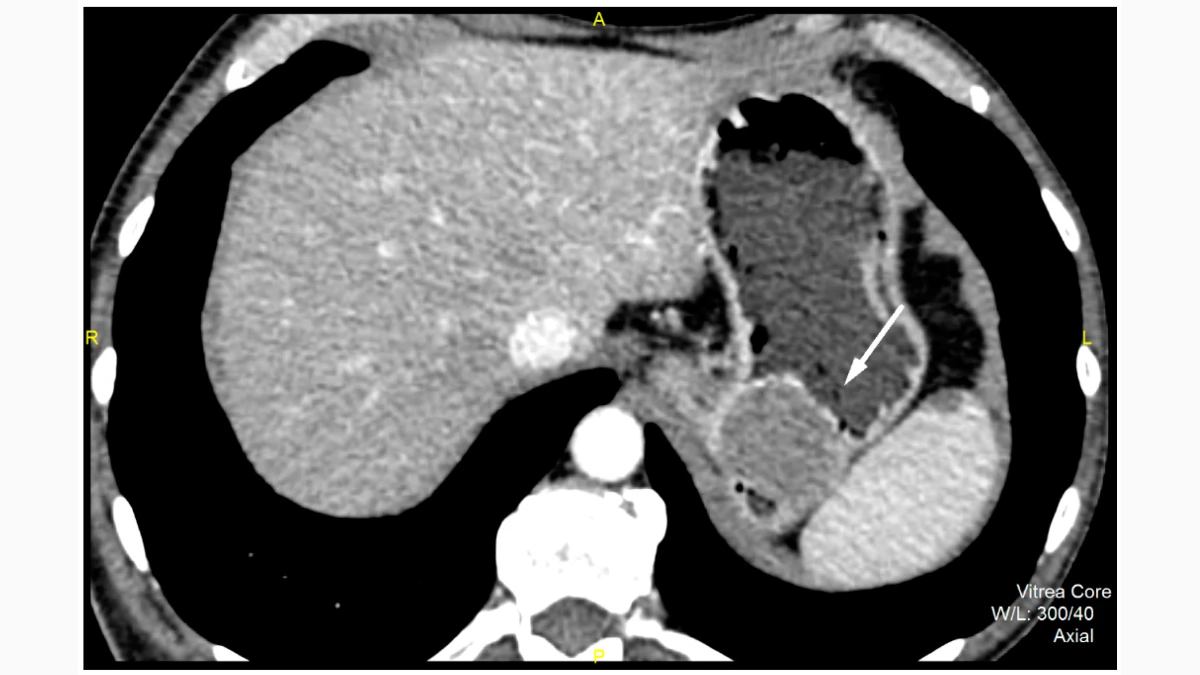
Image source and reuse details
Source: Mitrovic-Jovanovic et al., Diagnostics 12(11), 2841 — Figure 1. Proportionally reduced and centered in the cover frame. The full original view and arrow are preserved.
In this guide
The cancers covered here
Soft tissue sarcomas are rare cancers. They can start in fat, muscle or other tissues that support the body. Liposarcoma, leiomyosarcoma and synovial sarcoma are names of different types. Treatment depends on the type, where it started and how far it has spread.
Gastrointestinal stromal tumors, called GIST, start in the wall of the digestive tract, often in the stomach or small intestine. They have a separate pathway for tests and medicines.
Source: National Cancer Institute — Soft Tissue Sarcoma Treatment (PDQ®)–Health Professional Version · National Cancer Institute — Gastrointestinal Stromal Tumors Treatment (PDQ®)–Health Professional Version
When to get a lump checked
Get an unexplained lump that is growing checked soon, even if it does not hurt. Many lumps are benign. An exam and imaging can help show when a referral to a sarcoma center is needed.
A GIST can turn up on a test for something else. It can also cause abdominal pain, feeling full quickly or bleeding. Get urgent care if you vomit blood, pass black stools or faint with signs of bleeding.
Source: British Sarcoma Group — UK guidelines for the management of soft tissue sarcomas · National Cancer Institute — Gastrointestinal Stromal Tumors Treatment (PDQ®)–Patient Version
Imaging and biopsy for soft tissue sarcoma
Ultrasound can be the first test for a lump that is easy to reach. If it looks suspicious, ask for a specialist assessment before removal. At many sites, an MRI shows how the mass sits next to muscles, nerves and blood vessels. A CT scan is useful at other sites and to check how far disease has spread.
A biopsy takes a small piece of tissue. The center often uses a needle. It plans where the needle goes with possible surgery in mind. The lab identifies the type of cancer. The grade describes what its cells look like under a microscope. The stage describes how far it has spread. Some people need tests on the tumor’s genes.
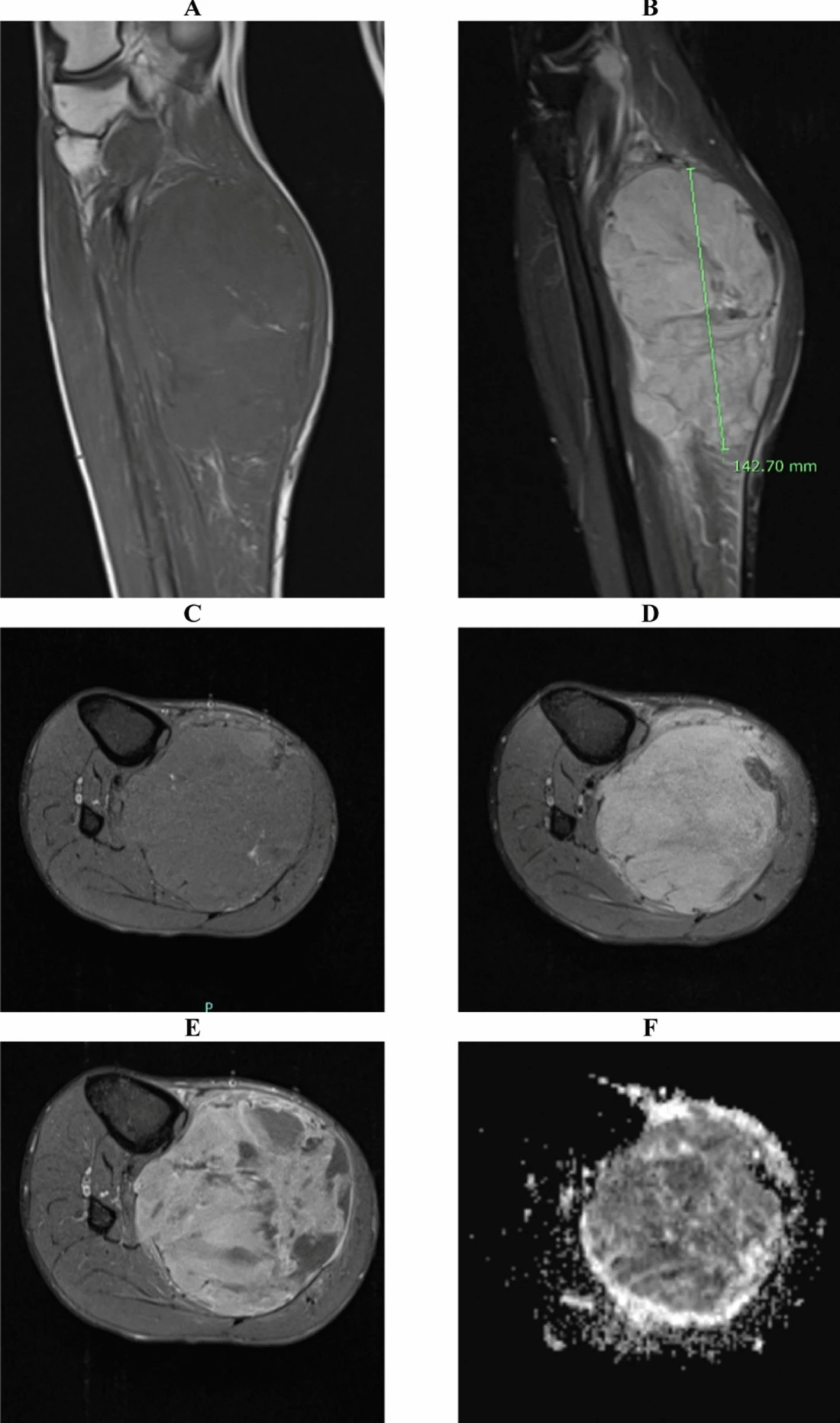
Image source and reuse details
Source: Diagnostic challenges in synovial sarcoma: a case report — Figure 6. Proportional reduction. All six panels and measurements are preserved.
Source: British Sarcoma Group — UK guidelines for the management of soft tissue sarcomas · National Cancer Institute — Soft Tissue Sarcoma Treatment (PDQ®)–Health Professional Version · Journal of Medical Case Reports — Diagnostic challenges in synovial sarcoma: a case report
Treatment for localized sarcoma
For many localized sarcomas, surgery aims to remove the tumor with an adequate border of tissue. The team considers how to protect function. Radiation may be added before or after surgery for some tumors, depending on the location and risk.
Chemotherapy before or after surgery is an option in selected situations. Ask the team what benefit and side effects to expect for your subtype.
Source: National Cancer Institute — Soft Tissue Sarcoma Treatment (PDQ®)–Health Professional Version · British Sarcoma Group — UK guidelines for the management of soft tissue sarcomas
Advanced sarcoma and cell therapy
Some people with advanced sarcoma receive doxorubicin, sometimes with other drugs. The choices depend on the subtype, past treatments and the person’s health. Ask whether the aim is to shrink the tumor, slow it down or relieve symptoms.
Since June 2026, United States approval for afamitresgene autoleucel includes some people aged 12 and older with synovial sarcoma after chemotherapy. It applies if the cancer cannot be removed or has spread. Two tests are needed. One checks for a suitable HLA type, a marker of the body’s defenses. The other checks for a protein called MAGE-A4 in the tumor. This treatment uses immune cells. It can cause a severe reaction called cytokine release syndrome.
Source: National Cancer Institute — Soft Tissue Sarcoma Treatment (PDQ®)–Health Professional Version · United States Food and Drug Administration — TECELRA · United States Food and Drug Administration — June 17, 2026 Approval Letter – TECELRA
GIST testing, risk and surgery
The team may use CT scans to see inside the body or endoscopy, where a small camera on a tube looks inside the digestive tract. It may also use ultrasound from inside the tract. The team decides if it needs a tissue sample. The lab can look for proteins and changes in tumor genes such as KIT or PDGFRA. Results help guide treatment.
When GIST is localized and can be removed, surgery aims to take it out without rupturing it. Location, size, how quickly the cells divide and any rupture help estimate the risk it will return. After surgery, imatinib may be used for a sensitive tumor at high risk of coming back.
Source: National Cancer Institute — Gastrointestinal Stromal Tumors Treatment (PDQ®)–Health Professional Version · National Cancer Institute — Gastrointestinal Stromal Tumors Treatment (PDQ®)–Patient Version · Diagnostics — The Utility of Conventional CT, CT Perfusion and Quantitative Diffusion-Weighted Imaging in Predicting the Risk Level of Gastrointestinal Stromal Tumors of the Stomach: A Prospective Comparison of Classical CT Features, CT Perfusion Values, Apparent Diffusion Coefficient and Intravoxel Incoherent Motion-Derived Parameters
Advanced GIST drugs and clinical studies
Imatinib is often used first if advanced GIST is likely to respond to it. If the tumor cannot be removed or has spread, a change in the PDGFRA gene called D842V can make avapritinib an option. After some treatments, a doctor may consider sunitinib, regorafenib or ripretinib. Tests, past treatments and local approvals guide the choice.
The INSIGHT trial compares ripretinib and sunitinib after imatinib in people with some changes in the KIT gene. It is a phase 3 trial, which means it compares treatments in a group of patients. The registry lists who can take part. Ask the center if places are available and at which hospitals.
Source: National Cancer Institute — Gastrointestinal Stromal Tumors Treatment (PDQ®)–Health Professional Version · European Medicines Agency — Ayvakyt · European Medicines Agency — Qinlock · United States National Library of Medicine — A Study of Ripretinib vs Sunitinib in Patients With Advanced GIST With Specific KIT Exon Mutations Who Were Previously Treated With Imatinib
Preparing for visits and follow-up
Bring reports, scans and a list of medicines and supplements. Ask how to share biopsy material securely for a second opinion. After surgery, ask which movements are safe and when to start rehabilitation.
If treatment affects appetite or weight, the center can refer you to an oncology dietitian. Check before taking supplements. Some can interact with cancer drugs. Ask for a schedule of follow-up visits and a number to call about new symptoms or side effects.
Source: British Sarcoma Group — UK guidelines for the management of soft tissue sarcomas · National Cancer Institute — Popular Diets, Supplements, and Cancer
Finding a specialist center
Look for a team that regularly treats your exact type of sarcoma or GIST. For example, the National Cancer Institute in Milan lists both adult care pathways. The directory has official contact details and lets you search by country, city or postal code.
If you find no nearby entry, ask your treating team for a referral through the national network. Check how to request a first visit or a second opinion and how reports should be sent.
Find a sarcoma and GIST specialist center →
Source: Fondazione IRCCS Istituto Nazionale dei Tumori — Oncologia Medica 2 · British Sarcoma Group — UK guidelines for the management of soft tissue sarcomas
Questions to take to your appointment
- What is the exact subtype on my report?
- Should a specialist center plan or review my biopsy?
- Which tests could change the care plan?
- If I have GIST, which mutation was found?
- How can I protect function and manage treatment effects?
- Is there a clinical study that fits my situation?
Sources and verification
- National Cancer Institute — Soft Tissue Sarcoma Treatment (PDQ®)–Health Professional Version
- National Cancer Institute — Gastrointestinal Stromal Tumors Treatment (PDQ®)–Health Professional Version
- National Cancer Institute — Gastrointestinal Stromal Tumors Treatment (PDQ®)–Patient Version
- British Sarcoma Group — UK guidelines for the management of soft tissue sarcomas
- United States Food and Drug Administration — TECELRA
- United States Food and Drug Administration — June 17, 2026 Approval Letter – TECELRA
- European Medicines Agency — Ayvakyt
- European Medicines Agency — Qinlock
- United States National Library of Medicine — A Study of Ripretinib vs Sunitinib in Patients With Advanced GIST With Specific KIT Exon Mutations Who Were Previously Treated With Imatinib
- National Cancer Institute — Popular Diets, Supplements, and Cancer
- Fondazione IRCCS Istituto Nazionale dei Tumori — Oncologia Medica 2
- Journal of Medical Case Reports — Diagnostic challenges in synovial sarcoma: a case report
- Diagnostics — The Utility of Conventional CT, CT Perfusion and Quantitative Diffusion-Weighted Imaging in Predicting the Risk Level of Gastrointestinal Stromal Tumors of the Stomach: A Prospective Comparison of Classical CT Features, CT Perfusion Values, Apparent Diffusion Coefficient and Intravoxel Incoherent Motion-Derived Parameters
Sources checked: 2026-11-20