


Primary bone cancers: diagnosis, treatment and specialist centers
A suspicious bone lesion needs the right team before a biopsy. This guide explains three main types of bone cancer, their treatments and how to find help.
MyMedNest editorial guide · Sources checked:
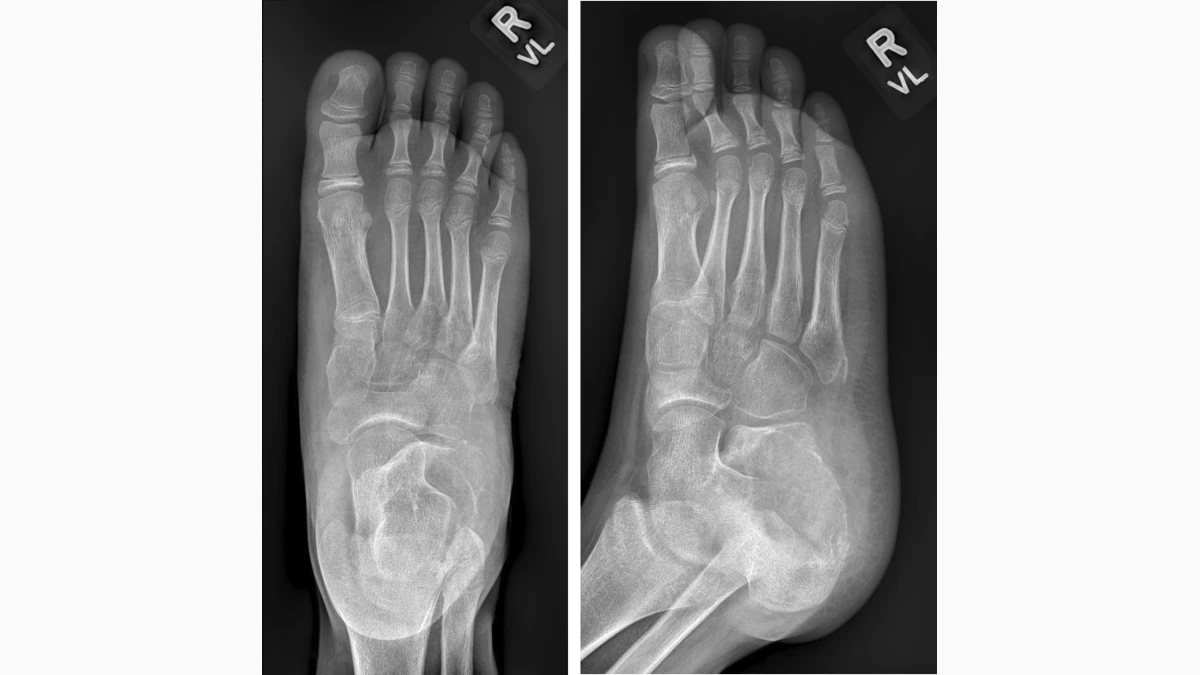
Image source and reuse details
Source: Rare case of pediatric calcaneal osteosarcoma masquerading as a cystic lesion — Figure 1. Reduced in proportion. The whole figure and all clinical details are preserved. Neutral side bands for the cover.
In this guide
Cancers that start in bone
A primary bone cancer starts in a bone. A bone metastasis comes from a cancer that started somewhere else and follows treatment for that cancer. Cysts and other benign lesions can appear on the same tests. The exact name on the report guides care.
Osteosarcoma and Ewing sarcoma are more common in young people and can also occur in adults. Conventional chondrosarcoma, which produces material like cartilage, mainly affects adults. Other rarer types have their own treatments.
Source: National Cancer Institute — Primary Bone Cancer · European Society for Medical Oncology and European Reference Networks — Bone sarcomas: Clinical Practice Guideline for diagnosis, treatment and follow-up
When to get pain or swelling checked
Arrange an assessment for pain that stays in one place, worsens or lasts longer than expected after an injury. Have growing swelling, loss of movement or a fracture after a minor impact checked. Many common problems can cause these symptoms, so examination is needed to find the cause.
Seek urgent assessment if severe pain starts suddenly, you lose function or you cannot bear weight. A fracture is one possibility. If you know a bone is weakened, ask the team how to protect it during daily activities.
Source: National Cancer Institute — Primary Bone Cancer · European Society for Medical Oncology and European Reference Networks — Bone sarcomas: Clinical Practice Guideline for diagnosis, treatment and follow-up
Imaging and a planned biopsy
The first steps are often an examination and an X-ray. If a lesion looks suspicious, ask for a sarcoma center assessment before a biopsy or surgery. The team plans where the sample is taken and the path into the bone because it may affect later surgery.
An MRI shows how the lesion relates to nearby tissues and helps plan the biopsy. A pathologist examines the sample to identify the lesion. If the report is unclear, a sarcoma pathologist can review it. Some samples need molecular testing.
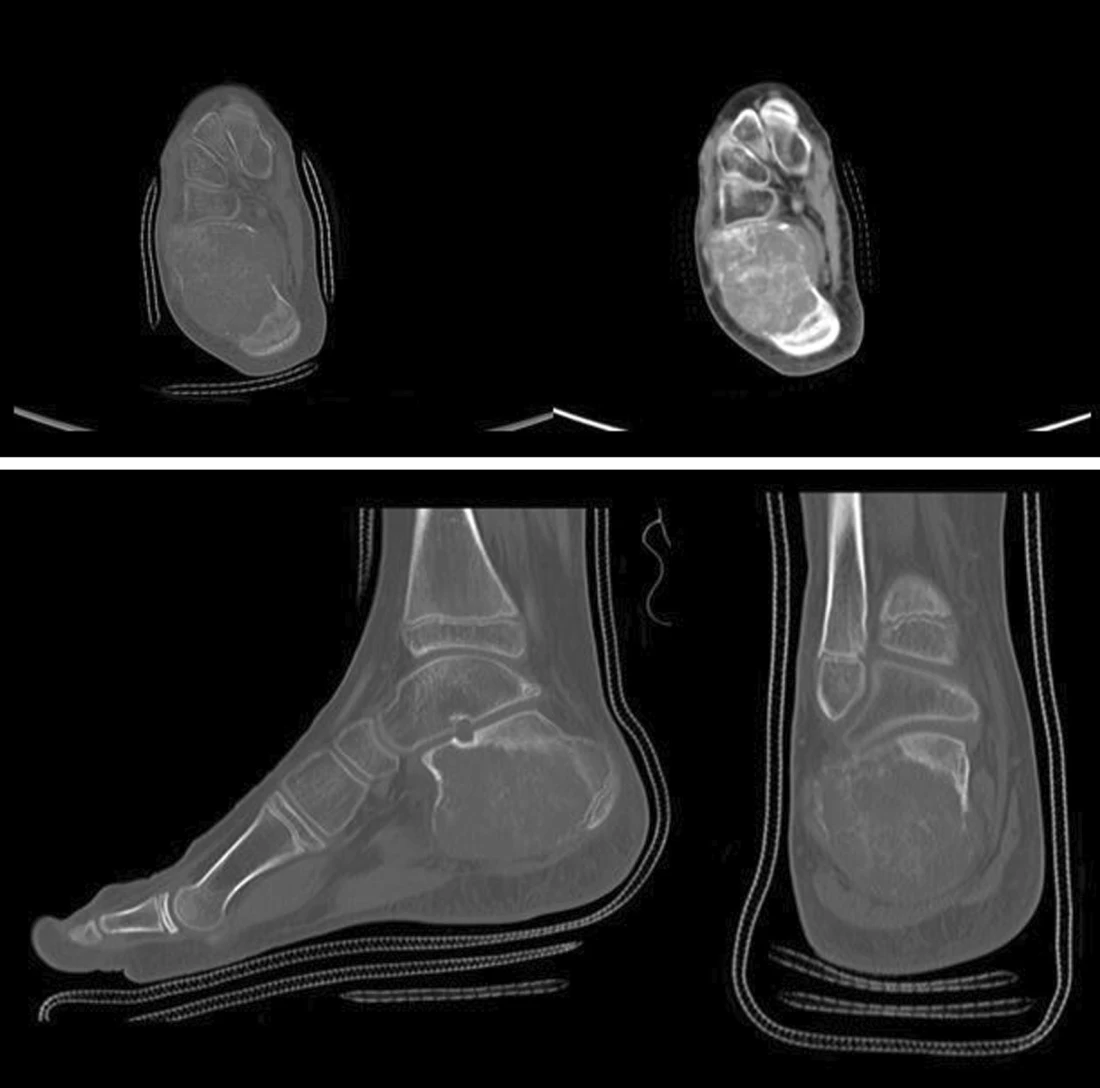
Image source and reuse details
Source: Rare case of pediatric calcaneal osteosarcoma masquerading as a cystic lesion — Figure 2. Reduced in proportion. The whole figure and all clinical details are preserved.
Source: National Cancer Institute — Primary Bone Cancer · European Society for Medical Oncology and European Reference Networks — Bone sarcomas: Clinical Practice Guideline for diagnosis, treatment and follow-up · Egyptian Journal of Radiology and Nuclear Medicine — Rare case of pediatric calcaneal osteosarcoma masquerading as a cystic lesion
What grade and stage tell you
Grade describes what the cells look like under a microscope. Stage describes how far the cancer has spread. Look for the type, exact site and grade where applicable. Ask whether nearby tissues are involved. After surgery, the margins show if cancer reaches the edges of the removed tissue.
The specialist group chooses which tests are needed before treatment. For many bone sarcomas, a chest CT checks the lungs. Other imaging depends on tumor type, age and treatment protocol. Ask which results would change the decision.
Source: European Society for Medical Oncology and European Reference Networks — Bone sarcomas: Clinical Practice Guideline for diagnosis, treatment and follow-up · National Cancer Institute — Primary Bone Cancer · National Cancer Institute — Osteosarcoma and Undifferentiated Pleomorphic Sarcoma of Bone Treatment (PDQ®)–Health Professional Version
Osteosarcoma
High-grade osteosarcoma is often treated with several chemotherapy medicines and surgery. Chemotherapy is usually planned before and after the operation. The team considers age, tumor type, areas involved and the person's health.
Surgery aims to remove the tumor with adequate margins. The limb may be saved and the bone rebuilt when feasible. Low-grade tumors can follow different approaches. If cancer returns, the team assesses whether deposits, such as those in the lung, can be removed.
Source: National Cancer Institute — Osteosarcoma and Undifferentiated Pleomorphic Sarcoma of Bone Treatment (PDQ®)–Health Professional Version · European Society for Medical Oncology and European Reference Networks — Bone sarcomas: Clinical Practice Guideline for diagnosis, treatment and follow-up
Ewing sarcoma
In Ewing sarcoma, laboratory testing of the sample helps distinguish it from similar tumors. Treatment combines several chemotherapy medicines with control of the original site. The team chooses surgery, radiation or both depending on location, response and whether clear margins are feasible.
Spread or recurrence needs a different plan. Ask whether the center uses a protocol suited to your age and whether a study is available for your exact situation.
Source: National Cancer Institute — Ewing Sarcoma Treatment (PDQ®)–Health Professional Version · European Society for Medical Oncology and European Reference Networks — Bone sarcomas: Clinical Practice Guideline for diagnosis, treatment and follow-up · University College London — Euro Ewing Consortium — rEECur
Conventional chondrosarcoma and other types
For many localized conventional chondrosarcomas, surgery is the main treatment. Site, subtype and grade can change that decision. Mesenchymal and dedifferentiated chondrosarcomas follow distinct pathways. A tumor in a difficult site may need a specialist team for that area.
Giant cell tumor of bone is a separate diagnosis. In the United States, denosumab is authorized for selected adults and skeletally mature adolescents if it cannot be removed or surgery is likely to cause serious problems. This indication is for giant cell tumor of bone.
Source: European Society for Medical Oncology and European Reference Networks — Bone sarcomas: Clinical Practice Guideline for diagnosis, treatment and follow-up · National Cancer Institute — Primary Bone Cancer · U.S. National Library of Medicine DailyMed — Xgeva — denosumab official prescribing information
New treatments and clinical trials
In the small randomized phase 2 SARC024 trial, in adults with progressing metastatic osteosarcoma, the median time before worsening or death was 3.6 months with regorafenib and 1.7 months with placebo. The result measures temporary disease control. The study did not establish longer overall survival and osteosarcoma is not listed on the U.S. label.
The CHONQUER trial tests ivosidenib in adults with advanced conventional chondrosarcoma and an IDH1 mutation. Permission to conduct a trial does not establish routine treatment access. Ask if the trial site is open, which checks are involved and what other options are available.
Source: Journal of Clinical Oncology — Randomized Double-Blind Phase II Study of Regorafenib in Patients With Metastatic Osteosarcoma · National Cancer Institute — Osteosarcoma and Undifferentiated Pleomorphic Sarcoma of Bone Treatment (PDQ®)–Health Professional Version · U.S. Food and Drug Administration — Stivarga — prescribing information · European Medicines Agency — Clinical Trials Information System — CHONQUER phase 3 trial (2023-508507-20-00) · European Medicines Agency — Tibsovo — European Public Assessment Report
Recovery, movement and follow-up
Ask when weight-bearing is safe and which movements are suitable. A physical therapist can help before or after surgery as guided by your surgeon. If treatment could affect fertility, bring it up before you start so you know what can be done in time.
Ask for a schedule to check the original site and the lungs if needed. Bring new symptoms to the team between visits. Diet support can help with weight loss, nausea or fatigue. Ask about possible interactions before taking supplements.
Source: European Society for Medical Oncology and European Reference Networks — Bone sarcomas: Clinical Practice Guideline for diagnosis, treatment and follow-up · National Cancer Institute — Cancer Therapy Interactions With Foods and Dietary Supplements (PDQ®)–Patient Version · National Cancer Institute — Male Fertility and Cancer Treatment · National Cancer Institute — Female Fertility and Cancer Treatment
Finding the right team
Look for a sarcoma center that brings together orthopedic oncology, imaging, pathology, medical oncology and radiation oncology. For a second opinion, ask how to send original imaging, biopsy reports and slides securely. Search by country, city or postal code in the directory.
A nearby service helps when many visits are needed. For a rare cancer, consider the center’s experience with the exact type and location and access to a suitable trial. Ask what can be done close to home and when to travel to a specialist.
Find a bone sarcoma specialist center →
Source: European Society for Medical Oncology and European Reference Networks — Bone sarcomas: Clinical Practice Guideline for diagnosis, treatment and follow-up · Istituto Ortopedico Rizzoli — Osteoncology, Bone and Soft Tissue Sarcomas and Innovative Therapies · Istituto Ortopedico Rizzoli — Prenotare in regime SSN · The University of Texas MD Anderson Cancer Center — What is Bone Cancer? Symptoms, Risk Factors & Treatments
Questions to take to your appointment
- What is the exact tumor type and grade?
- Should a specialist center plan or review the biopsy?
- What tests clarify the spread of the cancer?
- Which options protect function and what rehabilitation will I need?
- Which side effects matter before I start?
- Is a second opinion or a study useful for my situation?
Sources and verification
- National Cancer Institute — Primary Bone Cancer
- European Society for Medical Oncology and European Reference Networks — Bone sarcomas: Clinical Practice Guideline for diagnosis, treatment and follow-up
- National Cancer Institute — Osteosarcoma and Undifferentiated Pleomorphic Sarcoma of Bone Treatment (PDQ®)–Health Professional Version
- National Cancer Institute — Ewing Sarcoma Treatment (PDQ®)–Health Professional Version
- Journal of Clinical Oncology — Randomized Double-Blind Phase II Study of Regorafenib in Patients With Metastatic Osteosarcoma
- European Medicines Agency — Clinical Trials Information System — CHONQUER phase 3 trial (2023-508507-20-00)
- U.S. National Library of Medicine DailyMed — Xgeva — denosumab official prescribing information
- University College London — Euro Ewing Consortium — rEECur
- Istituto Ortopedico Rizzoli — Osteoncology, Bone and Soft Tissue Sarcomas and Innovative Therapies
- U.S. Food and Drug Administration — Stivarga — prescribing information
- European Medicines Agency — Tibsovo — European Public Assessment Report
- National Cancer Institute — Cancer Therapy Interactions With Foods and Dietary Supplements (PDQ®)–Patient Version
- National Cancer Institute — Male Fertility and Cancer Treatment
- National Cancer Institute — Female Fertility and Cancer Treatment
- Istituto Ortopedico Rizzoli — Prenotare in regime SSN
- The University of Texas MD Anderson Cancer Center — What is Bone Cancer? Symptoms, Risk Factors & Treatments
- Egyptian Journal of Radiology and Nuclear Medicine — Rare case of pediatric calcaneal osteosarcoma masquerading as a cystic lesion
Sources checked: 2026-11-19