


Parathyroid cancer: symptoms, tests and treatment
The parathyroids are small glands in your neck. They help keep the right amount of calcium in your blood. Cancer in these glands is rare. This guide explains tests, treatment and how to find a specialist center.
MyMedNest editorial guide · Sources checked:
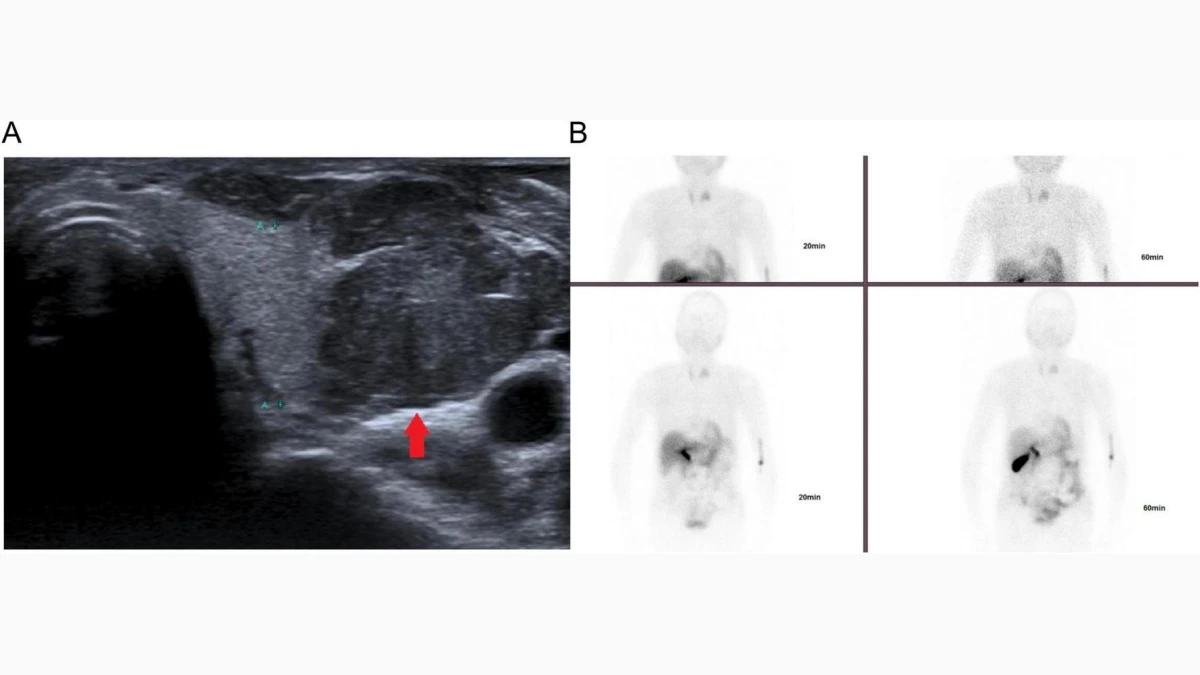
Image source and reuse details
Source: From persistent hypercalcemia to parathyroid carcinoma: a case report of acute urinary retention and the diagnostic role of Ki-67 — Figure 2. Reduced in proportion and centered on the cover. All panels, marks and times remain.
In this guide
What the parathyroid glands do
Most people have four glands about the size of a pea. They sit in the neck near the thyroid. They make parathyroid hormone, also called PTH. It helps the body control calcium in the blood.
A gland can make too much hormone for different reasons. Often this is due to an adenoma, a benign lump. Cancer of these glands is rare. It is also called parathyroid carcinoma. A blood test alone cannot tell it apart from a benign lump.
Source: National Cancer Institute — Parathyroid Cancer Treatment (PDQ®)–Patient Version · National Institute of Diabetes and Digestive and Kidney Diseases — Primary Hyperparathyroidism
How high blood calcium can make you feel
Too much calcium in the blood can cause thirst, frequent urination, tiredness, nausea or constipation. Over time, it can lead to kidney stones or weaker bones. Some people notice a lump in the neck, a hoarse voice that does not go away or trouble swallowing.
Ask a doctor about these changes. They can have many causes. If you know your calcium is high and you become confused, very sleepy or keep vomiting, get help right away. Very high calcium can need urgent treatment.
Source: National Cancer Institute — Parathyroid Cancer Treatment (PDQ®)–Patient Version · Endocrine Society — Hypercalcemia Guideline Resources
Blood tests, scans and tissue tests
The doctor measures calcium and parathyroid hormone. They may also check the kidneys, phosphate and vitamin D. Ultrasound uses sound waves to look at the neck. A nuclear scan uses a tracer to find the overactive gland. Sometimes a CT scan or MRI shows its location more clearly.
Scans can help find the lump. The team decides whether more tests are needed before surgery. When cancer is suspected, a needle sample cannot reliably tell a benign lump from cancer. After surgery, the lab checks the tissue for signs that the cancer has grown into nearby tissue or blood vessels.
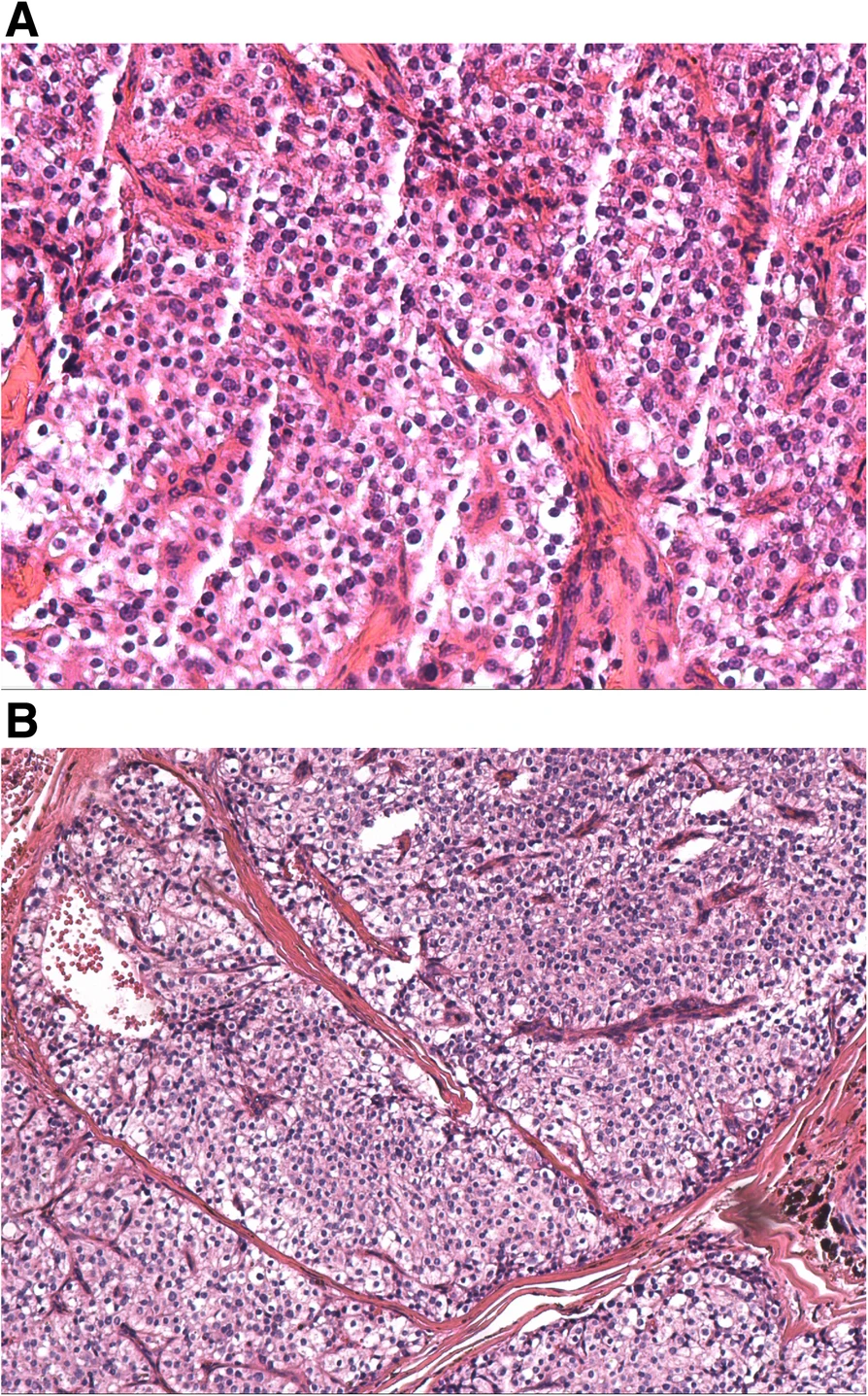
Image source and reuse details
Source: Case report: a camouflaged parathyroid carcinoma with initial misdiagnosis — Figure 2. Proportional reduction. Both panels and their labels are preserved.
Source: European Society for Medical Oncology — Neuroendocrine neoplasms of head and neck, genitourinary and gynaecological systems, unknown primaries, parathyroid carcinomas and intrathyroid thymic neoplasms: ESMO Clinical Practice Guideline for diagnosis, treatment and follow-up · National Institute of Diabetes and Digestive and Kidney Diseases — Primary Hyperparathyroidism · Frontiers in Medicine — From persistent hypercalcemia to parathyroid carcinoma: a case report of acute urinary retention and the diagnostic role of Ki-67 · BMC Surgery — Case report: a camouflaged parathyroid carcinoma with initial misdiagnosis
Surgery and the first checks
Surgery is the main treatment if the cancer can be removed. The surgeon may remove the lump in one piece so it does not break. Nearby tissue may also need removal, such as part of the thyroid. Ask what the operation may mean for your voice and blood calcium.
Blood calcium can drop after surgery. The team checks your blood and decides if you need calcium or vitamin D. Ask who to call if you feel tingling around your mouth, cramps or other new symptoms. Follow the agreed doses and checkups.
Source: European Society for Medical Oncology — Neuroendocrine neoplasms of head and neck, genitourinary and gynaecological systems, unknown primaries, parathyroid carcinomas and intrathyroid thymic neoplasms: ESMO Clinical Practice Guideline for diagnosis, treatment and follow-up · National Cancer Institute — Parathyroid Cancer Treatment (PDQ®)–Health Professional Version · American Thyroid Association — Post Operative Expectations
Long-term checks and family testing
The cancer can come back years later. Ask for a plan for long-term checkups. Blood tests for calcium and parathyroid hormone help the team decide when to repeat scans.
Some people have an inherited change in a gene called CDC73. A gene carries instructions for cells. A genetics specialist can explain whether to get tested and when the result may matter for your family.
Source: European Society for Medical Oncology — Neuroendocrine neoplasms of head and neck, genitourinary and gynaecological systems, unknown primaries, parathyroid carcinomas and intrathyroid thymic neoplasms: ESMO Clinical Practice Guideline for diagnosis, treatment and follow-up · National Cancer Institute — Parathyroid Cancer Treatment (PDQ®)–Health Professional Version · University of Washington, Seattle — CDC73-Related Disorders
When cancer returns or spreads
If the cancer returns in the neck or spreads, the team checks where it is and whether another operation is possible. Sometimes other treatments may be considered for a specific spot. The team also works to control problems caused by high calcium.
Cinacalcet is approved in some countries to lower high blood calcium caused by parathyroid cancer. Lowering calcium can reduce problems caused by high readings. Treatment of the cancer has its own plan. Very high calcium may need hospital treatment.
Source: National Cancer Institute — Parathyroid Cancer Treatment (PDQ®)–Health Professional Version · Endocrine Society — Hypercalcemia Guideline Resources · United States National Library of Medicine — DailyMed: Cinacalcet tablet, film coated · European Medicines Agency — Cinacalcet Accordpharma
What researchers are studying
The United States study NCT04969926 follows people with parathyroid conditions, including this cancer. It gathers information about how those conditions change over time. It is an observational study and does not assign a new treatment.
Studies for a rare cancer may have few places. Ask your center what studies may fit your situation and at which hospitals. The team can explain the tests and visits involved and which treatments you can get now.
Source: United States National Institutes of Health Clinical Center — Natural History Study of Parathyroid Disorders · National Cancer Institute — Parathyroid Cancer Treatment (PDQ®)–Health Professional Version
Food, movement and medicines
Bring a list of your medicines, vitamins and supplements. Ask which foods, drinks and supplements suit your situation. After surgery you may need calcium. At another time, when blood calcium is high, the plan may differ.
If you have had broken bones or kidney problems, ask your team before changing your diet or activity. A dietitian or physical therapist can help you make a plan. Keep the right number for new symptoms handy.
Source: American Thyroid Association — Post Operative Expectations · National Cancer Institute — Popular Diets, Supplements, and Cancer
Where to get care
Look for a center that treats parathyroid conditions and can review your case with an endocrinologist, a doctor who treats hormone problems. If cancer is suspected, ask about experience with this diagnosis and how to get a second opinion.
The directory contains official contact details. You can search by country, city or postal code. For a first contact, have calcium test results, scan reports and any previous surgical pathology report ready.
Find a specialist center for parathyroid cancer →
Source: Fondazione Policlinico Universitario Agostino Gemelli IRCCS — Chirurgia Endocrina e Metabolica · European Society for Medical Oncology — Neuroendocrine neoplasms of head and neck, genitourinary and gynaecological systems, unknown primaries, parathyroid carcinomas and intrathyroid thymic neoplasms: ESMO Clinical Practice Guideline for diagnosis, treatment and follow-up
Questions to take to your appointment
- Is my high calcium coming from a parathyroid gland?
- What tests are still needed?
- Should a specialist center review the tissue removed at surgery?
- What should I know before the operation?
- When should I get calcium and parathyroid hormone checked?
- Should I talk to a specialist about inherited conditions?
Sources and verification
- National Cancer Institute — Parathyroid Cancer Treatment (PDQ®)–Health Professional Version
- National Cancer Institute — Parathyroid Cancer Treatment (PDQ®)–Patient Version
- National Institute of Diabetes and Digestive and Kidney Diseases — Primary Hyperparathyroidism
- European Society for Medical Oncology — Neuroendocrine neoplasms of head and neck, genitourinary and gynaecological systems, unknown primaries, parathyroid carcinomas and intrathyroid thymic neoplasms: ESMO Clinical Practice Guideline for diagnosis, treatment and follow-up
- University of Washington, Seattle — CDC73-Related Disorders
- Endocrine Society — Hypercalcemia Guideline Resources
- United States National Library of Medicine — DailyMed: Cinacalcet tablet, film coated
- European Medicines Agency — Cinacalcet Accordpharma
- American Thyroid Association — Post Operative Expectations
- United States National Institutes of Health Clinical Center — Natural History Study of Parathyroid Disorders
- National Cancer Institute — Popular Diets, Supplements, and Cancer
- Fondazione Policlinico Universitario Agostino Gemelli IRCCS — Chirurgia Endocrina e Metabolica
- Frontiers in Medicine — From persistent hypercalcemia to parathyroid carcinoma: a case report of acute urinary retention and the diagnostic role of Ki-67
- BMC Surgery — Case report: a camouflaged parathyroid carcinoma with initial misdiagnosis
Sources checked: 2026-11-20