


Multiple endocrine neoplasia: MEN1, MEN2 and MEN4 syndromes
Multiple endocrine neoplasia refers to conditions caused by changes in genes. The changes can make lumps or tumors grow in more than one gland. Some are benign. Finding out which type you have helps plan checks for you and, when needed, your family.
MyMedNest editorial guide · Sources checked:
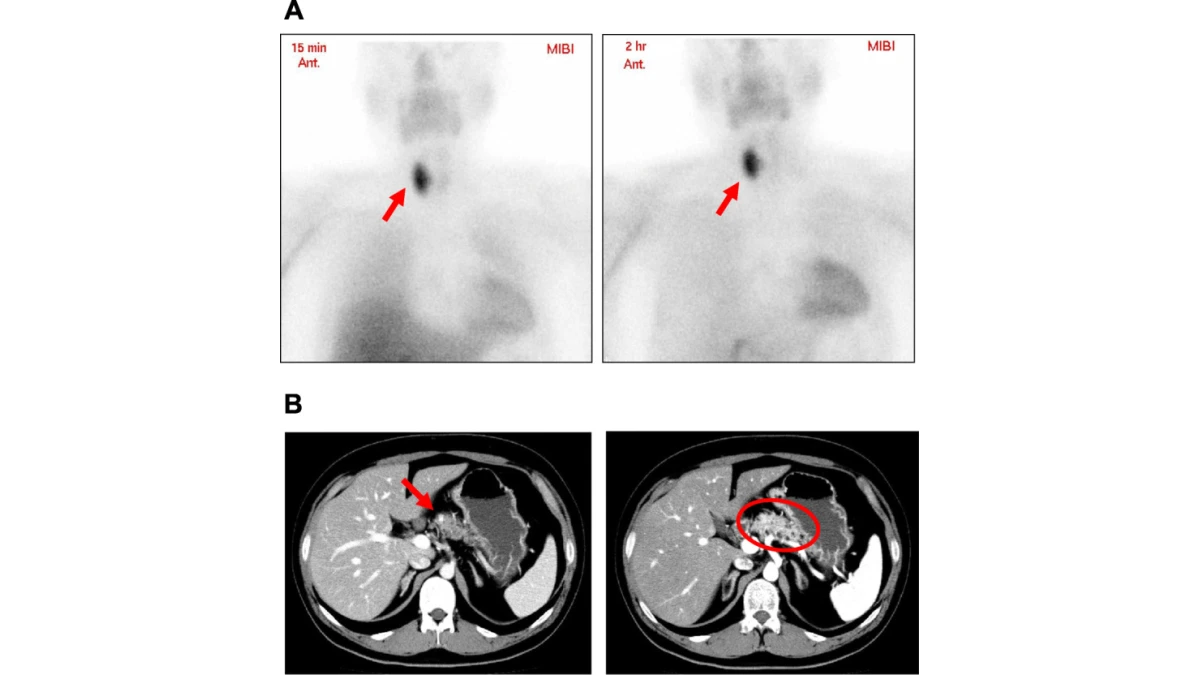
Image source and reuse details
Source: Multiple endocrine neoplasia type 1 with a frameshift mutation in its gene accompanied by a giant cervical lipoma and multiple fatty deposits in the pancreas: case report — Figure 2. Scaled proportionally, framed and converted to WebP. All views and original marks are intact.
In this guide
How the types differ
Endocrine glands make hormones, which are signals that travel in the blood. In multiple endocrine neoplasia type 1, or MEN1, the main areas to check are the parathyroids, which control calcium, the pituitary below the brain and certain cells in the pancreas and the first part of the intestine. MEN1 is also the name of the gene involved.
In MEN2, caused by a disease-causing change in the RET gene, the main risk is medullary thyroid cancer. Adrenal tumors called pheochromocytomas can also occur. Types 2A and 2B carry different risks. MEN4 is very rare. It is linked to the CDKN1B gene and can look like MEN1.
Source: National Cancer Institute — Multiple Endocrine Neoplasia (MEN) Syndromes · National Cancer Institute — Genetics of Endocrine and Neuroendocrine Neoplasias (PDQ®) — Health Professional Version · National Cancer Institute — Multiple Endocrine Neoplasia Type 2 (MEN2) (PDQ®) — Health Professional Version
Signs you might notice
High calcium can cause thirst, tiredness or kidney stones. Some pancreatic tumors make blood sugar fall too low. A tumor that makes extra adrenal hormones can cause episodes of a pounding heart, sweating and headache. Some people have no symptoms and a checkup is the first sign.
These symptoms have many causes. Ask for a medical check if they persist. If someone passes out, has a seizure or cannot respond, call the local emergency service right away.
Source: National Cancer Institute — Genetics of Endocrine and Neuroendocrine Neoplasias (PDQ®) — Health Professional Version · National Cancer Institute — Childhood Multiple Endocrine Neoplasia (MEN) Syndromes Treatment (PDQ®) — Health Professional Version
Genetic testing and other tests
A specialist can review your family history and explain which genes to test. If a change that causes the syndrome is found, it may be useful to talk about it with siblings, children or parents. A parent carrying many of these variants can pass it on with a one-in-two chance for each child. Inheriting the change does not tell you which tumors will develop.
The center uses genetic results with blood tests and scans suited to the type. It may check calcium, blood sugar or hormones. In MEN2, tests can measure calcitonin for the thyroid and metanephrines for the adrenal glands. The image here shows neck scans and a CT of the pancreas from a published MEN1 case.
Source: National Cancer Institute — Genetics of Endocrine and Neuroendocrine Neoplasias (PDQ®) — Health Professional Version · American Association of Clinical Endocrinology — American Association of Clinical Endocrinology Consensus Statement on Management of Multiple Endocrine Neoplasia, Type 1 · National Cancer Institute — Multiple Endocrine Neoplasia Type 2 (MEN2) (PDQ®) — Health Professional Version · BMC Endocrine Disorders — Multiple endocrine neoplasia type 1 with a frameshift mutation in its gene accompanied by a giant cervical lipoma and multiple fatty deposits in the pancreas: case report
How treatment is chosen
Some small changes are watched over time. Others may need surgery or medicine. The team may consider surgery for the parathyroids or medicine to control pituitary hormones. With pancreatic tumors, growth, size and hormone production matter too.
In MEN2, the center decides when to remove the thyroid based on the RET variant, age and test results. It checks for a pheochromocytoma before thyroid surgery. If it finds one, it usually treats it first to reduce the risk of a crisis during surgery. An experienced center should plan the timing.
Source: American Association of Clinical Endocrinology — American Association of Clinical Endocrinology Consensus Statement on Management of Multiple Endocrine Neoplasia, Type 1 · National Cancer Institute — Multiple Endocrine Neoplasia Type 2 (MEN2) (PDQ®) — Health Professional Version · GeneReviews — University of Washington, Seattle — Multiple Endocrine Neoplasia Type 2 · National Cancer Institute — Childhood Multiple Endocrine Neoplasia (MEN) Syndromes Treatment (PDQ®) — Health Professional Version
From research to treatment
The phase 3 LIBRETTO-531 trial compared selpercatinib with cabozantinib or vandetanib in 291 people with advanced medullary thyroid cancer caused by a change in RET. The cancer stayed under control longer on selpercatinib in the study group. The trial applies to this cancer and does not cover every tumor in an endocrine syndrome.
In the United States the medicine is approved for specific cases of advanced or metastatic medullary thyroid cancer, with a RET mutation, when treatment that acts throughout the body is needed, from age two. Eligibility and availability vary by country. Ask your care team which treatments are suitable and whether a trial fits your case.
Source: The New England Journal of Medicine — Phase 3 Trial of Selpercatinib in Advanced RET-Mutant Medullary Thyroid Cancer · United States Food and Drug Administration — Selpercatinib — Approved Labeled Indications
Follow-up for you and your family
Ask for a written plan. The age when checks start and how often they are done depend on the syndrome, gene and previous results. Checks can help while you feel well. For children and teens, ask who will arrange the move to adult services.
Tell the team if your weight changes, you have trouble eating or your blood sugar drops. Bring a list of medicines and supplements. Plan food and activity around the treatment and hormones involved. The team can help you explain genetic results to relatives.
Source: American Association of Clinical Endocrinology — American Association of Clinical Endocrinology Consensus Statement on Management of Multiple Endocrine Neoplasia, Type 1 · National Cancer Institute — Childhood Multiple Endocrine Neoplasia (MEN) Syndromes Treatment (PDQ®) — Health Professional Version · National Cancer Institute — Multiple Endocrine Neoplasia Type 2 (MEN2) (PDQ®) — Health Professional Version
Finding a center
Search by country, city or postal code. Assessment can involve hormone, genetics and endocrine surgery specialists. Careggi in Florence has pathways for inherited endocrine tumors. The university center in Utrecht cares for people with MEN1 and MEN2.
Keep your test results, reports and known family details handy. Ask how to send them securely. For a child, ask how to reach pediatric care and who will discuss the timing of genetic testing with the family.
Find a center for multiple endocrine neoplasia →
Source: Azienda Ospedaliero Universitaria Careggi — Malattie del metabolismo minerale e osseo · Azienda Ospedaliero Universitaria Careggi — Day Service e PACC attivabili in AOU Careggi — iperparatiroidismo e neoplasia endocrina multipla · University Medical Center Utrecht — Endocrinologie · University Medical Center Utrecht — Polikliniek Endocriene Oncologie · Oxford University Hospitals National Health Service Foundation Trust — Genetic testing for endocrine neoplasia (R217)
Questions to take to your appointment
- Which type might I have and which glands need checking?
- Which genetic test could clarify the diagnosis?
- Which relatives should talk to a genetics specialist?
- With MEN2, do my adrenal glands need checking before thyroid surgery?
- Which tests should I have and who will share the results?
- Which symptoms need urgent help?
Sources and verification
- National Cancer Institute — Multiple Endocrine Neoplasia (MEN) Syndromes
- National Cancer Institute — Genetics of Endocrine and Neuroendocrine Neoplasias (PDQ®) — Health Professional Version
- American Association of Clinical Endocrinology — American Association of Clinical Endocrinology Consensus Statement on Management of Multiple Endocrine Neoplasia, Type 1
- National Cancer Institute — Multiple Endocrine Neoplasia Type 2 (MEN2) (PDQ®) — Health Professional Version
- National Cancer Institute — Childhood Multiple Endocrine Neoplasia (MEN) Syndromes Treatment (PDQ®) — Health Professional Version
- GeneReviews — University of Washington, Seattle — Multiple Endocrine Neoplasia Type 2
- The New England Journal of Medicine — Phase 3 Trial of Selpercatinib in Advanced RET-Mutant Medullary Thyroid Cancer
- United States Food and Drug Administration — Selpercatinib — Approved Labeled Indications
- Azienda Ospedaliero Universitaria Careggi — Malattie del metabolismo minerale e osseo
- Azienda Ospedaliero Universitaria Careggi — Day Service e PACC attivabili in AOU Careggi — iperparatiroidismo e neoplasia endocrina multipla
- University Medical Center Utrecht — Endocrinologie
- University Medical Center Utrecht — Polikliniek Endocriene Oncologie
- Oxford University Hospitals National Health Service Foundation Trust — Genetic testing for endocrine neoplasia (R217)
- BMC Endocrine Disorders — Multiple endocrine neoplasia type 1 with a frameshift mutation in its gene accompanied by a giant cervical lipoma and multiple fatty deposits in the pancreas: case report
Sources checked: 2026-11-21