


Metastatic cancer: what it means, tests, treatment and specialist care
When your doctor talks about metastases, ask where the cancer started, where it has spread and what treatment can realistically achieve. A report can use difficult words. Bring the reports you have and ask for a written plan with a number to call if new symptoms develop.
MyMedNest editorial guide · Sources checked:
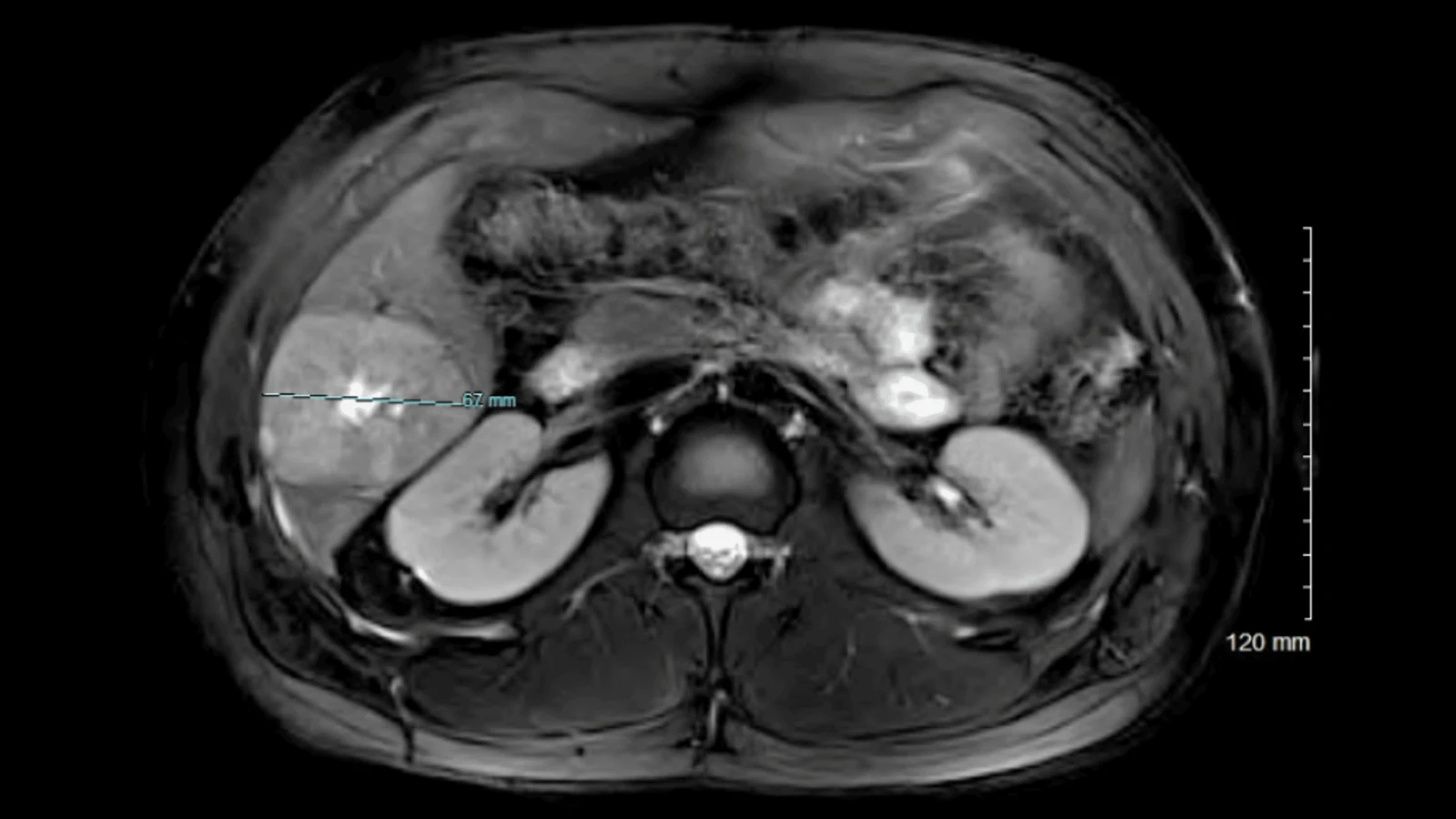
Image source and reuse details
Source: A 21-Year-Old Male With Metastatic Colorectal Cancer: A Case Report and Literature Overview of Early-Onset Colorectal Cancer — Figure 2. Reduced in proportion and framed in WebP. The original measurement and scale are preserved.
In this guide
How metastases form
Some cancer cells can break away, travel and grow in a distant part of the body. These new areas are called metastases. Breast cancer that spreads to the lungs is still breast cancer. Where the cells started helps guide tests and treatment.
For many solid cancers, distant spread is called stage 4. Nearby lymph nodes and cancer that returns close to where it began are assessed separately. If tests find metastases but cannot identify where the cancer started, a team for cancer of unknown primary may help. Some metastatic cancers can be kept under control for years. The outlook depends on the cancer type, where it has spread and how it responds to treatment.
Source: National Cancer Institute — Metastatic Cancer: When Cancer Spreads
Which symptoms to report and when to get help
Symptoms vary with where the cancer has spread. Examples include bone pain and shortness of breath. A scan can sometimes find metastases before they cause symptoms. Tell your team about anything new or getting worse, and when it started.
If you have or have had cancer and develop leg weakness, trouble walking or new trouble controlling urine or bowel movements, get urgent medical help right away. The cancer may be pressing on the spinal cord. Use your team’s emergency contact or the local emergency number if needed.
Source: National Cancer Institute — Metastatic Cancer: When Cancer Spreads · National Institute for Health and Care Excellence — Spinal metastases and metastatic spinal cord compression
Which tests could change the plan
Doctors review your previous reports, blood tests and scans together. A scan with X-rays or magnetic resonance imaging can show where cancer is growing. Sometimes a new biopsy, a small sample of tissue, can check whether an area is a metastasis or look for changes that affect treatment.
Some tests look for biomarkers, features of the cancer cells that can help the team choose a drug. These tests can use tissue or, in some situations, blood. Ask what question the test answers and how decisions will be made if it cannot point to a treatment.
Source: National Cancer Institute — Metastatic Cancer: When Cancer Spreads · National Cancer Institute — Biomarker Testing for Cancer Treatment · Cureus — A 21-Year-Old Male With Metastatic Colorectal Cancer: A Case Report and Literature Overview of Early-Onset Colorectal Cancer
How treatment is chosen
Treatment depends on where the cancer started, how far it has spread, what you have already tried and your health. Chemotherapy, hormone therapy, immunotherapy and targeted drugs can act in more than one part of the body. Radiation or surgery may help with symptoms in one area or help some people with a small number of metastases. Ask how the team will weigh benefits and risks in your case.
In the United States, larotrectinib is approved for some solid tumors with an NTRK gene fusion, which joins parts of genes. The approval specifies several conditions, including no known changes that have developed and make this drug ineffective. It covers cancer that has spread, or where surgery could cause serious harm, when there is no satisfactory alternative or the cancer has grown after treatment.
Source: National Cancer Institute — Metastatic Cancer: When Cancer Spreads · United States Food and Drug Administration — VITRAKVI (larotrectinib) Supplement Approval — NDA 211710/S-010
Research and clinical trials
Clinical trials have rules about who can join. Some compare medicines. Others look at when to use radiation. Ask what phase the trial is in, how many visits it requires, what risks are known and what standard treatment is available.
ComboMATCH, registry number NCT05564377, looks at features of some advanced solid tumors first to see whether a person might qualify for a related clinical trial. This testing does not guarantee access to a study treatment. Ask the center which trials are open and who can join.
Source: National Cancer Institute — Targeted Therapy Directed by Genetic Testing in Treating Patients with Locally Advanced or Advanced Solid Tumors, The ComboMATCH Screening Trial · National Cancer Institute — Stereotactic Ablative Radiotherapy (SABR) for the Treatment of Patients with Metastatic Cancer, ID-COMET Trial
Managing symptoms and daily life
Supportive care can start while you are still having cancer treatment. It can help with pain, tiredness, sleep, appetite and worries. Ask whether there is a palliative care team. If cancer has spread to your bones, ask the team which activities are safe for you.
If you eat very little or are losing weight, ask for a nutrition assessment. Talk to the team before taking vitamins, herbal products or supplements. They can interact with your treatment. You can also ask who can help with travel, work and care at home.
Source: National Cancer Institute — Palliative Care in Cancer · National Cancer Institute — Diets, Supplements, and Cancer · American Society of Clinical Oncology — JCO Oncology Practice — Exercise Recommendation for People With Bone Metastases: Expert Consensus for Health Care Providers and Exercise Professionals
Where to find the right team
Look for a team with experience in the cancer that caused the metastases. For a second opinion, collect your diagnosis, original scans, treatment history and results from tissue or blood tests. Ask how to send the records securely.
Use country, city or postal code to find contacts. Check whether a listing is for a doctor’s referral, an appointment or a second opinion. For urgent problems, use the contact given to you by your team.
Find a center for metastatic cancer →
Source: Istituto Oncologico Veneto — Chirurgia oncologica delle vie digestive · Gustave Roussy — International Department · Memorial Sloan Kettering Cancer Center — Services for International Patients
Questions to take to your appointment
- Where did the cancer start and where has it spread?
- Which tests do I still need and how could they change the plan?
- What can treatment achieve for my type of cancer?
- How will we check whether treatment is working?
- Which symptoms should I report right away and whom should I call?
- Could a second opinion or clinical trial help me?
Sources and verification
- National Cancer Institute — Metastatic Cancer: When Cancer Spreads
- National Institute for Health and Care Excellence — Spinal metastases and metastatic spinal cord compression
- National Cancer Institute — Biomarker Testing for Cancer Treatment
- United States Food and Drug Administration — VITRAKVI (larotrectinib) Supplement Approval — NDA 211710/S-010
- National Cancer Institute — Targeted Therapy Directed by Genetic Testing in Treating Patients with Locally Advanced or Advanced Solid Tumors, The ComboMATCH Screening Trial
- National Cancer Institute — Stereotactic Ablative Radiotherapy (SABR) for the Treatment of Patients with Metastatic Cancer, ID-COMET Trial
- National Cancer Institute — Palliative Care in Cancer
- National Cancer Institute — Diets, Supplements, and Cancer
- American Society of Clinical Oncology — JCO Oncology Practice — Exercise Recommendation for People With Bone Metastases: Expert Consensus for Health Care Providers and Exercise Professionals
- Istituto Oncologico Veneto — Chirurgia oncologica delle vie digestive
- Gustave Roussy — International Department
- Memorial Sloan Kettering Cancer Center — Services for International Patients
- Cureus — A 21-Year-Old Male With Metastatic Colorectal Cancer: A Case Report and Literature Overview of Early-Onset Colorectal Cancer
Sources checked: 2026-11-21