


Melanoma and skin cancer in adults: diagnosis, treatment and specialist centers
The right care starts with the exact type of skin cancer. This guide explains how it is diagnosed, how treatment is chosen and what to ask a specialist.
MyMedNest editorial guide · Sources checked:
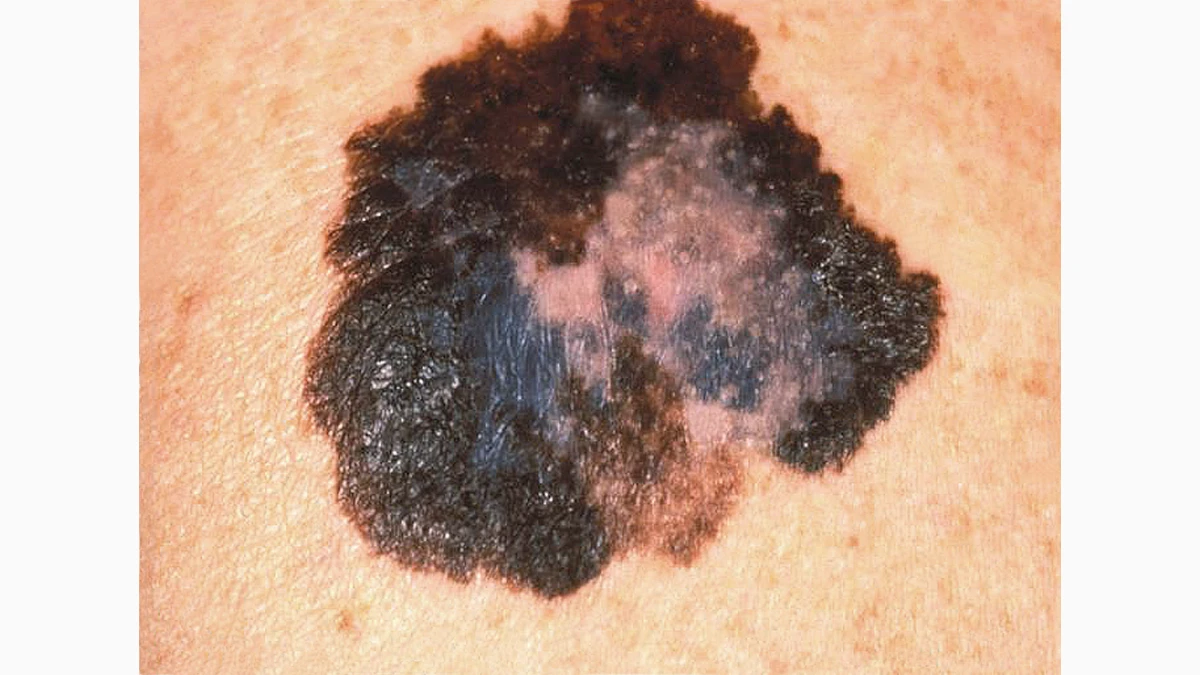
Image source and reuse details
Source: Public Health Image Library — 13404. Reduced in proportion. No clinical detail altered. Neutral side bands for the cover.
In this guide
Three cancers that need different care
Melanoma starts in pigment-making cells. Basal cell carcinoma and cutaneous squamous cell carcinoma start in other cells of the skin. Basal cell cancer usually grows locally. Squamous cell cancer can reach lymph nodes and other sites, especially when it has high-risk features.
This guide is about skin cancer in adults. Melanoma of the eye or the lining of organs follows a different path. Ask exactly which type the sample showed.
Source: National Cancer Institute — Melanoma Treatment (PDQ®)–Health Professional Version · National Cancer Institute — Skin Cancer Treatment (PDQ®)–Health Professional Version
When to have a spot checked
Make an appointment for a new or changing spot, a sore that does not heal, repeated bleeding or a firm lump that grows. Look for an uneven shape, an irregular edge, several colors or a change over time. Small and pale spots can also matter.
Changes can show up on any skin tone, including the palms, soles and under a nail. A new dark stripe or one that widens deserves a check, especially if pigment spreads onto nearby skin. A photo can help record change. A biopsy is what confirms cancer.
Source: National Cancer Institute — Common Moles, Dysplastic Nevi, and Risk of Melanoma · National Cancer Institute — Skin Cancer on Black and Brown Skin · National Cancer Institute — Skin Cancer Treatment (PDQ®)–Health Professional Version
What a skin biopsy and its report can tell you
A clinician may look through a dermatoscope and take a sample. When possible, a suspected melanoma is usually removed in one piece with a narrow border for the first biopsy. Large spots and sensitive sites may need a different sampling plan.
Ask whether the cancer reaches the edges of the sample. In melanoma, ask about Breslow thickness, the depth in millimeters, and ulceration, a break in the surface above the tumor. Those features help decide the next steps. A specialist may review an unclear report.
Source: National Cancer Institute — Melanoma Treatment (PDQ®)–Health Professional Version · National Cancer Institute — Skin Cancer Treatment (PDQ®)–Health Professional Version
When lymph nodes and scans matter
In melanoma without a suspicious node on examination, ask whether a sentinel lymph node biopsy could change care. It samples the first node or nodes that drain the site. The team may discuss it for melanomas at least 0.8 mm thick or selected thinner melanomas with ulceration.
Blood tests and scans depend on stage and symptoms. They are not automatic for every thin melanoma. A positive sentinel node does not automatically mean taking out all the nearby nodes. Ask about follow-up with ultrasound and whether additional treatment is useful.
Source: National Cancer Institute — Melanoma Treatment (PDQ®)–Health Professional Version
Basal cell carcinoma
Many basal cell cancers are treated by removing the lesion. Mohs surgery checks the edges step by step and helps preserve healthy skin when millimeters matter, as near an eye or the nose. Radiation can be an alternative in selected cases.
A prescription cream may fit some superficial lesions if the clinician confirms the type and site are suitable. An advanced cancer that cannot be removed may need a drug that blocks the Hedgehog growth pathway. The team may consider cemiplimab after that treatment or if it is inappropriate, according to the local label.
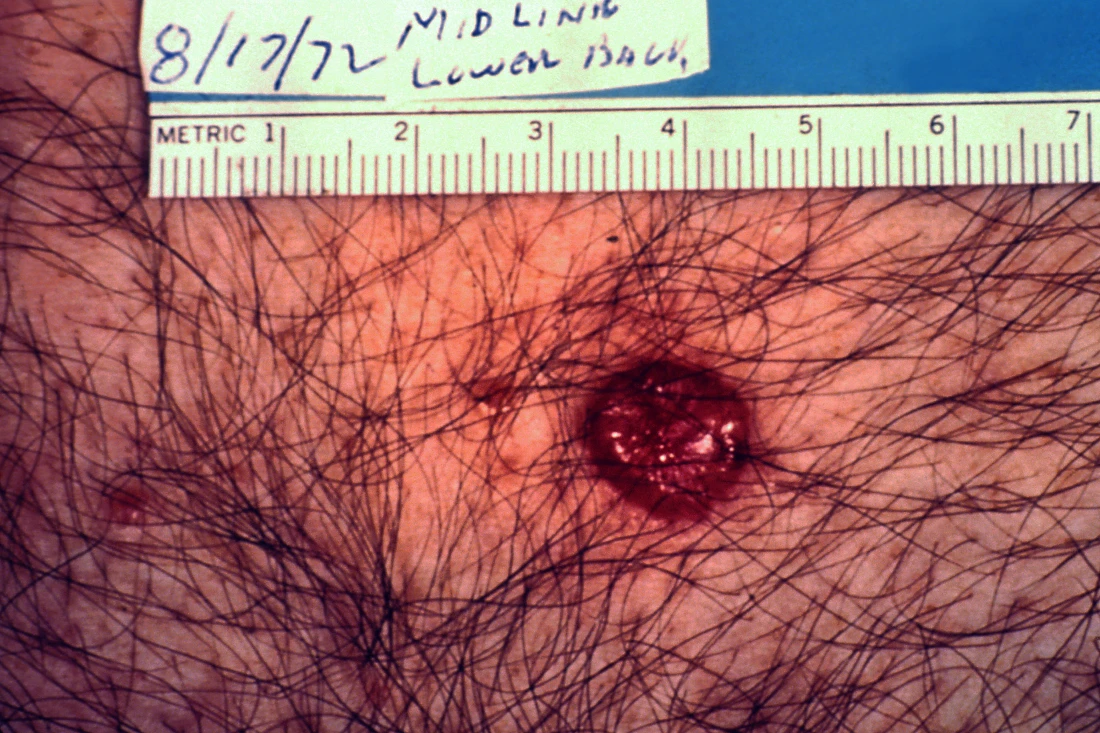
Image source and reuse details
Source: Public Health Image Library — 18404. Reduced in proportion. No clinical detail altered.
Source: National Cancer Institute — Skin Cancer Treatment (PDQ®)–Health Professional Version · European Medicines Agency — Libtayo — European Public Assessment Report
Cutaneous squamous cell carcinoma
Surgery is often the main treatment. Ask whether the location, depth, growth along a nerve or immune suppression place it in a high-risk group. Mohs surgery, radiation or lymph node assessment may be appropriate. Advanced disease can require immunotherapy.
Cemiplimab is authorized in the United States and European Union after surgery and radiation for selected adults at high risk of recurrence. In C-POST, 415 participants were assigned to cemiplimab or placebo. At 24 months an estimated 87.1% versus 64.1% were alive without recurrence. Severe or worse adverse events occurred in 23.9% versus 14.2%. The result applies to the high-risk setting that was studied.
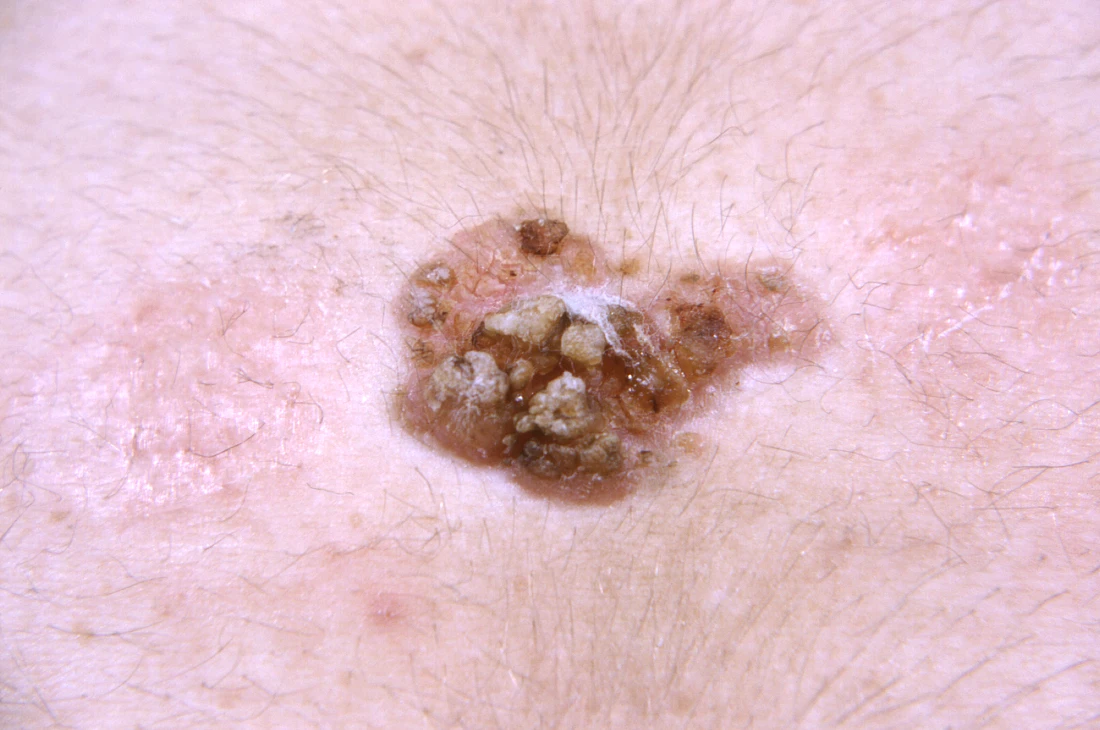
Image source and reuse details
Source: Public Health Image Library — 12181. Reduced in proportion. No clinical detail altered.
Source: National Cancer Institute — Skin Cancer Treatment (PDQ®)–Health Professional Version · New England Journal of Medicine — Adjuvant Cemiplimab or Placebo in High-Risk Cutaneous Squamous-Cell Carcinoma · U.S. Food and Drug Administration — FDA approves cemiplimab-rwlc for adjuvant treatment of cutaneous squamous cell carcinoma · European Medicines Agency — Libtayo — European Public Assessment Report
Melanoma that can be removed
A second operation usually removes a rim of skin around the biopsy site. Its width depends on the melanoma thickness and the site. Some people need only surgery and follow-up. For certain higher-risk stages, the team may discuss a drug after complete resection to lower the chance of recurrence.
Options can include anti-PD-1 immunotherapy such as pembrolizumab or nivolumab. For certain stage III cancers with a BRAF V600 change, a BRAF inhibitor combined with a MEK inhibitor can be another option, depending on the variant and local authorization. Weigh the expected benefit against side effects.
Source: National Cancer Institute — Melanoma Treatment (PDQ®)–Health Professional Version
When melanoma cannot be removed or has spread
The choice depends on whether treatment is urgent, where the cancer has spread, its BRAF V600 result and what has been tried. Anti-PD-1 drugs can be given alone or with other immunotherapy in selected cases. Matching BRAF and MEK inhibitors are an option for eligible BRAF V600 tumors.
Ask about a plan for symptoms, brain metastases if present and immune side effects. New shortness of breath, persistent diarrhea or yellowing of the eyes during immunotherapy should be reported promptly using the oncology team’s instructions.
Source: National Cancer Institute — Melanoma Treatment (PDQ®)–Health Professional Version · National Cancer Institute — Side Effects of Cancer Treatment
Lifileucel and access to cell therapy
Lifileucel uses a patient's own immune cells taken from the tumor and multiplied in a lab. The United States granted accelerated approval for eligible adults after anti-PD-1 treatment and, for BRAF V600-positive melanoma, after a BRAF inhibitor with or without a MEK inhibitor.
In the 73 patients assessed for the regulatory response analysis, 31.5% had tumors shrink enough to count as a response. That figure does not measure a survival benefit. Intensive treatment can cause serious infections, prolonged low blood counts and heart, lung or kidney problems. The European application was withdrawn on July 22, 2025. Ask a specialist about current access and clinical trials in your country.
Source: U.S. Food and Drug Administration — FDA grants accelerated approval to lifileucel for unresectable or metastatic melanoma · European Medicines Agency — Amtagvi — Withdrawal of application for marketing authorisation
What an individual mRNA treatment showed
In the phase 3 INTerpath-001 trial, 1,137 people with fully removed stage IIB to IV cutaneous melanoma received pembrolizumab with either intismeran autogene or placebo. Intismeran is an mRNA treatment designed from features of each person's tumor. At 24 months 82.2% versus 70.0% were alive without recurrence. The median follow-up was 24.6 months.
At 24 months 88.5% versus 80.2% were alive without distant spread. Severe or worse events occurred in 23.6% versus 20.3%. The results concern treatment after surgery. They do not establish longer overall survival or routine access. Check the regulatory status and trial eligibility before making plans.
Source: New England Journal of Medicine — Intismeran Autogene plus Pembrolizumab for Resected Stage IIB to IV Melanoma · ClinicalTrials.gov — A Study of Intismeran Autogene Plus Pembrolizumab Versus Placebo Plus Pembrolizumab in Participants With High-Risk Melanoma (INTerpath-001)
Follow-up and life after treatment
Ask for a follow-up plan that says who checks the skin, scars and lymph nodes, and when. Seek advice if new symptoms appear between visits. Shade, clothing, a hat and broad-spectrum sunscreen help reduce UV exposure. Avoid tanning beds. These measures still matter after a diagnosis.
A balanced diet, movement suited to recovery and support for sleep or stress can help you get through treatment. Ask the team before taking concentrated supplements or herbal products. No food or supplement has been shown to replace treatment for these cancers.
Source: National Cancer Institute — Melanoma Treatment (PDQ®)–Health Professional Version · National Cancer Institute — Sunlight · National Cancer Institute — Cancer Therapy Interactions With Foods and Dietary Supplements (PDQ®)–Patient Version · National Cancer Institute — Side Effects of Cancer Treatment
Finding a specialist team
Look for a team that treats your exact cancer. A local dermatologist can begin the diagnosis and help arrange the referral. For recurrence, a difficult site or advanced disease, ask about joint review by dermatology, surgery, pathology, oncology and radiation specialists.
Start by choosing a country in the directory. You can narrow by city or postal code. Ask what the team needs for a first or second opinion. Have the report, treatment dates and the original slides or scans ready, and request a secure way to share files.
Find a skin cancer specialist center →
Source: Istituto Europeo di Oncologia — Tumori della pelle e melanomi · Gustave Roussy — Cancer de la peau · Melanoma Institute Australia — Referrals to MIA · The University of Texas MD Anderson Cancer Center — Melanoma & Skin Center · Nationales Centrum für Tumorerkrankungen Heidelberg — Hauttumorzentrum · The Royal Marsden National Health Service Foundation Trust — Soft tissue tumour and skin cancer services — GP directory
Questions to take to your appointment
- Which type and stage does my report show?
- Are the margins clear and does the report mention high-risk features?
- Would a sentinel node biopsy or a scan change the plan?
- Should my tumor be tested for BRAF V600?
- What is the benefit of treatment after surgery in my situation?
- Can I get a second opinion or check a clinical trial in my country?
Sources and verification
- National Cancer Institute — Common Moles, Dysplastic Nevi, and Risk of Melanoma
- National Cancer Institute — Skin Cancer on Black and Brown Skin
- National Cancer Institute — Melanoma Treatment (PDQ®)–Health Professional Version
- National Cancer Institute — Skin Cancer Treatment (PDQ®)–Health Professional Version
- National Cancer Institute — Sunlight
- New England Journal of Medicine — Adjuvant Cemiplimab or Placebo in High-Risk Cutaneous Squamous-Cell Carcinoma
- U.S. Food and Drug Administration — FDA approves cemiplimab-rwlc for adjuvant treatment of cutaneous squamous cell carcinoma
- European Medicines Agency — Libtayo — European Public Assessment Report
- U.S. Food and Drug Administration — FDA grants accelerated approval to lifileucel for unresectable or metastatic melanoma
- European Medicines Agency — Amtagvi — Withdrawal of application for marketing authorisation
- New England Journal of Medicine — Intismeran Autogene plus Pembrolizumab for Resected Stage IIB to IV Melanoma
- ClinicalTrials.gov — A Study of Intismeran Autogene Plus Pembrolizumab Versus Placebo Plus Pembrolizumab in Participants With High-Risk Melanoma (INTerpath-001)
- Istituto Europeo di Oncologia — Tumori della pelle e melanomi
- Gustave Roussy — Cancer de la peau
- Melanoma Institute Australia — Referrals to MIA
- National Cancer Institute — Cancer Therapy Interactions With Foods and Dietary Supplements (PDQ®)–Patient Version
- National Cancer Institute — Side Effects of Cancer Treatment
- The University of Texas MD Anderson Cancer Center — Melanoma & Skin Center
- Nationales Centrum für Tumorerkrankungen Heidelberg — Hauttumorzentrum
- The Royal Marsden National Health Service Foundation Trust — Soft tissue tumour and skin cancer services — GP directory
Sources checked: 2026-11-19