


Lymphoma: understand your biopsy and treatment choices
A swollen lymph node does not always mean lymphoma. If a biopsy confirms it, the exact subtype matters more than the word lymphoma alone. This guide explains the main adult pathways, how treatment choices differ and what to ask your team.
MyMedNest editorial guide · Sources checked:
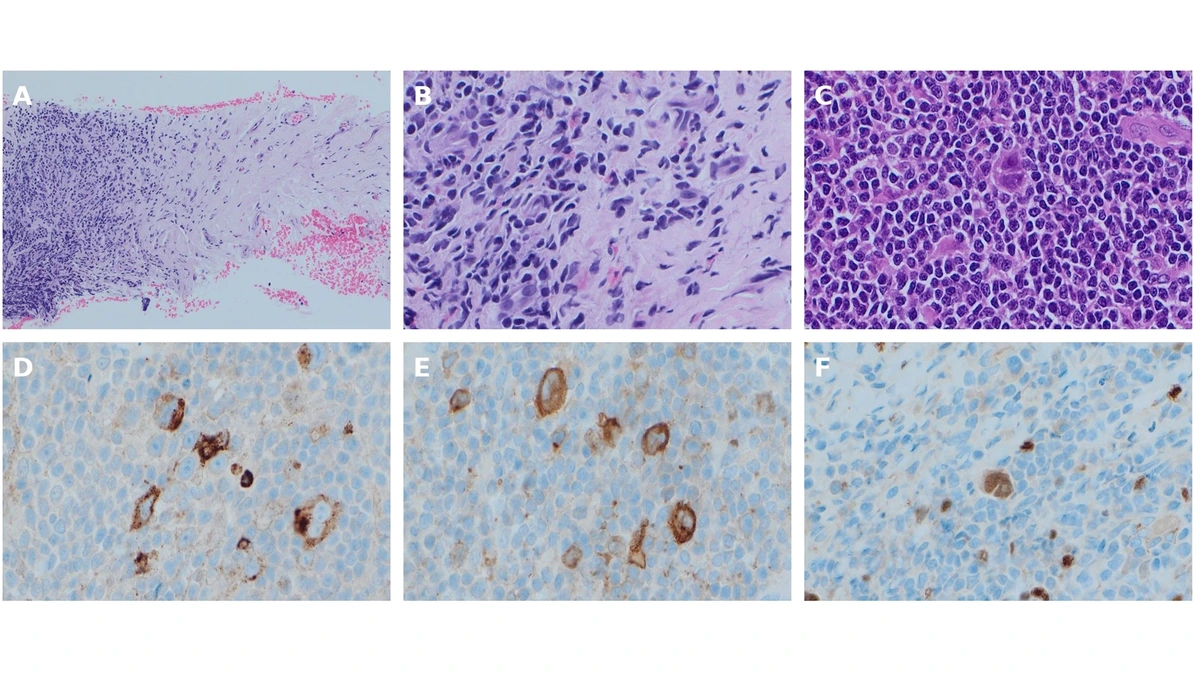
Image source and reuse details
Source: Classical Hodgkin lymphoma presenting with aortic arch encasement and C7–T1 neural foraminal extension: a rare case report — Figures 1 and 2 — Figure 1. Whole original proportionally reduced to 1200 × 538 inside a 1200 × 675 white frame. All panels and original labels retained. No clinical crop, recoloring, retouching or enlargement.
In this guide
The full diagnosis is the starting point
Lymphomas develop from lymphocytes, cells of the immune system. They can affect lymph nodes and organs outside them. The main groups are Hodgkin lymphoma and non-Hodgkin lymphomas, which include many B-cell, T-cell and natural killer-cell diseases. They do not all behave alike.
Indolent means usually slow-growing; aggressive means faster-growing. These words do not determine whether a particular person can be cured. Some aggressive lymphomas are highly treatable, while some slow forms need long-term management. Ask for the complete pathology name, not just a general label such as lymphatic cancer.
Source: National Cancer Institute — United States — Lymphoma—Patient Version · National Cancer Institute — United States — Hodgkin Lymphoma Treatment (PDQ®)–Patient Version · National Cancer Institute — United States — Non-Hodgkin Lymphoma Treatment (PDQ®)–Patient Version
Symptoms need assessment, not self-diagnosis
A persistent or enlarging lump in the neck, armpit or groin, unexplained tiredness, itching, fever, drenching night sweats or weight loss deserves assessment. Infection is a common cause of swollen nodes. Symptoms alone cannot distinguish a lymphoma from other conditions or identify its subtype.
Some infections, immune disorders and immunosuppressive treatments increase the risk of particular lymphomas; an individual case often has no single clear cause. Epstein–Barr virus, HIV or Helicobacter pylori are relevant only in specific contexts. Finding a lymphoma is not proof of something you did wrong, and its treatment is not an infection treatment in every case.
Source: National Cancer Institute — United States — Hodgkin Lymphoma Treatment (PDQ®)–Patient Version · National Cancer Institute — United States — Non-Hodgkin Lymphoma Treatment (PDQ®)–Patient Version
When to seek urgent help
Severe breathlessness, new swelling of the face or neck with breathing problems, confusion, major bleeding or rapidly worsening illness needs urgent care. New limb weakness, difficulty walking or loss of bladder or bowel control can signal pressure on nerves or the spinal cord and needs emergency assessment.
During treatment, a temperature of 38 °C or higher requires immediate contact with your team; use a lower threshold if your center gave one. Do not wait for a scheduled appointment. Fast-growing disease such as Burkitt lymphoma can need rapid hospital care, while a different subtype may safely follow a planned outpatient pathway.
Source: National Cancer Institute — United States — Hodgkin Lymphoma Treatment (PDQ®)–Patient Version · National Cancer Institute — United States — Non-Hodgkin Lymphoma Treatment (PDQ®)–Patient Version · National Cancer Institute — United States — Infection and Neutropenia during Cancer Treatment
Why an adequate biopsy matters
A biopsy provides tissue so a pathologist can examine cells and their arrangement. Removing a whole accessible node often gives useful information. A larger needle core may be chosen when surgery is unsuitable or risky. A very small sample does not always provide enough tissue for a reliable classification.
If a core biopsy is inconclusive, a surgical biopsy may be needed when feasible. Ask whether a specialist hematopathologist has reviewed the sample and whether enough tissue remains for further tests. Blood tests, an ultrasound or a scan can support assessment but do not usually replace tissue diagnosis.
Source: National Institute for Health and Care Excellence — United Kingdom — Non-Hodgkin lymphoma: diagnosis and management — recommendations, including June 2026 amendment · National Health Service — United Kingdom — Tests and next steps for non-Hodgkin lymphoma · National Cancer Institute — United States — Aggressive B-Cell Non-Hodgkin Lymphoma Treatment (PDQ®)–Health Professional Version
What the pathology report should clarify
The report combines appearance with markers, such as CD20 in many B-cell lymphomas or CD30 in selected diseases. Flow cytometry, immunohistochemistry and selected genetic tests help distinguish look-alike conditions. A marker alone is not a diagnosis or an automatic reason to prescribe its matching drug.
In some large B-cell lymphomas, tests for MYC, BCL2 and sometimes BCL6 rearrangements influence classification and planning. Double-expressor and double-hit describe different findings: increased protein expression is not the same as a gene rearrangement. Ask the team to explain the actual result and whether a specialist second review would change care.
Source: National Cancer Institute — United States — Aggressive B-Cell Non-Hodgkin Lymphoma Treatment (PDQ®)–Health Professional Version · National Cancer Institute — United States — Peripheral T-Cell Non-Hodgkin Lymphoma Treatment (PDQ®)–Health Professional Version · National Cancer Institute — United States — Hodgkin Lymphoma Treatment (PDQ®)–Health Professional Version
Stage describes distribution, not a personal verdict
Lymphomas are commonly described using stages I–IV, considering affected areas, whether they lie above or below the diaphragm and organ involvement. Stage IV does not automatically mean terminal illness. Subtype, symptoms, bulk, blood results and response also affect the outlook and treatment goal.
B symptoms can include unexplained fever above 38 °C, drenching night sweats or loss of more than 10% of body weight in 6 months; they do not all have to occur together. PET/CT is useful for selected lymphomas, but uptake can also reflect inflammation. A marrow biopsy is used when it could clarify diagnosis or change management, not automatically for everyone.
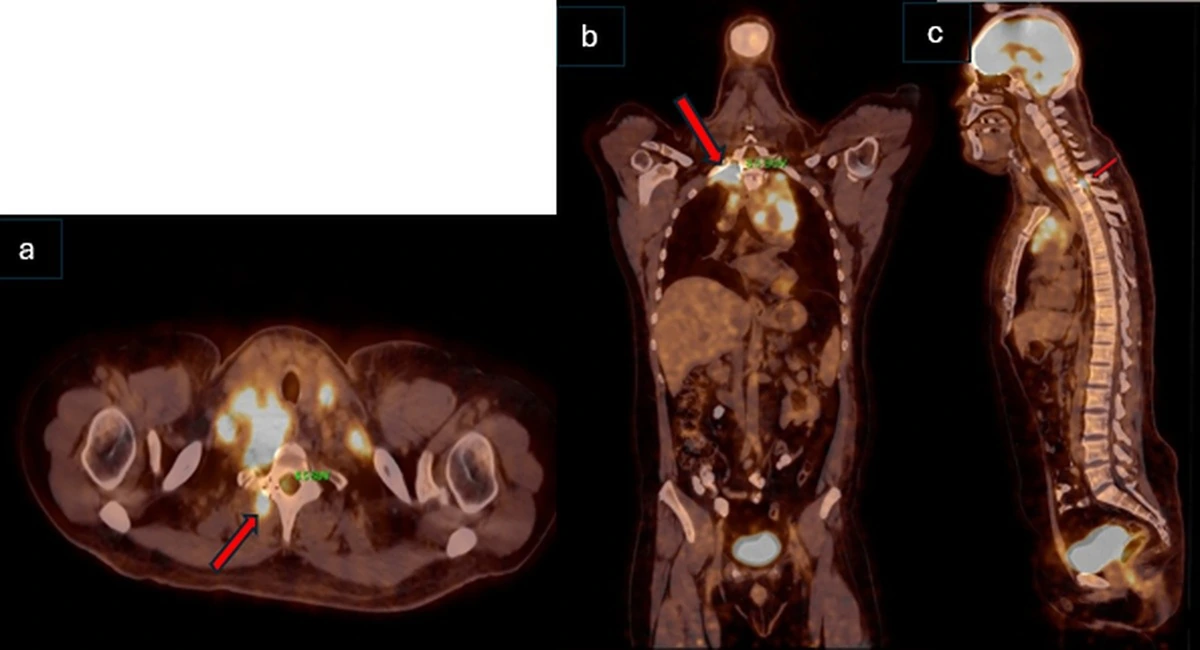
Image source and reuse details
Source: Classical Hodgkin lymphoma presenting with aortic arch encasement and C7–T1 neural foraminal extension: a rare case report — Figures 1 and 2 — Figure 2. Whole original proportionally reduced to 1200 × 650 and converted to WebP. Original whitespace, panels, arrows and labels retained. No diagnostic alteration, crop or enlargement.
Source: National Cancer Institute — United States — Hodgkin Lymphoma Treatment (PDQ®)–Health Professional Version · National Cancer Institute — United States — Aggressive B-Cell Non-Hodgkin Lymphoma Treatment (PDQ®)–Health Professional Version · National Institute for Health and Care Excellence — United Kingdom — Non-Hodgkin lymphoma: diagnosis and management — recommendations, including June 2026 amendment
Checks before treatment starts
The team reviews blood counts, kidney and liver function, current medicines and relevant infections, including hepatitis B, hepatitis C and HIV. Some treatments can reactivate an old hepatitis B infection, so preventive treatment or monitoring may be needed. Tell the team about previous infections even if they were treated years ago.
Heart or lung tests may be needed for the planned drugs. Discuss fertility, pregnancy possibility, vaccines, transport and who to call outside office hours. Bring all prescriptions, supplements and previous treatment records. Test results help adapt treatment safely; they are not a reason to change or delay urgent care on your own.
Source: National Cancer Institute — United States — Non-Hodgkin Lymphoma Treatment (PDQ®)–Patient Version · National Cancer Institute — United States — Infection and Neutropenia during Cancer Treatment · National Cancer Institute — United States — Male Fertility and Cancer Treatment · National Cancer Institute — United States — Female Fertility and Cancer Treatment
Classical Hodgkin lymphoma has its own pathway
Classical Hodgkin lymphoma is identified through a combination of tissue features, including characteristic Reed–Sternberg cells and supporting markers. Treatment can aim at cure. The plan depends on stage, risk, fitness and response, with chemotherapy and sometimes focused radiotherapy rather than one program for everyone.
Regimens include combinations such as ABVD or AVD in appropriate settings. AVD contains doxorubicin, vinblastine and dacarbazine; ABVD also contains bleomycin. PET-adapted changes depend on the protocol and specialist interpretation. Nodular lymphocyte-predominant disease is a distinct B-cell entity and should not automatically receive the same plan as classical Hodgkin lymphoma.
A verified change in first-line Hodgkin treatment
On March 20, 2026, the United States Food and Drug Administration approved nivolumab with AVD for adults and patients aged 12 years or older with previously untreated stage III or IV classical Hodgkin lymphoma. This is a precise indication, not an approval for every stage, every age or every lymphoma.
Nivolumab releases a brake on immune cells. It can also cause immune inflammation in healthy organs, so new symptoms need assessment. Other Hodgkin pathways may use brentuximab vedotin or different regimens. The team must check the local label, funding and your eligibility; a United States decision alone does not establish access in another country.
Source: Food and Drug Administration — United States — FDA approves nivolumab with chemotherapy for previously untreated Hodgkin lymphoma — March 20, 2026 · National Cancer Institute — United States — Hodgkin Lymphoma Treatment (PDQ®)–Health Professional Version
Diffuse large B-cell lymphoma: prompt treatment can aim at cure
Diffuse large B-cell lymphoma (DLBCL) is a common aggressive lymphoma. Treatment often uses an anti-CD20 antibody with chemotherapy, for example R-CHOP or, in selected settings, a polatuzumab-based combination such as pola-R-CHP. Genetic findings, fitness and the exact diagnosis influence the choice.
R-CHOP combines rituximab, cyclophosphamide, doxorubicin, vincristine and prednisone. This is an explanation, not a prescription or a universal schedule. Some mediastinal, high-grade or central nervous system forms need a different approach. Even advanced-stage DLBCL may be treated with curative intent; stage alone cannot predict an individual's result.
Slow-growing lymphomas: observation is sometimes an option
Some people with low-burden follicular or marginal zone lymphoma and no troublesome symptoms can be actively monitored. This means planned visits and clear triggers for reassessment, not neglect. Earlier antibody treatment may also be discussed in appropriate settings; observation is not the only valid approach in every guideline or country.
Localized disease may sometimes receive radiotherapy with curative intent. When systemic treatment is needed, anti-CD20 antibodies alone or in combinations are among the options. Many advanced indolent forms need long-term control rather than a promise of permanent cure. New rapid growth or a different pattern of symptoms may require another biopsy to look for transformation.
Source: National Cancer Institute — United States — Indolent B-Cell Non-Hodgkin Lymphoma Treatment (PDQ®)–Health Professional Version · National Institute for Health and Care Excellence — United Kingdom — Non-Hodgkin lymphoma: diagnosis and management — recommendations, including June 2026 amendment
Mantle cell and Burkitt lymphoma are different diseases
Mantle cell lymphoma has its own tissue and molecular features, often involving cyclin D1 or CCND1. Treatment may include antibody-based combinations, selected Bruton tyrosine kinase inhibitors or other approaches, according to the setting. Some carefully selected slow presentations can be monitored; others need treatment.
Burkitt lymphoma can grow very rapidly and generally needs an urgent specialist plan, with attention to the nervous system and tumor lysis. It should not be treated as an ordinary slow-growing B-cell lymphoma. The full diagnosis and the service's experience matter more than choosing a regimen because it helped someone with another lymphoma.
Source: National Cancer Institute — United States — Non-Hodgkin Lymphoma Treatment (PDQ®)–Patient Version · National Cancer Institute — United States — Aggressive B-Cell Non-Hodgkin Lymphoma Treatment (PDQ®)–Health Professional Version
T-cell and natural killer-cell lymphomas need specific expertise
Peripheral T-cell and natural killer-cell lymphomas comprise different conditions with different drug sensitivities. They are not automatically treated with the same B-cell antibody combinations. A precise tissue review, including relevant viral and molecular tests, can be especially important in an uncommon subtype.
For selected CD30-positive diseases, such as systemic anaplastic large cell lymphoma, a brentuximab vedotin-containing combination may be relevant. Other T-cell or natural killer-cell forms need different protocols, sometimes with radiotherapy or transplant strategies. Ask which subtype-specific evidence supports the plan and whether a clinical trial is appropriate.
Skin, stomach, brain and HIV-related pathways
Cutaneous lymphomas can begin in the skin and need dermatology and hematology expertise. Primary central nervous system lymphoma requires a treatment able to reach the nervous system, often based on high-dose methotrexate in an appropriate protocol; routine systemic lymphoma treatment cannot simply be substituted.
In selected gastric MALT lymphoma, treating Helicobacter pylori can be part of the lymphoma plan, with endoscopic follow-up; this does not apply to every gastric lymphoma. HIV-associated disease needs coordinated lymphoma and antiviral care. Children and pregnant patients require dedicated assessment rather than direct use of this adult overview.
Source: National Cancer Institute — United States — Mycosis Fungoides (Including Sézary Syndrome) Treatment (PDQ®)–Patient Version · National Cancer Institute — United States — Primary CNS Lymphoma Treatment (PDQ®)–Health Professional Version · National Cancer Institute — United States — Indolent B-Cell Non-Hodgkin Lymphoma Treatment (PDQ®)–Health Professional Version · National Cancer Institute — United States — Non-Hodgkin Lymphoma Treatment (PDQ®)–Patient Version
A suspected relapse should be confirmed when appropriate
An enlarged node or a positive scan after treatment is not automatically a relapse. Inflammation and other conditions can look similar. The team may recommend repeat tissue sampling, especially if the disease behaves differently or transformation would change the treatment.
Options depend on subtype, previous medicines, how long the response lasted, fitness and current targets. They can include different drug combinations, antibodies, cellular therapy, transplant or a trial. Do not assume that a treatment used for an early relapse is the same as one used after a long remission.
Source: National Cancer Institute — United States — Aggressive B-Cell Non-Hodgkin Lymphoma Treatment (PDQ®)–Health Professional Version · National Cancer Institute — United States — Indolent B-Cell Non-Hodgkin Lymphoma Treatment (PDQ®)–Health Professional Version · National Cancer Institute — United States — Hodgkin Lymphoma Treatment (PDQ®)–Health Professional Version
Bispecific antibodies and CAR T-cell treatment
Some bispecific antibodies connect an immune cell with a lymphoma cell through different targets. CAR T-cell therapy modifies immune cells to recognize a target, often CD19 in selected B-cell lymphomas. Eligibility depends on subtype, prior therapy, product and national rules, not only on finding a target in a report.
These treatments can cause cytokine-release syndrome, neurological problems, low blood counts and serious infections. They require an experienced team, monitoring and a plan for urgent symptoms. A response does not guarantee cure, and these options are not interchangeable with each other or available for every lymphoma.
Source: National Cancer Institute — United States — CAR T Cells: Engineering Patients’ Immune Cells to Treat Their Cancers · National Cancer Institute — United States — Aggressive B-Cell Non-Hodgkin Lymphoma Treatment (PDQ®)–Health Professional Version · National Cancer Institute — United States — Indolent B-Cell Non-Hodgkin Lymphoma Treatment (PDQ®)–Health Professional Version
Autologous and donor transplants have different roles
An autologous transplant returns a person's own stored blood-forming stem cells after high-dose treatment. An allogeneic transplant uses a donor's cells and has different benefits and risks. Neither is routine for every newly diagnosed lymphoma, and neither is the same procedure as CAR T-cell therapy.
Ask why transplant is being considered, what alternatives exist and how response, age and other illnesses affect eligibility. Risks can include severe infection, organ injury and infertility; donor transplantation also carries graft-versus-host disease risk. Travel, caregiver support, costs and follow-up near the transplant center need planning.
Source: National Cancer Institute — United States — Stem Cell Transplants in Cancer Treatment · National Cancer Institute — United States — Aggressive B-Cell Non-Hodgkin Lymphoma Treatment (PDQ®)–Health Professional Version · National Cancer Institute — United States — Hodgkin Lymphoma Treatment (PDQ®)–Health Professional Version
Infections and side effects need a practical plan
Treatment can lower normal blood cells and may require preventive medicines or transfusions. Tumor lysis happens when many cells break down, potentially affecting kidneys and blood chemistry; risk can be high with rapidly growing or bulky disease. Hydration, medicines and blood tests are arranged by the team, not replaced by home remedies.
Ask about fever, breathing problems, bleeding, nerve symptoms and reactions during infusions. Bleomycin can affect lungs; anthracyclines can affect the heart; immune therapies have their own risks. Report new symptoms promptly and check interactions before adding medicines or supplements. The directory below is not an emergency service.
Source: National Cancer Institute — United States — Infection and Neutropenia during Cancer Treatment · National Cancer Institute — United States — Hodgkin Lymphoma Treatment (PDQ®)–Health Professional Version · National Cancer Institute — United States — CAR T Cells: Engineering Patients’ Immune Cells to Treat Their Cancers
Fertility, pregnancy and family plans
Before treatment, discuss whether sperm, eggs or embryos can be preserved without an unsafe delay. Some drugs, radiotherapy fields and transplant conditioning can affect fertility. If pregnancy is possible or already present, tell the team immediately: timing, investigations and treatments need a separate specialist discussion.
Contraception, sexual health and safe timing for future pregnancy depend on the actual therapy. Physical changes, worry and fatigue can affect relationships and work. Ask for practical psychological or social support. Do not postpone urgent lymphoma treatment independently while arranging a fertility appointment.
Source: National Cancer Institute — United States — Male Fertility and Cancer Treatment · National Cancer Institute — United States — Female Fertility and Cancer Treatment
Food, movement and supplements
No food or supplement has been shown to replace lymphoma treatment. A dietitian can help with weight loss, nausea, mouth pain or difficulty eating. During periods of reduced immunity, follow the team's food-safety advice. Restrictive anticancer diets can make it harder to maintain strength.
Adapt activity to your symptoms, blood counts and treatment; gentle movement may be appropriate when strenuous exercise is not. Ask about vaccinations and contact with people who are ill. Have herbal products, vitamins and over-the-counter medicines checked for interactions. Natural does not mean safe or proven to treat lymphoma.
Source: National Cancer Institute — United States — Nutrition During Cancer Treatment · National Cancer Institute — United States — Complementary and Alternative Medicine · National Cancer Institute — United States — Infection and Neutropenia during Cancer Treatment
Research can change care, but a trial date is not a promise
The National Cancer Institute-sponsored S1826 study, NCT03907488, compared nivolumab-AVD with brentuximab vedotin-AVD in a randomized, open-label phase 3 trial with 994 participants. It helped inform the United States Hodgkin approval described above. Its primary outcome measured progression-free survival, not a guarantee of cure for an individual. The paper reports public funding and additional support from Bristol Myers Squibb, with drug supplied by Seagen in Canada.
The registry update of November 13, 2026, says active, not recruiting. The estimated completion on March 28, 2027, is not a new approval date. Other studies test combinations, biomarkers and ways to reduce toxicity. Ask about eligibility, alternatives, uncertain benefit, travel, funding and consent; a research result or recruitment label does not guarantee local access.
Source: Food and Drug Administration — United States — FDA approves nivolumab with chemotherapy for previously untreated Hodgkin lymphoma — March 20, 2026 · United States National Library of Medicine — ClinicalTrials.gov — NCT03907488 — S1826 trial; registry updated November 13, 2026 · Alex F. Herrera and colleagues — The New England Journal of Medicine — Nivolumab-AVD in Advanced Stage Classic Hodgkin Lymphoma — original trial report, 2024 · SWOG Cancer Research Network — United States — S1826 Data Confirm Nivo-AVD Benefit in Hodgkin Lymphoma — trial network funding statement · National Cancer Institute — United States — Who Pays for Clinical Trials?
Choose expertise for the exact lymphoma
A useful service offers specialist pathology, subtype-specific treatment and reliable support for complications. Cellular therapy or transplant requires the relevant program. A famous institution is not automatically the best fit for every person; timely local care and coordination can be crucial, especially for rapidly growing disease.
Bring biopsy reports, slides or tissue blocks if requested, scan images, blood results and treatment summaries. The contacts below are selected documented pathways, not every center worldwide. Confirm referral, pediatric eligibility, language support, costs and secure records transfer. A country filter does not calculate distance from a postal code.
Documented lymphoma and hematology services →
Source: Fondazione IRCCS Istituto Nazionale dei Tumori — Italy — Ematologia — adult hematology service and outpatient contacts · Universitätsspital Zürich — Switzerland — Lymphoma treatment — documented service and physician referral contacts · The University of Texas MD Anderson Cancer Center — United States — Lymphoma and Myeloma Center — documented clinical service · The University of Texas MD Anderson Cancer Center — United States — International Referrals — international appointment contact · Nationales Centrum für Tumorerkrankungen Heidelberg — Germany — Lymphome — specialist clinic appointment office
Discuss the goal of care in plain language
Ask whether treatment aims at cure, long-term control, preparation for another treatment or relief of symptoms. These goals can differ between lymphoma subtypes and between stages of a person's care. A survival figure for another population is not a personal forecast.
A difficult or resistant lymphoma can still have options, but no experimental therapy guarantees benefit. Supportive and palliative care can address pain, fatigue, worry and family needs alongside active treatment. Ask what improvement would count as success, what risks are acceptable to you and when the team would reconsider the plan.
Source: National Cancer Institute — United States — Hodgkin Lymphoma Treatment (PDQ®)–Patient Version · National Cancer Institute — United States — Aggressive B-Cell Non-Hodgkin Lymphoma Treatment (PDQ®)–Health Professional Version · National Cancer Institute — United States — Indolent B-Cell Non-Hodgkin Lymphoma Treatment (PDQ®)–Health Professional Version · National Cancer Institute — United States — Palliative Care in Cancer
After treatment: response, late effects and new symptoms
Follow-up reviews symptoms, examination and tests appropriate to the subtype and treatment. PET/CT is not automatically needed at every visit; unnecessary scans can create false alarms and exposure. Ask what schedule applies, who checks results and what symptoms should prompt contact before the next appointment.
Long-term care can address heart, lung, thyroid, fertility, infection and emotional effects, as well as other cancer risks related to previous treatment. Keep your treatment summary and any screening plan tailored to it. Children and young adults need age-appropriate follow-up. New symptoms deserve assessment even after earlier reassuring results.
Source: National Cancer Institute — United States — Hodgkin Lymphoma Treatment (PDQ®)–Health Professional Version · National Institute for Health and Care Excellence — United Kingdom — Non-Hodgkin lymphoma: diagnosis and management — recommendations, including June 2026 amendment
Questions to take to your appointment
- Does a swollen lymph node always mean lymphoma? No. Infections and many other conditions can enlarge nodes. A persistent or growing lump deserves assessment; a biopsy may be needed if lymphoma is suspected.
- Does stage IV mean there is no chance of cure? No. Stage describes distribution. Some advanced lymphomas can still be treated with curative intent; the subtype and response are essential.
- Why might I need another biopsy? The first sample may be insufficient, or a new sample may clarify suspected relapse or transformation. The team weighs benefit and procedure risk.
- Is observation the same as doing nothing? No. In selected slow-growing lymphomas it means planned monitoring and clear treatment triggers. It is not appropriate for every subtype or situation.
- Can I receive CAR T cells because my report says CD19? Not automatically. The exact lymphoma, prior therapy, medical fitness, product indication and local access rules all need review.
- Are the listed hospital contacts emergency numbers? No. They are selected institutional appointment or referral contacts. Use your local emergency system or the urgent line given by your treatment team.
Sources and verification
- National Cancer Institute — United States — Lymphoma—Patient Version
- National Cancer Institute — United States — Hodgkin Lymphoma Treatment (PDQ®)–Patient Version
- National Cancer Institute — United States — Non-Hodgkin Lymphoma Treatment (PDQ®)–Patient Version
- National Cancer Institute — United States — Hodgkin Lymphoma Treatment (PDQ®)–Health Professional Version
- National Cancer Institute — United States — Indolent B-Cell Non-Hodgkin Lymphoma Treatment (PDQ®)–Health Professional Version
- National Cancer Institute — United States — Aggressive B-Cell Non-Hodgkin Lymphoma Treatment (PDQ®)–Health Professional Version
- Food and Drug Administration — United States — FDA approves nivolumab with chemotherapy for previously untreated Hodgkin lymphoma — March 20, 2026
- Raghad Waheed Khanfar and colleagues — Frontiers in Hematology — Classical Hodgkin lymphoma presenting with aortic arch encasement and C7–T1 neural foraminal extension: a rare case report — Figures 1 and 2
- Universitätsspital Zürich — Switzerland — Lymphoma treatment — documented service and physician referral contacts
- Nationales Centrum für Tumorerkrankungen Heidelberg — Germany — Lymphome — specialist clinic appointment office
- Fondazione IRCCS Istituto Nazionale dei Tumori — Italy — Ematologia — adult hematology service and outpatient contacts
- The University of Texas MD Anderson Cancer Center — United States — Lymphoma and Myeloma Center — documented clinical service
- National Institute for Health and Care Excellence — United Kingdom — Non-Hodgkin lymphoma: diagnosis and management — recommendations, including June 2026 amendment
- National Health Service — United Kingdom — Tests and next steps for non-Hodgkin lymphoma
- National Cancer Institute — United States — Peripheral T-Cell Non-Hodgkin Lymphoma Treatment (PDQ®)–Health Professional Version
- National Cancer Institute — United States — Primary CNS Lymphoma Treatment (PDQ®)–Patient Version
- National Cancer Institute — United States — Mycosis Fungoides (Including Sézary Syndrome) Treatment (PDQ®)–Patient Version
- United States National Library of Medicine — ClinicalTrials.gov — NCT03907488 — S1826 trial; registry updated November 13, 2026
- National Cancer Institute — United States — Primary CNS Lymphoma Treatment (PDQ®)–Health Professional Version
- Alex F. Herrera and colleagues — The New England Journal of Medicine — Nivolumab-AVD in Advanced Stage Classic Hodgkin Lymphoma — original trial report, 2024
- SWOG Cancer Research Network — United States — S1826 Data Confirm Nivo-AVD Benefit in Hodgkin Lymphoma — trial network funding statement
- The University of Texas MD Anderson Cancer Center — United States — International Referrals — international appointment contact
- National Cancer Institute — United States — CAR T Cells: Engineering Patients’ Immune Cells to Treat Their Cancers
- National Cancer Institute — United States — Female Fertility and Cancer Treatment
- National Cancer Institute — United States — Stem Cell Transplants in Cancer Treatment
- National Cancer Institute — United States — Palliative Care in Cancer
- National Cancer Institute — United States — Male Fertility and Cancer Treatment
- National Cancer Institute — United States — Infection and Neutropenia during Cancer Treatment
- National Cancer Institute — United States — Nutrition During Cancer Treatment
- National Cancer Institute — United States — Complementary and Alternative Medicine
- National Cancer Institute — United States — Who Pays for Clinical Trials?
Sources checked: 2026-11-19