


Liver and bile duct cancer: tests, treatments and specialist care
A tumour in the liver is not a single diagnosis. Hepatocellular carcinoma, bile duct cancer and cancer that has spread from another organ have different treatment pathways. Start with the exact diagnosis, how far it has spread and how well the liver still works.
MyMedNest editorial guide · Sources checked:
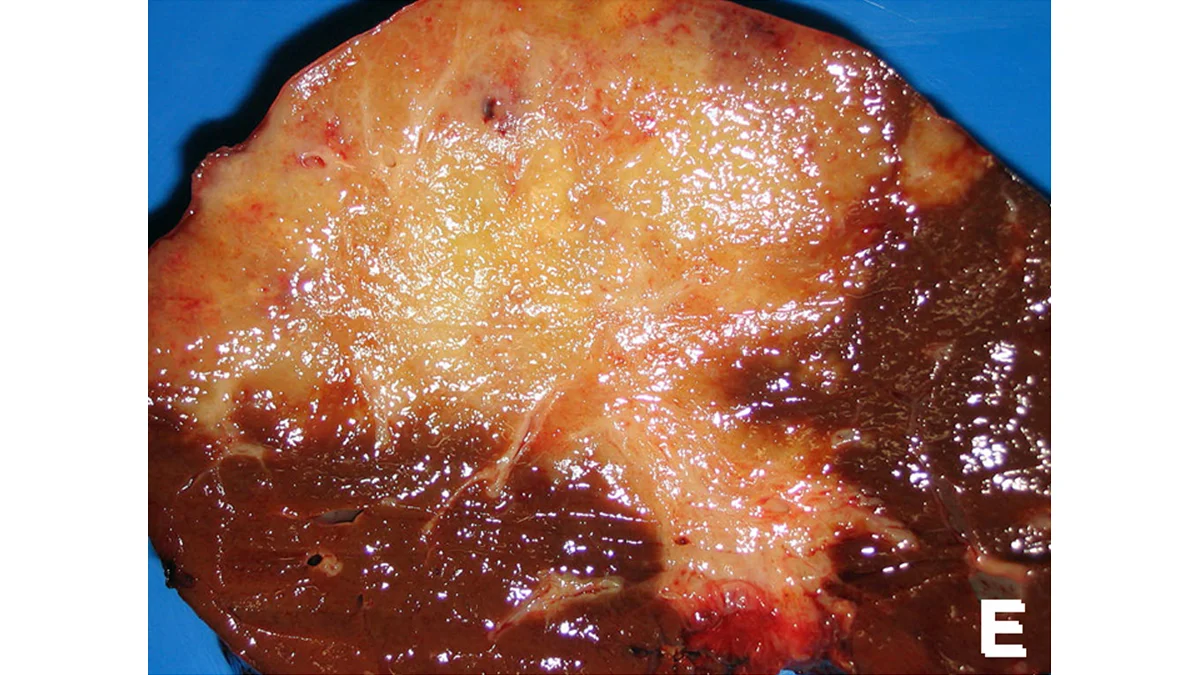
Image source and reuse details
Source: Cholangiocarcinoma.png — figure 1E, Concerted Action Is Needed to Tackle Liver Fluke Infections in Asia. Whole original photograph, including its panel letter E, proportionally reduced with external white side margins to 1200 × 675 pixels; WebP conversion. No clinical crop, recolouring or new annotation.
In this guide
First establish where the cancer started
Hepatocellular carcinoma, often shortened to HCC, starts in the main liver cells. Cholangiocarcinoma starts in the bile ducts, the tubes that carry bile. It can be inside the liver, at the junction of the ducts near the liver, or farther down towards the intestine. These locations can require different operations. Ask for the exact name and site in writing.
A bowel or breast cancer that spreads to the liver remains bowel or breast cancer; it does not become HCC. Its medicines follow the original tumour. Gallbladder cancer, childhood liver tumours and rare or mixed liver cancers also need their own assessment. A scan showing a liver lump does not by itself establish any of these diagnoses.
Source: National Cancer Institute — United States — Primary Liver Cancer Treatment (PDQ®)–Health Professional Version · National Cancer Institute — United States — Bile Duct Cancer Treatment
Symptoms and situations that need urgent help
Early disease may cause no obvious symptoms. Yellow eyes or skin, dark urine, pale stools, itching, reduced appetite, unintended weight loss, persistent upper abdominal pain or increasing swelling deserve medical assessment. Other illnesses can cause the same problems. New jaundice needs urgent assessment rather than waiting for the next routine appointment.
Vomiting blood, black tar-like stools or sudden confusion need emergency help through your local service. Fever or shaking chills with jaundice, especially with a biliary stent, can signal infection and need urgent assessment the same day. Severe weakness, fainting or breathing difficulty increases the urgency. During treatment, follow the team's emergency instructions and temperature threshold.
Source: National Health Service — United Kingdom — Symptoms of bile duct cancer (cholangiocarcinoma) · National Health Service — United Kingdom — Cirrhosis
HCC: why a biopsy is not always necessary
Doctors combine medical history, liver blood tests and imaging. In selected people at high risk, such as those with cirrhosis, a characteristic pattern on a multiphase contrast CT or MRI can establish HCC without a biopsy. This rule does not apply to every liver lump. Unclear or atypical findings can require another scan or a tissue sample.
Alpha-fetoprotein, or AFP, is a blood marker. It can be normal in HCC or elevated for other reasons, so it cannot diagnose cancer alone. Ask which finding supports the diagnosis, whether tissue is needed and whether the scan has been reviewed by a liver specialist. Do not arrange an invasive procedure independently before the specialist plan is agreed.
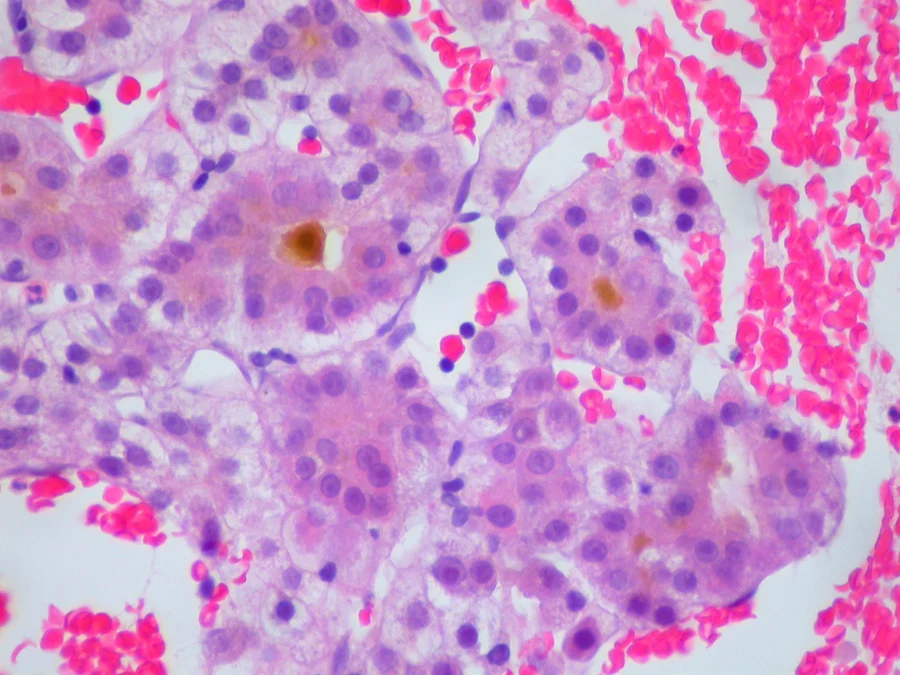
Image source and reuse details
Source: Hepatocellular Carcinoma, FNA Clot Section (2331528464).jpg. Whole microscopic field proportionally reduced from 2048 × 1536 to 900 × 675 pixels and converted to WebP. No diagnostic crop, recolouring or added annotation.
Source: National Cancer Institute — United States — Primary Liver Cancer Treatment (PDQ®)–Health Professional Version · American Association for the Study of Liver Diseases — AASLD Practice Guidance on prevention, diagnosis, and treatment of hepatocellular carcinoma
Bile duct cancer: plan tests and drainage together
Ultrasound, CT and MRI help locate a blocked duct and assess the liver and nearby structures. An endoscopic procedure called ERCP can obtain cells or help place a stent. Other sampling or drainage routes may be needed. Not everyone needs every test. The team should explain what each procedure will establish and its risks.
For a potentially operable tumour near the duct junction or in the distal bile duct, the biopsy route matters. Specialist guidelines advise avoiding a needle biopsy through the skin in resectable distal or perihilar cases. Discuss sampling with a hepatobiliary team first. A stent relieves blockage; it does not itself remove the cancer. Ask who manages it and when it needs checking.
Source: National Health Service — United Kingdom — Tests and next steps for bile duct cancer (cholangiocarcinoma) · European Society for Medical Oncology — ESMO Clinical Practice Guideline interim update on the management of biliary tract cancer · National Health Service — United Kingdom — Treatment for bile duct cancer (cholangiocarcinoma)
Stage and liver function answer different questions
Staging describes the tumour's extent: size, number, blood vessel involvement, lymph nodes and spread elsewhere. Liver reserve describes how much useful function remains. Blood tests, fluid in the abdomen and episodes of confusion can contribute to this assessment. Child–Pugh is one scoring system; the Barcelona Clinic Liver Cancer system combines liver function, tumour features and physical condition for HCC.
A person can have a small tumour but a very damaged liver, or a larger tumour with better preserved liver function. The safest option can therefore differ. For bile duct cancer, location and the amount of healthy liver that would remain after surgery are also crucial. Ask whether the aim is cure, tumour control, symptom relief, or several of these together.
Source: National Cancer Institute — United States — Primary Liver Cancer Treatment (PDQ®)–Health Professional Version · National Health Service — United Kingdom — Tests and next steps for bile duct cancer (cholangiocarcinoma)
HCC: surgery, ablation and transplant assessment
For selected early HCC, removing part of the liver or destroying the tumour with heat can offer treatment with curative intent. Selection depends on location, size, number of lesions and liver reserve. Resection leaves the rest of the liver in place; ablation uses an instrument positioned at the tumour. Neither is automatically safe merely because a lesion is small.
A liver transplant removes both the tumour-bearing liver and the damaged organ, but requires strict eligibility assessment and access to a donor. Some people receive local treatment while awaiting transplant or to bring disease within accepted criteria. This is not a guarantee of eligibility or cure. Transplant for cholangiocarcinoma is reserved for selected specialist protocols, not a routine substitute for HCC treatment.
Source: National Cancer Institute — United States — Liver Cancer Treatment · National Health Service — United Kingdom — Treatment for liver cancer · European Society for Medical Oncology — ESMO Clinical Practice Guideline interim update on the management of biliary tract cancer
When treatment is delivered directly to the liver
Transarterial chemoembolisation, often called TACE, delivers treatment through the blood supply and blocks selected vessels. Radioembolisation delivers radioactive particles through an artery. Carefully targeted external radiotherapy can be another option. These approaches are different from surgery and from medicines that circulate throughout the body. Ask what the chosen method is expected to achieve.
Tumour distribution, blood flow and liver reserve determine whether a local approach is suitable. It may control disease, support a transplant pathway or be combined with another plan. It can also damage healthy liver. If the tumour progresses or liver function worsens, the team should reconsider the approach rather than repeat an ineffective procedure indefinitely.
Source: National Cancer Institute — United States — Liver Cancer Treatment · National Health Service — United Kingdom — Treatment for liver cancer · American Association for the Study of Liver Diseases — AASLD Practice Guidance on prevention, diagnosis, and treatment of hepatocellular carcinoma
HCC medicines: bleeding risk and liver reserve matter
Options for unresectable or advanced HCC include immunotherapy combinations such as atezolizumab with bevacizumab, durvalumab with tremelimumab, and nivolumab with ipilimumab in eligible settings. Targeted tablets such as lenvatinib or sorafenib can be alternatives for some people. Later choices depend on previous treatment, tolerance, liver function and local approval. These are not interchangeable prescriptions.
Before atezolizumab with bevacizumab, the team must assess and manage bleeding risk, including enlarged oesophageal veins called varices. Immunotherapy can inflame the liver and other organs. A previous transplant, autoimmune disease or severe liver failure changes the risk assessment. Report new diarrhoea, breathlessness, marked weakness or worsening jaundice promptly; do not start or stop treatment on your own.
Source: American Association for the Study of Liver Diseases — AASLD Practice Guidance on prevention, diagnosis, and treatment of hepatocellular carcinoma · National Cancer Institute — United States — Liver Cancer Treatment · United States Food and Drug Administration — FDA approves nivolumab with ipilimumab for unresectable or metastatic hepatocellular carcinoma
What the 2025 nivolumab–ipilimumab result means
On 11 April 2025 the United States Food and Drug Administration approved nivolumab with ipilimumab as first systemic treatment for adults with unresectable or metastatic HCC. CHECKMATE-9DW enrolled 668 people with preserved liver function, Child–Pugh A, and good physical function, ECOG 0 or 1. It compared the combination with lenvatinib or sorafenib.
Median overall survival was 23.7 versus 20.6 months. This describes the middle of each study group's survival distribution, not an individual's remaining time. It does not prove the same benefit in severe liver failure or rank this combination against every other immunotherapy. Ask how closely your situation matches the study and which serious immune-related risks affect the choice.
Bile duct cancer: surgery and treatment afterwards
An operable cholangiocarcinoma may require removal of part of the liver, bile ducts and lymph nodes, or a larger operation involving nearby organs. The location determines the procedure. Before surgery, specialists assess whether enough functioning liver will remain and whether drainage is needed. A second opinion at an experienced hepatobiliary unit can clarify difficult decisions without promising that surgery will be possible.
After removal, discuss whether chemotherapy can reduce recurrence risk. The American Society of Clinical Oncology guideline recommends offering six months of capecitabine after resected biliary tract cancer, with individual assessment of recovery and tolerance. Radiation with chemotherapy may be discussed for selected extrahepatic cases with microscopic cancer at the cut edge. These decisions are different from treatment for advanced HCC.
Source: National Health Service — United Kingdom — Treatment for bile duct cancer (cholangiocarcinoma) · European Society for Medical Oncology — ESMO Clinical Practice Guideline interim update on the management of biliary tract cancer · American Society of Clinical Oncology — Adjuvant Therapy for Resected Biliary Tract Cancer: ASCO Clinical Practice Guideline — abstract
Advanced bile duct cancer: medicines and their limits
For eligible people with unresectable or metastatic biliary tract cancer, gemcitabine and cisplatin with durvalumab or pembrolizumab are first-line options. Kidney function, general condition and immune-related risks influence suitability. If disease progresses, further chemotherapy, a treatment matched to a molecular finding or a clinical trial may be considered. Symptom control should accompany these discussions from the start.
In KEYNOTE-966, 1069 previously untreated people with advanced biliary tract cancer received chemotherapy with pembrolizumab or placebo. Median overall survival was 12.7 versus 10.9 months. The United States approval followed on 31 October 2023. This is a group result, not a deadline or proof that every patient benefits. It cannot be compared directly with results from a separate HCC trial.
Source: European Society for Medical Oncology — ESMO Clinical Practice Guideline interim update on the management of biliary tract cancer · United States Food and Drug Administration — FDA approves pembrolizumab with chemotherapy for biliary tract cancer
Molecular tests can open a different treatment pathway
For advanced bile duct cancer, discuss tumour molecular profiling before or during first-line therapy. Important findings can include FGFR2 fusions or rearrangements, IDH1, BRAF, HER2, NTRK, RET and DNA-repair markers such as MSI or mismatch-repair deficiency. A fusion joins genetic material abnormally; it is not the same as every mutation in that gene. Results require specialist interpretation.
Examples include pemigatinib or futibatinib for eligible FGFR2-rearranged disease, and ivosidenib for previously treated IDH1-mutated cholangiocarcinoma. Zanidatamab received United States accelerated approval on 20 November 2024 for previously treated advanced HER2-positive biliary cancer with IHC 3+ testing. That exact test category matters. A tumour result does not automatically mean an inherited condition or guarantee a suitable drug in every country.
Source: European Society for Medical Oncology — ESMO Clinical Practice Guideline interim update on the management of biliary tract cancer · United States Food and Drug Administration — FDA Approval Summary: Ivosidenib for the treatment of patients with advanced unresectable or metastatic, chemotherapy refractory cholangiocarcinoma with an IDH1 mutation · United States Food and Drug Administration — FDA grants accelerated approval to zanidatamab-hrii for previously treated unresectable or metastatic HER2-positive biliary tract cancer
Two 2026 approvals: promising, narrowly defined results
On 8 May 2026 the United States authorised zenocutuzumab for advanced cholangiocarcinoma with an NRG1 fusion after progression on prior systemic therapy. The eNRGy study enrolled 22 people with this cancer; 19 could be evaluated for efficacy. Tumours shrank in 36.8%, with a wide 95% confidence interval of 16.3–61.6%. Observed response durations ranged from 2.8 to 12.9 months; this was not a median survival result.
On 23 September 2026 lirafugratinib was approved there for previously treated advanced cholangiocarcinoma with an FGFR2 fusion or other rearrangement. REFOCUS studied 116 people who had not received an FGFR inhibitor: response was 46%, with median response duration 11.8 months. Both studies lacked a randomised control group. Neither proves cure. Lirafugratinib needs eye and phosphate monitoring; zenocutuzumab carries infusion, lung and heart risks. Approval abroad does not establish local access or reimbursement.
Source: United States Food and Drug Administration — FDA approves zenocutuzumab-zbco for advanced unresectable or metastatic cholangiocarcinoma · United States Food and Drug Administration — FDA approves lirafugratinib for previously treated unresectable, locally advanced or metastatic cholangiocarcinoma
Food, movement and protecting the remaining liver
Ask for a dietitian if weight or muscle is being lost, meals are difficult or fluid is accumulating. The plan must account for both cancer and liver disease. Avoid alcohol and discuss help if stopping is difficult. Treatment of hepatitis B or C and management of cirrhosis remain important alongside cancer care; they are not replaced by anticancer medicines.
Do not use a detox diet, herbal remedy or supplement as a cancer treatment. Some products harm the liver or interact with prescribed medicines. Show the team a complete list, including over-the-counter drugs. Gentle activity adapted to strength can help maintain function, but bleeding risk, low blood counts or severe weakness may require changes. Supportive and palliative care can help with pain, itching, fatigue and family needs while cancer treatment continues.
Source: National Health Service — United Kingdom — Cirrhosis · National Cancer Institute — United States — Nutrition During Cancer Treatment · National Cancer Institute — United States — Complementary and Alternative Medicine
Follow-up is different from screening
People at sufficiently high risk of HCC, including many with cirrhosis and selected people with chronic hepatitis B, may be offered ultrasound and AFP about every six months if they could benefit from treatment. This is surveillance for a defined risk group, not a screening schedule for every healthy adult. Poor ultrasound visibility or a suspicious finding can require a different test or earlier reassessment.
After a cancer diagnosis or treatment, the follow-up schedule is separate and tailored to the disease and procedure. Obtain a written plan for scans, blood tests, stents and the contact to use between appointments. New jaundice, fever, bleeding or confusion should not wait for a scheduled scan. A rising marker alone does not establish recurrence; the team interprets it with symptoms and imaging.
Source: American Association for the Study of Liver Diseases — AASLD Practice Guidance on prevention, diagnosis, and treatment of hepatocellular carcinoma · National Health Service — United Kingdom — Treatment for liver cancer · National Health Service — United Kingdom — Treatment for bile duct cancer (cholangiocarcinoma)
Clinical trials and realistic expectations
Trials can test new immune combinations, targeted drugs, local treatments or their sequence. Eligibility can depend on the exact tumour, molecular result, previous medicines, liver reserve and distance from a participating centre. A trial listing is not proof that enrolment is open or that the treatment works. Ask about the comparison group, known risks, extra visits, costs and alternatives.
There is no reliable date when an experimental treatment will become available. Some trials fail; others apply only to a small molecular subgroup. Ask what outcome matters: tumour shrinkage, time before progression, quality of life or survival. Group averages do not predict an individual's future. Reassessing the plan as new results arrive is more useful than treating a headline as a promise.
Source: National Cancer Institute — United States — What Are Clinical Trials? · United States Food and Drug Administration — FDA approves nivolumab with ipilimumab for unresectable or metastatic hepatocellular carcinoma · United States Food and Drug Administration — FDA approves zenocutuzumab-zbco for advanced unresectable or metastatic cholangiocarcinoma · United States Food and Drug Administration — FDA approves lirafugratinib for previously treated unresectable, locally advanced or metastatic cholangiocarcinoma
Choose a team for the diagnosis, not a worldwide ranking
Look for a hepatobiliary team that can bring together liver medicine, surgery, medical oncology, interventional radiology, radiotherapy and pathology. Ask whether transplant assessment or molecular testing is relevant and available. For a second opinion, prepare reports, scans in their original format, pathology information, medication lists and a short treatment timeline. Send health documents only through the centre's official secure route.
The directory linked here filters documented pathways by topic and country. It is selective, not a list of every hospital or a guarantee of being the nearest or best. Confirm referral rules, acceptance of international patients, fees and contact details with the institution. A switchboard or international office may route a request rather than provide direct specialist advice. Do not use a referral email for an emergency.
Find documented liver and bile duct cancer pathways →
Source: National Cancer Institute — United States — Finding Cancer Care · National Cancer Institute — United States — What Are Clinical Trials?
Questions to take to your appointment
- Array
- Array
- Array
- Array
- Array
- Array
- Array
- Array
Sources and verification
- National Cancer Institute — United States — Primary Liver Cancer Treatment (PDQ®)–Health Professional Version
- National Cancer Institute — United States — Liver Cancer Treatment
- National Cancer Institute — United States — Bile Duct Cancer Treatment
- National Health Service — United Kingdom — Treatment for liver cancer
- National Health Service — United Kingdom — Symptoms of bile duct cancer (cholangiocarcinoma)
- National Health Service — United Kingdom — Tests and next steps for bile duct cancer (cholangiocarcinoma)
- National Health Service — United Kingdom — Treatment for bile duct cancer (cholangiocarcinoma)
- National Health Service — United Kingdom — Cirrhosis
- American Association for the Study of Liver Diseases — AASLD Practice Guidance on prevention, diagnosis, and treatment of hepatocellular carcinoma
- European Society for Medical Oncology — ESMO Clinical Practice Guideline interim update on the management of biliary tract cancer
- American Society of Clinical Oncology — Adjuvant Therapy for Resected Biliary Tract Cancer: ASCO Clinical Practice Guideline — abstract
- United States Food and Drug Administration — FDA approves nivolumab with ipilimumab for unresectable or metastatic hepatocellular carcinoma
- United States Food and Drug Administration — FDA approves pembrolizumab with chemotherapy for biliary tract cancer
- United States Food and Drug Administration — FDA Approval Summary: Ivosidenib for the treatment of patients with advanced unresectable or metastatic, chemotherapy refractory cholangiocarcinoma with an IDH1 mutation
- United States Food and Drug Administration — FDA grants accelerated approval to zanidatamab-hrii for previously treated unresectable or metastatic HER2-positive biliary tract cancer
- United States Food and Drug Administration — FDA approves zenocutuzumab-zbco for advanced unresectable or metastatic cholangiocarcinoma
- United States Food and Drug Administration — FDA approves lirafugratinib for previously treated unresectable, locally advanced or metastatic cholangiocarcinoma
- National Cancer Institute — United States — Nutrition During Cancer Treatment
- National Cancer Institute — United States — Complementary and Alternative Medicine
- National Cancer Institute — United States — What Are Clinical Trials?
- National Cancer Institute — United States — Finding Cancer Care
Sources checked: 2026-11-15