


Langerhans cell histiocytosis: symptoms, diagnosis and treatment
Langerhans cell histiocytosis is a rare disease. Abnormal cells build up and can damage tissues such as bone, skin and lungs. The care plan depends on age and the areas affected.
MyMedNest editorial guide · Sources checked:
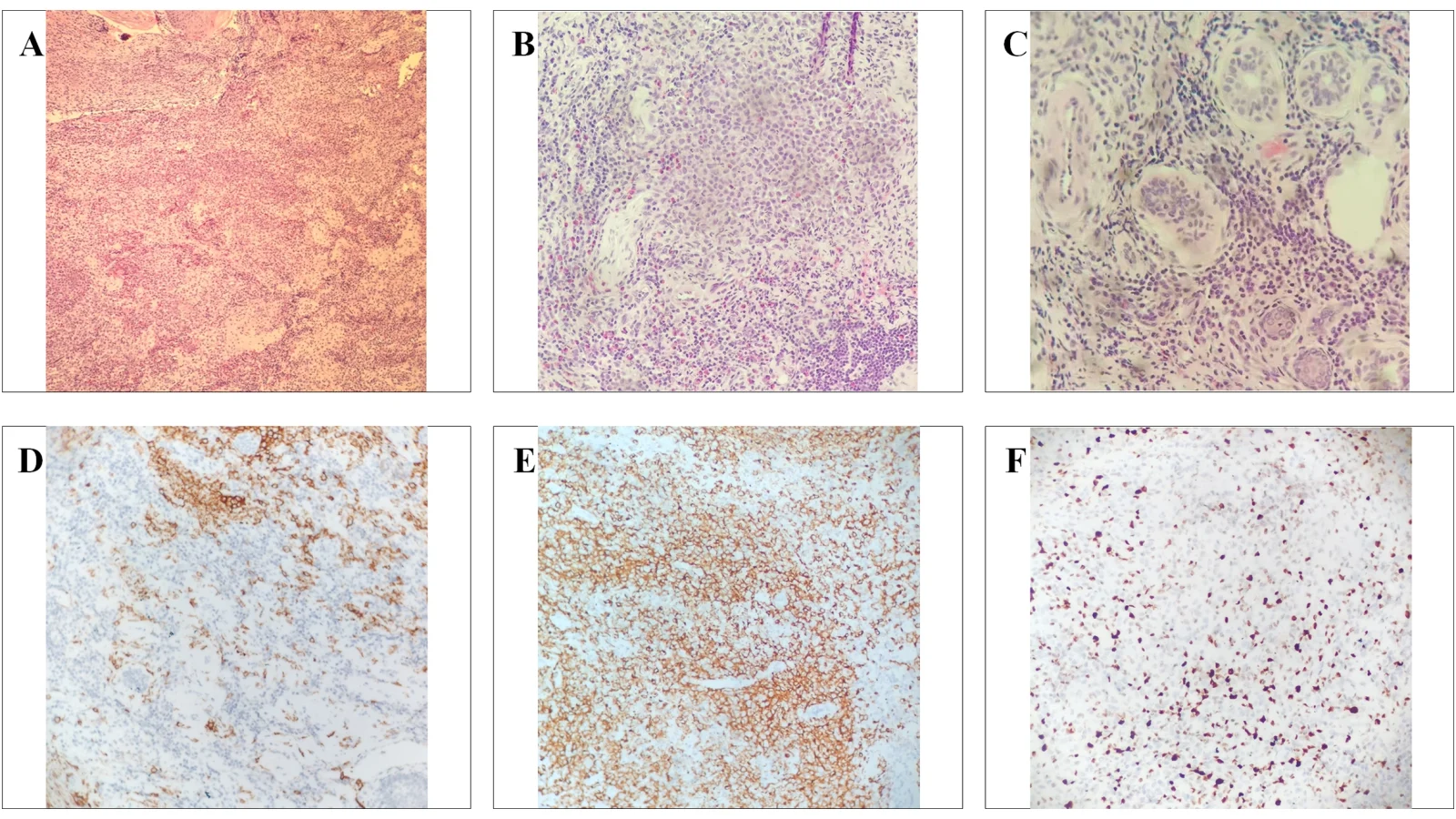
Image source and reuse details
Source: Case Report: A rare adult multisystem Langerhans cell histiocytosis involving the skin, thyroid, jaw-periodontal region, and bone: diagnostic challenges and complementary PET/CT–SPECT/CT findings — Figure 2. Converted to WebP, scaled proportionally and framed. All six panels are intact.
In this guide
What happens in the body
The cells that cause the disease belong to a family of immune cells. Some receive an abnormal signal that makes them grow and collect in one place. This can cause a lesion, an area of damaged tissue. It can happen in one spot, in several spots in the same organ, or in several organs.
The disease affects children and adults. In children, involvement of the liver, spleen or tissue that makes blood cells can indicate higher risk. Some adults have a form limited to the lungs that is often linked to smoking.
Source: National Cancer Institute — Langerhans Cell Histiocytosis Treatment (PDQ®) — Patient Version · National Cancer Institute — Langerhans Cell Histiocytosis Treatment (PDQ®) — Health Professional Version · Blood — American Society of Hematology — International expert consensus recommendations for the diagnosis and treatment of Langerhans cell histiocytosis in adults
Symptoms to look out for
A bone lesion can cause pain or swelling. Skin changes can include spots or crusts that do not go away. Some people have a cough or shortness of breath. Unusual thirst and frequent urination can occur if the disease affects the pituitary, a small gland below the brain that helps control how the body handles water.
These symptoms have many other causes. Ask for a medical check if they persist. Call emergency services if you suddenly have severe trouble breathing. If you have a fever during chemotherapy, follow the center’s emergency instructions right away.
Source: National Cancer Institute — Langerhans Cell Histiocytosis Treatment (PDQ®) — Patient Version · Ospedale Pediatrico Bambino Gesù — Istiocitosi a cellule di Langerhans del bambino e dell’adolescente · National Cancer Institute — Infection and Neutropenia during Cancer Treatment
How the disease is diagnosed
Doctors usually take a small sample of a lesion. This is called a biopsy. A doctor examines it under a microscope and looks for proteins such as CD1a and langerin. The photograph in this guide shows stained sections of a skin sample from a published case.
Blood tests and scans help show which parts of the body are affected. Lung or hormone symptoms can require specific tests. The center may check for a change in the cells, such as BRAF V600E. It affects a growth signal and can help guide some treatment decisions.
Source: National Cancer Institute — Langerhans Cell Histiocytosis Treatment (PDQ®) — Health Professional Version · Blood — American Society of Hematology — International expert consensus recommendations for the diagnosis and treatment of Langerhans cell histiocytosis in adults · Frontiers in Oncology — Case Report: A rare adult multisystem Langerhans cell histiocytosis involving the skin, thyroid, jaw-periodontal region, and bone: diagnostic challenges and complementary PET/CT–SPECT/CT findings
Why treatment varies
A small isolated lesion may need only observation after sampling or a local treatment. If several organs are affected, treatment may need to reach the whole body. In some children, doctors use vinblastine and prednisone. In adults, options can differ and depend on which organs are affected.
For smoking-related disease in the lungs, stopping smoking is a key part of care. The center can help with quitting and monitoring breathing. If active disease returns or resists early treatment, specialists may consider medicines that block a growth signal in selected cases.
Source: National Cancer Institute — Langerhans Cell Histiocytosis Treatment (PDQ®) — Health Professional Version · Blood — American Society of Hematology — International expert consensus recommendations for the diagnosis and treatment of Langerhans cell histiocytosis in adults · Ospedale Pediatrico Bambino Gesù — Istiocitosi a cellule di Langerhans del bambino e dell’adolescente
Targeted treatment and research
The United States Food and Drug Administration has approved cobimetinib for adults with histiocytic neoplasms. This U.S. indication applies to adults. Rules and access vary between countries. Approval alone cannot show whether the medicine is suitable for an individual.
The phase 2 study NCT04079179 evaluates cobimetinib in people with disease that has resisted treatment and with related disorders. It has different groups and entry rules. Ask if the study is accessible and which treatments are already available. The name of a study cannot predict a person’s result.
Source: United States Food and Drug Administration — Cobimetinib — Approved Labeled Indication for Adult Histiocytic Neoplasms · National Cancer Institute — Cobimetinib for the Treatment of Refractory Langerhans Cell Histiocytosis
Follow-up and everyday life
The center may monitor bone, lung, hearing or hormone problems over time. Children may need growth checks. Ask for a written plan that lists checkups, symptoms to report and a transition to adult care if needed.
If a bone is weak, ask when it is safe to get back to activities and what precautions to take. Tell your team if it is hard to eat or you are losing weight. Ask before taking supplements during treatment.
Source: National Cancer Institute — Langerhans Cell Histiocytosis Treatment (PDQ®) — Patient Version · Blood — American Society of Hematology — International expert consensus recommendations for the diagnosis and treatment of Langerhans cell histiocytosis in adults · National Cancer Institute — Nutrition During Cancer Treatment
Finding the right service
Search the directory by country, city or postal code. Italy’s Rare Diseases Portal lists centers for this diagnosis. Meyer Hospital in Florence lists a pediatric blood and cancer service. For adults, Gemelli in Rome and the dedicated Dana-Farber Cancer Institute program in Boston are options for specialist assessment.
Ask how to send reports, scans or biopsy results securely. A second opinion may help if the diagnosis is uncertain, several organs are affected or the disease returns after treatment.
Find a center for Langerhans cell histiocytosis →
Source: Portale delle Malattie Rare — Centri specializzati per Istiocitosi a cellule di Langerhans · Portale delle Malattie Rare — Centri di diagnosi e cura — Azienda Ospedaliera Universitaria Meyer · Portale delle Malattie Rare — Centri di diagnosi e cura — Fondazione Policlinico Universitario A. Gemelli · Dana-Farber Cancer Institute — Our Approach — Adult Histiocyte Disorders Treatment · Dana-Farber Cancer Institute — International Patient Care — Adult Patients
Questions to take to your appointment
- Is the disease in one area or in several organs?
- What did the tissue sample show?
- Which tests look for changes such as BRAF V600E?
- Do I need treatment or observation over time?
- Which lung or hormone tests should I plan for?
- Whom should I call if symptoms change or I get a fever during treatment?
Sources and verification
- National Cancer Institute — Langerhans Cell Histiocytosis Treatment (PDQ®) — Patient Version
- National Cancer Institute — Langerhans Cell Histiocytosis Treatment (PDQ®) — Health Professional Version
- Blood — American Society of Hematology — International expert consensus recommendations for the diagnosis and treatment of Langerhans cell histiocytosis in adults
- Ospedale Pediatrico Bambino Gesù — Istiocitosi a cellule di Langerhans del bambino e dell’adolescente
- United States Food and Drug Administration — Cobimetinib — Approved Labeled Indication for Adult Histiocytic Neoplasms
- National Cancer Institute — Cobimetinib for the Treatment of Refractory Langerhans Cell Histiocytosis
- National Cancer Institute — Infection and Neutropenia during Cancer Treatment
- National Cancer Institute — Nutrition During Cancer Treatment
- Portale delle Malattie Rare — Centri specializzati per Istiocitosi a cellule di Langerhans
- Portale delle Malattie Rare — Centri di diagnosi e cura — Azienda Ospedaliera Universitaria Meyer
- Portale delle Malattie Rare — Centri di diagnosi e cura — Fondazione Policlinico Universitario A. Gemelli
- Dana-Farber Cancer Institute — Our Approach — Adult Histiocyte Disorders Treatment
- Dana-Farber Cancer Institute — International Patient Care — Adult Patients
- Frontiers in Oncology — Case Report: A rare adult multisystem Langerhans cell histiocytosis involving the skin, thyroid, jaw-periodontal region, and bone: diagnostic challenges and complementary PET/CT–SPECT/CT findings
Sources checked: 2026-11-21