


Head and neck cancers in adults: diagnosis, treatment and specialist centers
Head and neck cancer can affect eating, speech or breathing. This guide helps you read your report, understand treatment options and prepare for a specialist visit.
MyMedNest editorial guide · Sources checked:
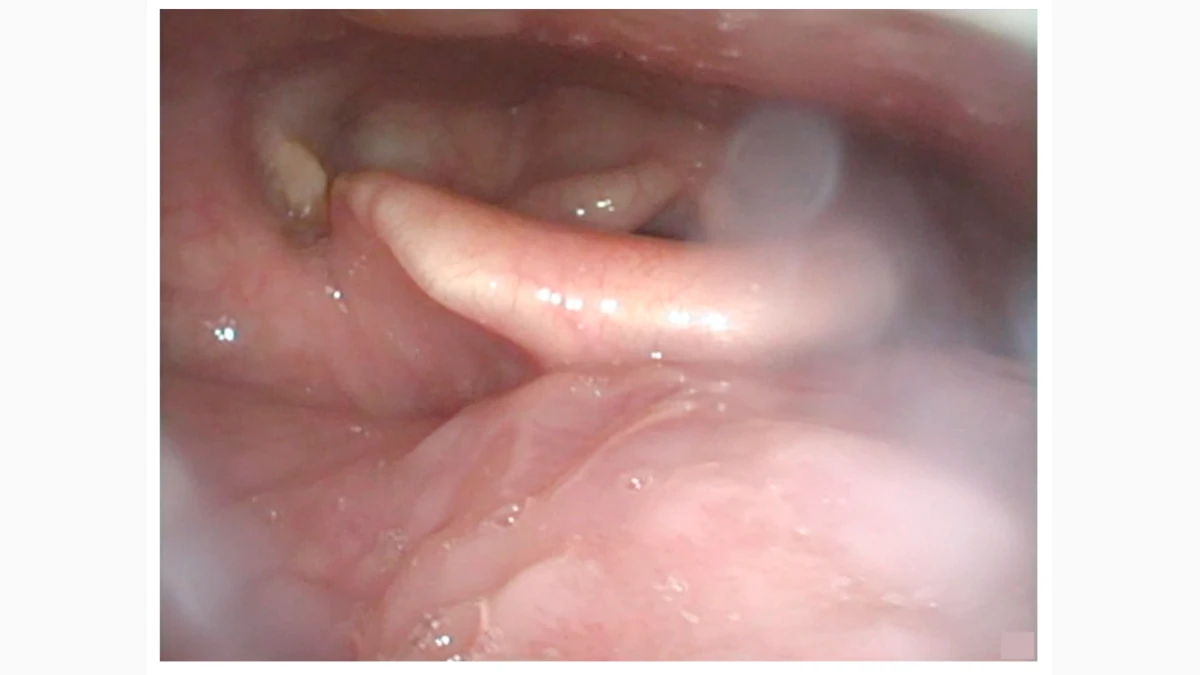
Image source and reuse details
Source: Radiation-Induced Oropharyngeal Squamous Cell Carcinoma: Case Report and Review of the Literature — Figure 1. Full figure reduced proportionally. Neutral side bands added for the cover.
In this guide
Where did the cancer start?
The front of the tongue is in the mouth. The base of the tongue and the tonsils are in the oropharynx, behind the mouth. The nasopharynx sits behind the nose. The hypopharynx lies lower down, and the voice box contains the vocal cords. The salivary glands, nasal cavity and sinuses have distinct types of cancer and care pathways.
This guide is for adults. The most common kind starts in the cells that line the mouth, throat and voice box. It is called squamous cell carcinoma. A report may name a different kind, particularly in the nose or salivary glands. Thyroid, brain and skin cancers have separate guides. Ask for the exact name and the site where the tumor started.
Source: National Cancer Institute — United States — Head and Neck Cancers
When to get checked
Arrange an assessment for a lasting neck lump, a mouth sore that does not heal, a red or white patch, pain when swallowing or unexplained hoarseness. A doctor, dentist or ear, nose and throat specialist can choose the first examination. There are common causes for these symptoms. In the United Kingdom, an unexplained mouth ulcer lasting more than 3 weeks is a reason to consider fast referral.
Get emergency help for severe trouble breathing. Call your local emergency number. If you are in treatment, ask who to call about new trouble breathing, swallowing or drinking. Report worsening symptoms and weight loss you did not plan.
Source: National Cancer Institute — United States — Head and Neck Cancers · National Institute for Health and Care Excellence — United Kingdom — Suspected cancer: recognition and referral — Recommendations organised by site of cancer · National Health Service — United Kingdom — Shortness of breath
Examination, tissue sample and scans
A specialist looks inside the mouth and throat and feels the neck. A small flexible camera can show areas behind the nose or deep in the throat. If the team finds a suspicious lesion, they take a sample. They may use an image-guided needle for a lymph node. The laboratory identifies the cells and chooses useful tests.
A CT or MRI helps show how far the lesion extends. In selected cases PET/CT may look for other sites or clarify a finding. The team chooses the tests for your situation. If cancer is found in a node and the starting point is unclear, more targeted tests may be needed. Ask what is still missing before the care team meets.
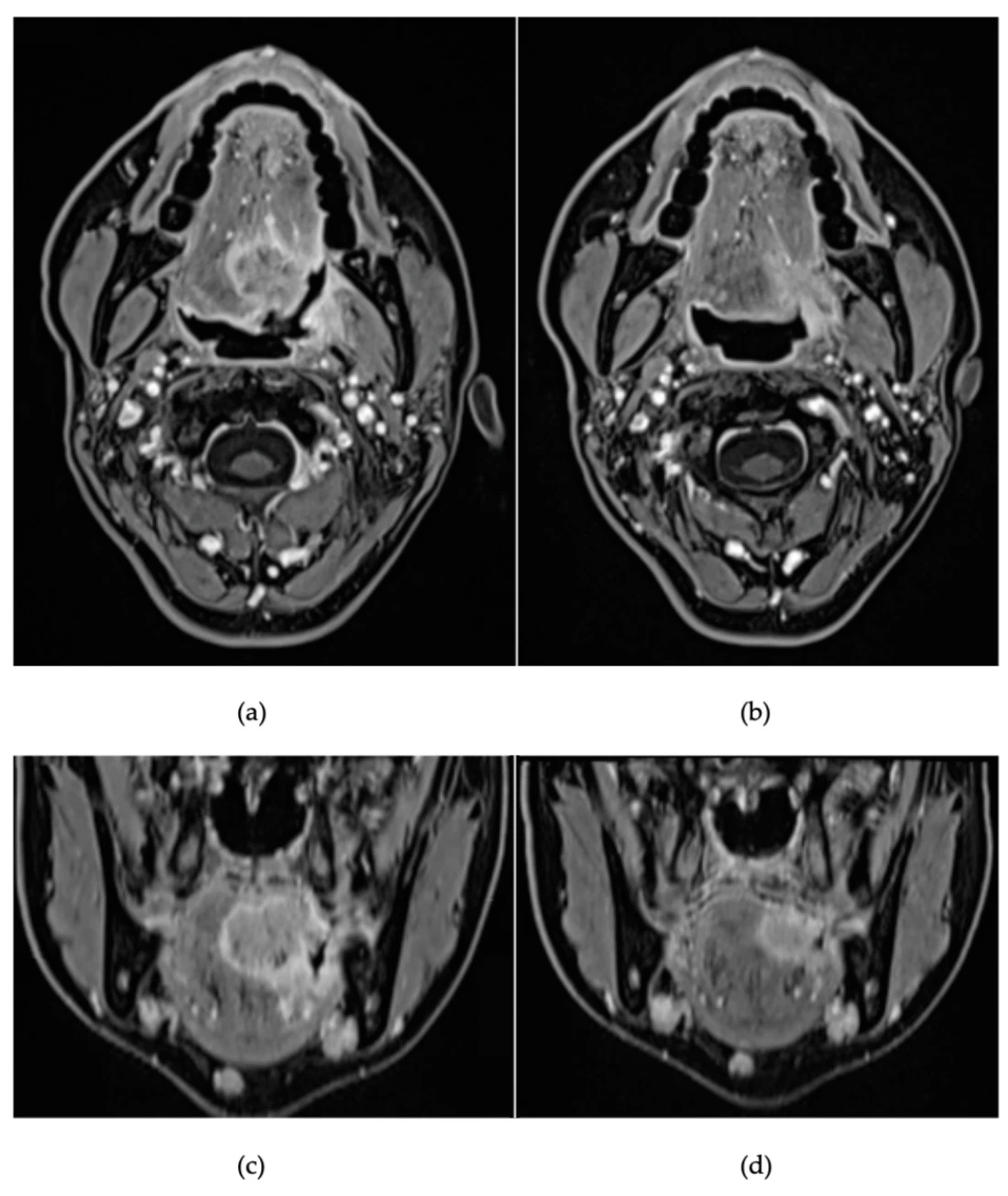
Image source and reuse details
Source: Radiation-Induced Oropharyngeal Squamous Cell Carcinoma: Case Report and Review of the Literature — Figure 2. Full figure reduced proportionally, keeping all panels and labels.
Source: National Cancer Institute — United States — Head and Neck Cancers · National Cancer Institute — United States — Lip and Oral Cavity Cancer Treatment (PDQ®)–Health Professional Version · National Cancer Institute — United States — Oropharyngeal Cancer Treatment (PDQ®)–Patient Version · Lorenzo Giannini et al. — Current Oncology — Radiation-Induced Oropharyngeal Squamous Cell Carcinoma: Case Report and Review of the Literature
What HPV, p16, PD-L1 and stage tell you
For squamous cancer of the oropharynx, the laboratory checks for a link to high-risk human papillomavirus, known as HPV. A p16 stain can help. In some circumstances the lab adds an HPV-specific test. A positive p16 stain has a different meaning outside the oropharynx. PD-L1 is a separate test. Its combined positive score, or CPS, may inform immunotherapy decisions.
Stage reflects how far the tumor extends at its site, neck lymph node involvement and whether cancer has spread farther away. In the oropharynx the HPV result can change which staging system is used. Bring your full report and ask whether the pathology, scans and marker results agree.
Source: National Cancer Institute — United States — Head and Neck Cancers · College of American Pathologists — United States — Human Papillomavirus Testing in Head and Neck Carcinomas Guideline Update · National Cancer Institute — United States — Oropharyngeal Cancer Treatment (PDQ®)–Patient Version · United States Food and Drug Administration — FDA approves neoadjuvant and adjuvant pembrolizumab for resectable locally advanced head and neck squamous cell carcinoma
How treatment changes by site
Surgery is often considered for a localized mouth cancer. Radiation can also be an option for some small lesions. An operation may include neck lymph nodes and reconstruction. Examination of the tissue removed helps guide decisions about radiation or chemotherapy with radiation. Ask what to expect for speech, chewing and swallowing.
For oropharyngeal cancer, options can include radiation, chemotherapy with radiation or surgery for selected people. For voice box cancer, the team considers how well you speak and swallow before treatment. The voice box may be preserved in some cases. A bulky tumor or poor function can make removal necessary. Ask how breathing and voice rehabilitation differ across options.
Source: National Cancer Institute — United States — Lip and Oral Cavity Cancer Treatment (PDQ®)–Health Professional Version · National Cancer Institute — United States — Laryngeal Cancer Treatment (PDQ®)–Health Professional Version · National Cancer Institute — United States — Oropharyngeal Cancer Treatment (PDQ®)–Patient Version · National Cancer Institute — United States — Head and Neck Cancers
The nasopharynx, nose and salivary glands
Nasopharyngeal cancer follows a distinct pathway and can be linked to Epstein–Barr virus. Radiation often plays a central role. The team decides when to combine it with chemotherapy. For cancers of the nose and sinuses, proximity to the eyes and skull base and the cells in the sample affect care.
In the salivary glands, the exact type and grade guide choices. Surgery or radiation may be discussed depending on the type and site. There are several possible causes of a lump near the jaw or parotid gland. The center can decide whether more tissue tests are needed.
Source: National Cancer Institute — United States — Head and Neck Cancers · Istituto Europeo di Oncologia — Italia — Otorinolaringoiatria e Chirurgia Cervico Facciale · Gustave Roussy — France — Service de cancérologie cervico-faciale · National Cancer Institute — United States — Nasopharyngeal Carcinoma Treatment (PDQ®)–Health Professional Version · National Cancer Institute — United States — Salivary Gland Cancer Treatment (PDQ®)–Patient Version
Immunotherapy before and after surgery
The United States and European Union extended the pembrolizumab indication in 2025 for certain adults with resectable, locally advanced head and neck squamous cell cancer and a PD-L1 CPS of at least 1. The regimen starts before surgery. After surgery, immunotherapy is given with radiation with or without cisplatin, then on its own. Actual access depends on the country and individual situation.
KEYNOTE-689 randomized 714 people. Among those with a CPS of at least 1, at 36 months 58.2% were event-free with added pembrolizumab versus 44.9% with standard treatment. Events included progression, recurrence or death as defined in the trial. In the full treated population, grade 3 or higher treatment-related side effects occurred in 44.6% versus 42.9%. This is a trial measure, not the chance of cure. Merck Sharp and Dohme funded the study.
Source: United States Food and Drug Administration — FDA approves neoadjuvant and adjuvant pembrolizumab for resectable locally advanced head and neck squamous cell carcinoma · European Medicines Agency — European Union — Keytruda — Procedural steps taken and scientific information after the authorisation · European Medicines Agency — European Union — Keytruda — Summary of Product Characteristics · Ravindra Uppaluri et al. — The New England Journal of Medicine — Neoadjuvant and Adjuvant Pembrolizumab in Locally Advanced Head and Neck Cancer
When cancer comes back or spreads
If it comes back in a limited area, ask whether another operation or radiation could help. Site, prior treatment and risks to healthy tissue matter. If local treatments cannot control it, the team may discuss medicines that act throughout the body. Immunotherapy or chemotherapy is an option for some squamous cancers, depending on markers, health and local rules. Pain and symptom care can be part of the plan.
Nasopharyngeal cancer that comes back or spreads has separate indications. The United States approved toripalimab with cisplatin and gemcitabine as first treatment for certain cases, and on its own for eligible patients after progression on platinum-based chemotherapy. The European Union nasopharyngeal indication is for first-line combination treatment for metastases or recurrence that cannot be treated with surgery or radiation. Ask which criteria apply where you receive care.
Source: National Cancer Institute — United States — Lip and Oral Cavity Cancer Treatment (PDQ®)–Health Professional Version · European Medicines Agency — European Union — Keytruda — Summary of Product Characteristics · United States Food and Drug Administration — FDA approves toripalimab-tpzi for nasopharyngeal carcinoma · European Medicines Agency — European Union — Loqtorzi — European public assessment report · National Cancer Institute — United States — Palliative Care in Cancer
Research on treatment after surgery
An Indiana University study looks at whether tumor HPV DNA in blood and the surgical report can help reduce radiation after transoral surgery in selected people with HPV-positive oropharyngeal cancer. NCT06915038 plans to enroll 120 people and estimates completion in December 2028. The 11 August 2026 update lists recruitment and no posted results. Participants are not randomly assigned. The main measure is time to recurrence or death over up to 24 months.
A smaller treatment burden might mean fewer late side effects. Researchers still need to learn whether cancer remains controlled. A blood test alone cannot show that someone can skip radiation. Before joining a study, ask how visits and treatment would change and which costs or travel you would cover.
Source: United States National Library of Medicine — ClinicalTrials.gov — Circulating Tumor HPV DNA Driven Adjuvant Treatment Deintensification After Transoral Surgery for HPV-Positive Squamous Cell Carcinoma of the Oropharynx (NCT06915038) · National Cancer Institute — United States — Who Pays for Clinical Trials?
Eating, speech and rehabilitation
Ask about dietitian and speech-language support if eating is hard, you cough when drinking or you lose weight. Swallow testing can show whether food or liquid enters the airway. Your team may offer suitable textures, exercises or temporary nutrition support. Report mouth pain, dry mouth or new problems with food early.
A dental visit may be needed before radiation. Ask how to protect your teeth and mouth and manage late side effects. Rehabilitation can address speech, swallowing, jaw opening and neck swelling. No diet or supplement has been shown to replace cancer treatment. Ask the care team to check any products you take alongside treatment.
Source: National Cancer Institute — United States — Head and Neck Cancers · Istituto Europeo di Oncologia — Italia — Otorinolaringoiatria e Chirurgia Cervico Facciale · The University of Texas MD Anderson Cancer Center — United States — Head & Neck Center · National Cancer Institute — United States — Nutrition During Cancer Treatment · National Cancer Institute — United States — Complementary and Alternative Medicine
Follow-up and prevention
Ask for a written plan with visits, tests and symptoms to report early. The team examines the treated area and your neck. They may discuss scans and thyroid tests after neck radiation. Speech, nutrition, teeth and quality of life matter during recovery. Contact the team if new symptoms or difficulties with daily activities develop.
Stopping tobacco use and reducing alcohol lower risk. HPV vaccination helps prevent infection with types linked to some oropharyngeal cancers. Follow your country’s vaccine guidance. A dental visit can detect mouth lesions. Get persistent symptoms assessed.
Source: National Cancer Institute — United States — Head and Neck Cancers · National Cancer Institute — United States — Laryngeal Cancer Treatment (PDQ®)–Health Professional Version
Finding a center and preparing for the visit
Look for a team experienced in your type of cancer with head and neck surgery, radiation, medical oncology, speech and swallow care, nutrition and dental care. Ask about reconstruction if appropriate. For a second opinion, prepare the biopsy report, original scans, medication list and prior treatment details. If you have had radiation, ask how to share the earlier treatment plan.
Check whether the number is for new patients and whether a referral is required. Confirm coverage, timing, costs and language support before travel. Follow the center’s secure instructions for sharing scans, tissue slides and health information. The directory lists documented services.
Find a head and neck cancer center →
Source: Istituto Europeo di Oncologia — Italia — Otorinolaringoiatria e Chirurgia Cervico Facciale · The University of Texas MD Anderson Cancer Center — United States — Head & Neck Center · The University of Texas MD Anderson Cancer Center — United States — International Referrals — international appointment contact · Gustave Roussy — France — Service de cancérologie cervico-faciale · Gustave Roussy — France — Cancer ORL — Deuxième avis médical sur dossier · Universitätsklinikum Erlangen — Deutschland — Sprechstunden — Tumorerkrankungen im Kopf-Hals-Bereich · Universitätsklinikum Erlangen — Deutschland — Hals-Nasen-Ohren-Klinik — Kontakt
Questions to take to your appointment
- What is the exact site and type of the cancer?
- Which tests are needed before a decision?
- What do the HPV result and PD-L1 score mean for me?
- How might speech, swallowing or breathing change?
- Which treatments are available where I live, and who is eligible?
- Who can help with a second opinion or rehabilitation?
Sources and verification
- National Cancer Institute — United States — Head and Neck Cancers
- National Institute for Health and Care Excellence — United Kingdom — Suspected cancer: recognition and referral — Recommendations organised by site of cancer
- National Health Service — United Kingdom — Shortness of breath
- National Cancer Institute — United States — Lip and Oral Cavity Cancer Treatment (PDQ®)–Health Professional Version
- National Cancer Institute — United States — Laryngeal Cancer Treatment (PDQ®)–Health Professional Version
- National Cancer Institute — United States — Oropharyngeal Cancer Treatment (PDQ®)–Patient Version
- College of American Pathologists — United States — Human Papillomavirus Testing in Head and Neck Carcinomas Guideline Update
- United States Food and Drug Administration — FDA approves neoadjuvant and adjuvant pembrolizumab for resectable locally advanced head and neck squamous cell carcinoma
- European Medicines Agency — European Union — Keytruda — Procedural steps taken and scientific information after the authorisation
- European Medicines Agency — European Union — Keytruda — Summary of Product Characteristics
- Ravindra Uppaluri et al. — The New England Journal of Medicine — Neoadjuvant and Adjuvant Pembrolizumab in Locally Advanced Head and Neck Cancer
- United States Food and Drug Administration — FDA approves toripalimab-tpzi for nasopharyngeal carcinoma
- European Medicines Agency — European Union — Loqtorzi — European public assessment report
- United States National Library of Medicine — ClinicalTrials.gov — Circulating Tumor HPV DNA Driven Adjuvant Treatment Deintensification After Transoral Surgery for HPV-Positive Squamous Cell Carcinoma of the Oropharynx (NCT06915038)
- Lorenzo Giannini et al. — Current Oncology — Radiation-Induced Oropharyngeal Squamous Cell Carcinoma: Case Report and Review of the Literature
- Istituto Europeo di Oncologia — Italia — Otorinolaringoiatria e Chirurgia Cervico Facciale
- The University of Texas MD Anderson Cancer Center — United States — Head & Neck Center
- Gustave Roussy — France — Service de cancérologie cervico-faciale
- Gustave Roussy — France — Cancer ORL — Deuxième avis médical sur dossier
- The University of Texas MD Anderson Cancer Center — United States — International Referrals — international appointment contact
- National Cancer Institute — United States — Palliative Care in Cancer
- National Cancer Institute — United States — Nutrition During Cancer Treatment
- National Cancer Institute — United States — Complementary and Alternative Medicine
- National Cancer Institute — United States — Who Pays for Clinical Trials?
- National Cancer Institute — United States — Nasopharyngeal Carcinoma Treatment (PDQ®)–Health Professional Version
- National Cancer Institute — United States — Salivary Gland Cancer Treatment (PDQ®)–Patient Version
- Universitätsklinikum Erlangen — Deutschland — Sprechstunden — Tumorerkrankungen im Kopf-Hals-Bereich
- Universitätsklinikum Erlangen — Deutschland — Hals-Nasen-Ohren-Klinik — Kontakt
Sources checked: 2026-11-19