


Cancer of unknown primary: tests, care and specialist centers
Tests have found cancer cells, but where they first grew is still unclear. A specialist team can plan care using the biopsy and scans. Finding the starting point matters when it could change the treatment.
MyMedNest editorial guide · Sources checked:
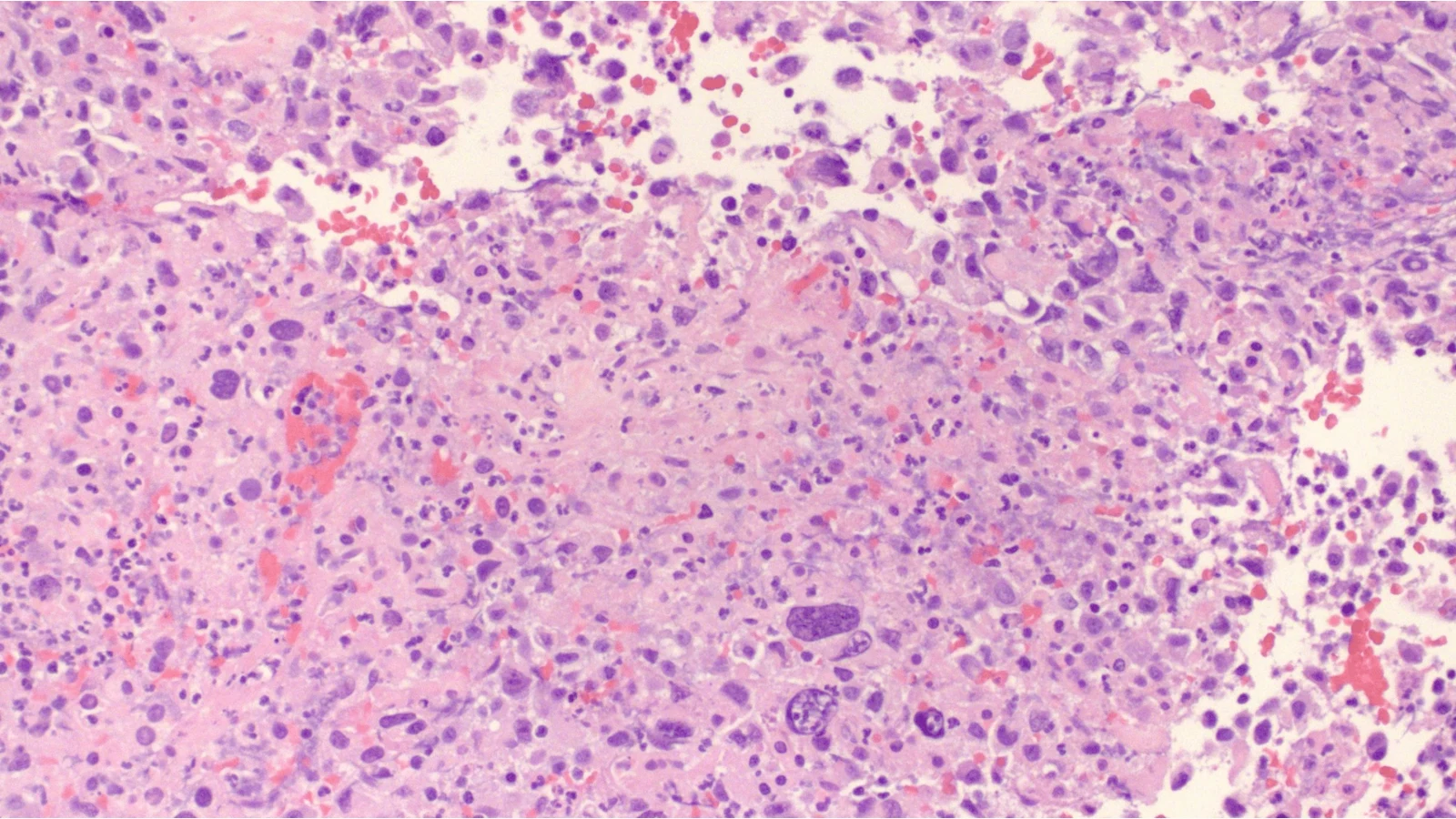
Image source and reuse details
Source: Adenocarcinoma of an Unknown Primary Site: Presentation, Diagnosis, and Management — Figure 4. The complete figure was reduced in proportion and converted to WebP.
In this guide
What the diagnosis means
The primary site is where the cancer first grew. A metastasis is a group of those cells growing somewhere else. A spot in the liver, for example, may have come from a tumor in another part of the body.
The origin may simply be unclear while tests are underway. If a biopsy shows cancer and the appropriate tests do not find the starting point, doctors may call it cancer of unknown primary, or CUP. A finding such as lymphoma or melanoma can lead to a different treatment plan.
Source: National Cancer Institute — Carcinoma of Unknown Primary Treatment (PDQ®)–Patient Version · National Cancer Institute — Cancer of Unknown Primary (CUP) Treatment (PDQ®)–Health Professional Version
The first tests and what they can show
The doctor asks about symptoms, previous scans and any cancer you had before. A laboratory may compare old and new tissue samples. The team may arrange blood tests and scans of the chest, belly and pelvis. A CT scan uses X-rays to make pictures of the inside of the body.
A biopsy takes a small piece of tissue. A doctor examines the cells under a microscope. Special stains that highlight certain proteins, called immunohistochemistry, can give clues about the type of cancer. Other tests, such as a scan or an exam with a tiny camera, depend on those clues. Ask what each test might change.
Source: National Cancer Institute — Carcinoma of Unknown Primary Treatment (PDQ®)–Patient Version · European Society for Medical Oncology — Cancer of unknown primary: ESMO Clinical Practice Guideline for diagnosis, treatment and follow-up · Cureus — Adenocarcinoma of an Unknown Primary Site: Presentation, Diagnosis, and Management
Tests of the tumor’s DNA
Some tests look for changes in the tumor’s DNA, the instructions inside its cells. A result can help the team pick a drug or point toward a possible starting place. The place of origin may remain uncertain. The team reads the result alongside the biopsy and scans.
Ask if enough tissue is available, whether a specialist should review it and what the result could change. A match in the lab is only part of the decision. The team also considers your health, the treatment you have had and which medicines are approved where you live.
Source: European Society for Medical Oncology — Cancer of unknown primary: ESMO Clinical Practice Guideline for diagnosis, treatment and follow-up · German Society for Hematology and Medical Oncology and partner societies — Onkopedia — CUP Syndrome – Cancer of Unknown Primary
Treatment and approved medicines
Surgery or focused radiation may be an option if the cancer is in just one place. Other patterns can point to a particular care team. For example, a certain cancer in nodes in the neck may need doctors who specialize in head and neck cancers.
When cancer has spread to several places, treatment may include chemotherapy or, in some cases, a targeted drug or immunotherapy. In the United States, pembrolizumab has a specific approval for certain solid tumors that cannot be removed or have spread, have worsened after earlier treatment and have at least 13 changes per million DNA letters on an authorized test. This approval has other criteria, including no satisfactory alternative. European approvals follow their own rules.
Source: National Cancer Institute — Cancer of Unknown Primary (CUP) Treatment (PDQ®)–Health Professional Version · German Society for Hematology and Medical Oncology and partner societies — Onkopedia — CUP Syndrome – Cancer of Unknown Primary · United States Food and Drug Administration — FDA grants traditional approval for pembrolizumab or pembrolizumab and berahyaluronidase alfa-pmph for unresectable or metastatic TMB-H solid tumors with updated indication · European Medicines Agency — KEYTRUDA — European Public Assessment Report: Product Information
What the research has found
CUPISCO, a phase 2 clinical trial, compared two treatment approaches in 436 people whose cancer was already under control after initial platinum-based chemotherapy. By chance, one group was assigned to treatment chosen using DNA tests. The other continued chemotherapy.
The 2026 update found that half had worsening cancer or had died by 6.1 months with the test-guided strategy and by 4.4 months with continued chemotherapy. The trial did not establish that either group lived longer overall. These results apply to the group studied. Ask your team which trials fit your situation and what is still being tested.
Source: The Lancet — Molecularly guided therapy versus chemotherapy after disease control in unfavourable cancer of unknown primary (CUPISCO): an open-label, randomised, phase 2 study · Journal of Clinical Oncology — Molecularly Guided Therapy Versus Continued Chemotherapy in Unfavorable Cancer of Unknown Primary: Updated Efficacy and Safety From the Randomized, Phase II CUPISCO Study · National Cancer Institute — Find Cancer Clinical Trials
Help with symptoms and daily life
Symptom support can start while tests and treatment are underway. Make a note of new problems and ask who to call if they change. Tell the team if pain, tiredness, poor appetite or trouble sleeping makes daily life harder.
Bring a list of medicines, vitamins, herbs and supplements. Ask a dietitian for help if eating or drinking is hard. Ask which activities are safe for you and whether you can get support at home. Seek urgent help if breathing suddenly gets worse or another severe problem comes on quickly.
Source: National Cancer Institute — Palliative Care in Cancer · National Cancer Institute — Popular Diets, Supplements, and Cancer
Where to get care and what to bring
Ask whether a cancer center has a team that sees people whose cancer origin is unknown. Bring reports, original scans and a list of all treatments. Ask the hospital holding your biopsy sample how to send it if another team needs to review it.
Use the directory to search by country and city or postal code. Ask the service for a secure way to share medical records, when to expect the next check and which person you should call about symptoms or a second opinion.
Find a specialist service for cancer of unknown primary →
Source: Universitätsklinikum Heidelberg — CUP-Syndrom (Carcinoma of unknown primary) · Great Western Hospitals NHS Foundation Trust — Cancer of Unknown Primary (CUP) · Azienda sanitaria universitaria Giuliano Isontina — Visite oncologiche ambulatoriali
Questions to take to your appointment
- Does my diagnosis still need confirmation?
- What did the biopsy and the stains on the sample show?
- Would another scan or a test of the tumor’s DNA change my treatment?
- What is the aim of the treatment and when will we know if it is helping?
- Which symptoms should I report right away and who should I call?
- Could another specialist review my results or help me find a trial?
Sources and verification
- National Cancer Institute — Carcinoma of Unknown Primary Treatment (PDQ®)–Patient Version
- National Cancer Institute — Cancer of Unknown Primary (CUP) Treatment (PDQ®)–Health Professional Version
- European Society for Medical Oncology — Cancer of unknown primary: ESMO Clinical Practice Guideline for diagnosis, treatment and follow-up
- German Society for Hematology and Medical Oncology and partner societies — Onkopedia — CUP Syndrome – Cancer of Unknown Primary
- The Lancet — Molecularly guided therapy versus chemotherapy after disease control in unfavourable cancer of unknown primary (CUPISCO): an open-label, randomised, phase 2 study
- Journal of Clinical Oncology — Molecularly Guided Therapy Versus Continued Chemotherapy in Unfavorable Cancer of Unknown Primary: Updated Efficacy and Safety From the Randomized, Phase II CUPISCO Study
- United States Food and Drug Administration — FDA grants traditional approval for pembrolizumab or pembrolizumab and berahyaluronidase alfa-pmph for unresectable or metastatic TMB-H solid tumors with updated indication
- European Medicines Agency — KEYTRUDA — European Public Assessment Report: Product Information
- National Cancer Institute — Find Cancer Clinical Trials
- National Cancer Institute — Palliative Care in Cancer
- National Cancer Institute — Popular Diets, Supplements, and Cancer
- Universitätsklinikum Heidelberg — CUP-Syndrom (Carcinoma of unknown primary)
- Great Western Hospitals NHS Foundation Trust — Cancer of Unknown Primary (CUP)
- Azienda sanitaria universitaria Giuliano Isontina — Visite oncologiche ambulatoriali
- Cureus — Adenocarcinoma of an Unknown Primary Site: Presentation, Diagnosis, and Management
Sources checked: 2026-11-20