


Cancer in teens and young adults: tests, treatments and support
If you have a diagnosis, ask for the exact name of the cancer, who leads your care and what will happen before your next visit. You can bring someone you trust. If you want to ask a question in private, ask for time alone with your care team.
MyMedNest editorial guide · Sources checked:
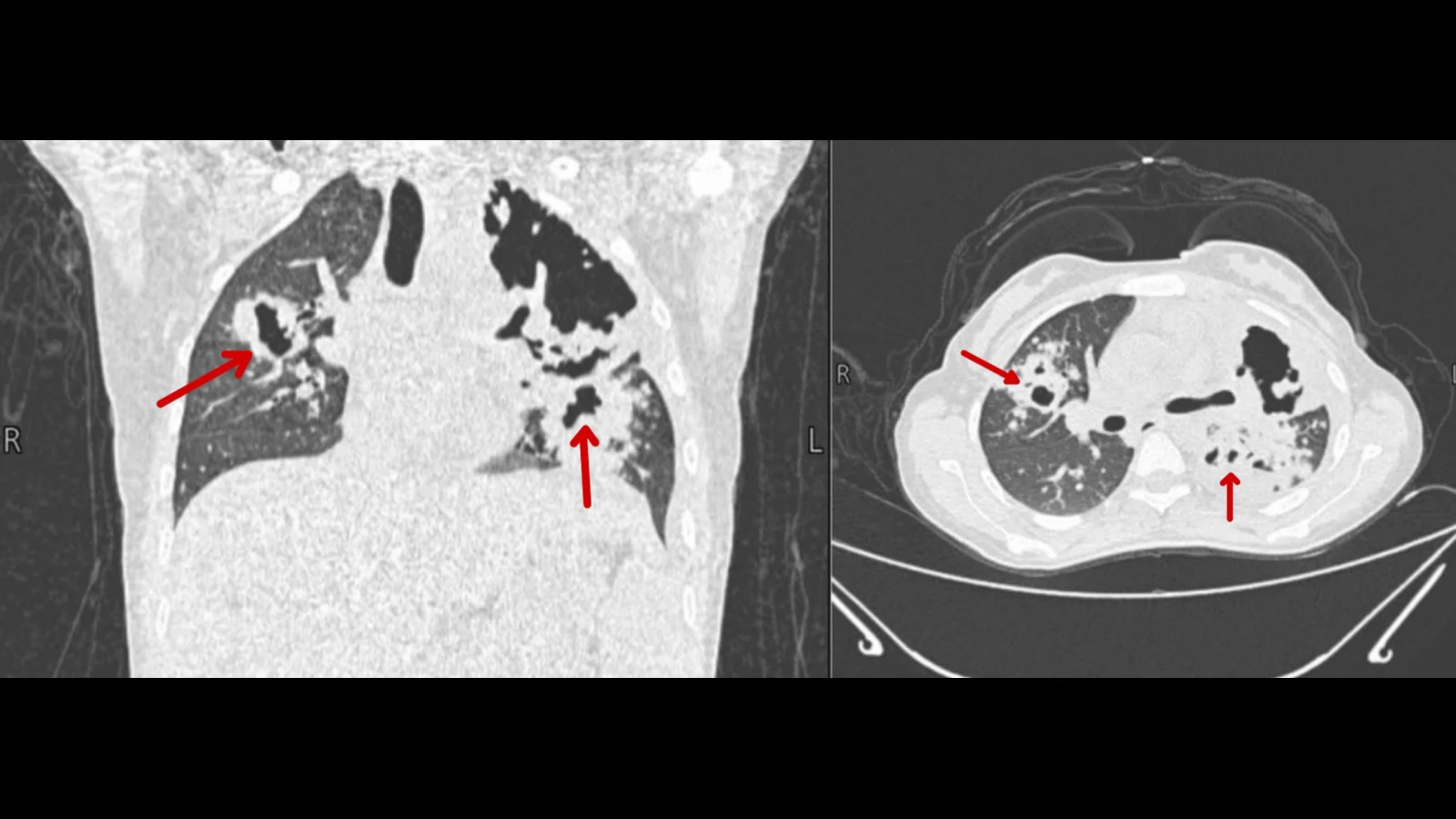
Image source and reuse details
Source: A Persistent Pulmonary Puzzle: Diagnosing Hodgkin Lymphoma in a Young Female With Chronic Respiratory Symptoms — Figure 1. Proportionally reduced and framed in WebP. Both views and the original arrows are preserved.
In this guide
Which cancers can occur at this age
The United States National Cancer Institute uses ages 15 to 39 to describe cancer in teens and young adults. Centers can use other age ranges. Examples include lymphomas, leukemias, thyroid cancer, testicular cancer, melanoma and breast cancer. The more common types vary with age.
A cancer is named for the cells where it started. Lymphoma starts in cells of the body's defense system. Leukemia affects cells that make blood. Knowing the exact type helps the team choose tests, find the right specialists and plan treatment.
Source: National Cancer Institute — Adolescents and Young Adults with Cancer · National Cancer Institute — Acute Lymphoblastic Leukemia Treatment (PDQ) — Patient Version · National Cancer Institute — Hodgkin Lymphoma Treatment (PDQ) — Patient Version
When to get checked and how doctors find the cause
Tell a doctor about a lump that stays or grows, unusual bleeding or a problem that lasts and gets worse. Repeated fever, night sweats or losing weight without trying can also need a check. Many different problems can cause these signs.
Your team might start with an exam and blood tests. Depending on what they suspect, you might need a scan or a biopsy, which takes a small sample of tissue. If leukemia is suspected, a sample from the bone marrow can help. Bone marrow is the tissue inside bones that makes blood cells.
Source: National Cancer Institute — Acute Lymphoblastic Leukemia Treatment (PDQ) — Patient Version · National Cancer Institute — Hodgkin Lymphoma Treatment (PDQ) — Patient Version · Cureus — A Persistent Pulmonary Puzzle: Diagnosing Hodgkin Lymphoma in a Young Female With Chronic Respiratory Symptoms
How doctors choose treatment
Treatment depends on the cancer type, how far it has spread and your health. A plan designed for children may suit some young people with acute lymphoblastic leukemia. For other cancers, adult services may be a better fit. Ask which team has the most experience with your type of cancer.
One example in the United States is blinatumomab for a specific kind of acute lymphoblastic leukemia of the B cells. One approved use is to help keep the gains from initial treatment when the cells have a protein called CD19 and do not have the Philadelphia chromosome. The Philadelphia chromosome is an unusual change in how some DNA is arranged inside a cell. Ask your team about safety, eligibility and access.
Source: National Cancer Institute — Adolescents and Young Adults with Cancer · National Cancer Institute — Acute Lymphoblastic Leukemia Treatment (PDQ) — Patient Version · United States Food and Drug Administration — Blinatumomab approval for consolidation in a specific type of acute lymphoblastic leukemia
Fertility and decisions before treatment
Some cancer treatments can make it harder to have children later. As soon as you can, ask what the planned care might change and who can explain your choices. If you are interested or unsure, ask to speak with a fertility specialist early. The team can coordinate the timing with your cancer doctors.
Some people can freeze sperm, eggs, embryos or ovarian tissue. Choices depend on age, development, treatment and how much time is available. Ask what might be possible after treatment too. If cancer treatment is urgent, plan the timing with your doctors.
Source: American Society of Clinical Oncology — Fertility Preservation in People With Cancer: ASCO Guideline Update · Duke Health — Teen and Young Adult Cancer Support
School, work and everyday life
Ask a social worker, teacher or someone at work about remote lessons, adjusted hours or a gradual return. Decide whom you want to tell about your health. If things feel overwhelming, ask about counseling or a group with people your age.
Ask how to manage tiredness, loss of appetite or weight loss. Your center can connect you with a nutrition specialist and help you choose suitable activity. Talk with your team before taking supplements. At the end of treatment, ask for a written summary and a follow-up plan.
Source: National Cancer Institute — Follow-Up Medical Care · National Cancer Institute — Nutrition During Cancer Treatment · National Cancer Institute — Popular Diets, Supplements, and Cancer · Gustave Roussy — Adolescents et jeunes adultes · Duke Health — Teen and Young Adult Cancer Support
What researchers are studying
Some trials test new drugs or new ways to use them. Others aim to improve life during and after treatment. Ask who can join, where it takes place, what it involves and what other options you have.
Duke University pilot study NCT07471685 is testing remote support for decisions about having children after cancer. It plans to enroll 48 women ages 18 to 39. It aims to find out whether the support can be delivered and collect early data. The registry listed it as recruiting, with estimated completion in December 2026. That date can change.
Source: National Cancer Institute — Adolescents and Young Adults with Cancer · United States National Library of Medicine — ClinicalTrials.gov — Family Building Decision Support for Female Adolescent and Young Adult Cancer Survivors
How to find a suitable service
Start with a center that has experience treating your cancer. Ask if it has a service for your age and how to access it. Some programs link pediatric and adult teams. Others mainly offer support during and after treatment.
You can search by country, city or postal code. Check the age range and whether you need a referral. For a second opinion, ask how to send your records securely. If you are receiving treatment, keep the urgent contact from your care team handy.
Find a service for teens and young adults →
Source: Fondazione IRCCS Istituto Nazionale dei Tumori — Il Progetto Giovani · Gustave Roussy — Adolescents et jeunes adultes · Duke Health — Teen and Young Adult Cancer Support
Questions to take to your appointment
- What is the exact name of the cancer and what do the tests show?
- Which team knows my type of cancer and works with people my age?
- Could treatment affect my ability to have children and when should we talk about it?
- What number should I call if I feel unwell between visits?
- Who can help with school, college, work or costs?
- What should I know about follow-up or a clinical trial?
Sources and verification
- National Cancer Institute — Adolescents and Young Adults with Cancer
- National Cancer Institute — Acute Lymphoblastic Leukemia Treatment (PDQ) — Patient Version
- National Cancer Institute — Hodgkin Lymphoma Treatment (PDQ) — Patient Version
- United States Food and Drug Administration — Blinatumomab approval for consolidation in a specific type of acute lymphoblastic leukemia
- American Society of Clinical Oncology — Fertility Preservation in People With Cancer: ASCO Guideline Update
- United States National Library of Medicine — ClinicalTrials.gov — Family Building Decision Support for Female Adolescent and Young Adult Cancer Survivors
- National Cancer Institute — Follow-Up Medical Care
- National Cancer Institute — Nutrition During Cancer Treatment
- National Cancer Institute — Popular Diets, Supplements, and Cancer
- Fondazione IRCCS Istituto Nazionale dei Tumori — Il Progetto Giovani
- Gustave Roussy — Adolescents et jeunes adultes
- Duke Health — Teen and Young Adult Cancer Support
- Cureus — A Persistent Pulmonary Puzzle: Diagnosing Hodgkin Lymphoma in a Young Female With Chronic Respiratory Symptoms
Sources checked: 2026-11-21