



Active play under five: movement, breaks and sleep by age
For young children, movement usually means playing, exploring and joining in with everyday life. It does not mean completing an adult workout. Public health recommendations combine activity, rest and sleep across the whole day. The practical aim is a varied routine that fits the child’s abilities, with safe opportunities to move.
Under one: frequent opportunities to move
Offer interactive floor play several times a day, such as reaching, grasping, kicking and moving freely in a safe space. For babies who are not yet mobile, the World Health Organization includes at least 30 minutes of tummy time across the day while awake. Begin with short periods and build up gradually, with an alert adult supervising. This is not one uninterrupted session, a sleep position or a test of development.
One to two years: activity adds up
The recommendation is at least 180 minutes, or three hours, of varied physical activity spread through the day. This can include light movement as well as energetic play: walking together, dancing, moving toys or playing with a ball. It is not three hours of continuous sport. Choose opportunities that match the child’s skills and available space.
Three to four years: include energetic play
Aim for at least 180 minutes across the day, including at least 60 minutes of moderate-to-vigorous activity. Those 60 minutes are part of the total, not an extra hour. Running games, age-appropriate climbing, jumping and lively dancing can contribute. Vary activities and allow breaks rather than turning play into a rigid training schedule.
Balance movement with quiet time and sleep
Avoid long uninterrupted periods of sitting or being restrained. The World Health Organization recommends no more than one hour at a time in devices such as a stroller or high chair. This does not override transport safety: keep the appropriate restraint during travel and plan breaks when safely stopped. Sitting together to read, tell stories or do a puzzle is valuable; the goal is not to eliminate all quiet activity.
For sedentary screen time, the World Health Organization recommends none for infants and one-year-olds, and no more than one hour a day at ages two to four; less is better. Its sleep ranges, including naps, are 14–17 hours at 0–3 months, 12–16 at 4–11 months, 11–14 at one to two years and 10–13 at three to four years. These are population recommendations, not an individual sleep diagnosis. Protect sleep instead of shortening it to fit more activity.
Make play safe and accessible
An attentive adult, a suitable surface, age-appropriate equipment and a clear play area matter more than expensive toys. Supervise water play closely and choose activities appropriate to the setting. Join in when possible and follow the child’s interest. If a baby is tired or upset, pause; the target is not a reason to force an activity. Build opportunities into small parts of the day.
Children with a disability or long-term condition should also have opportunities to be active, unless their healthcare team advises otherwise. Adapt movements, communication and equipment to their needs. Ask for an individual plan when health, prematurity or developmental concerns make general advice unsuitable. Pain, difficulty participating or changes that worry you deserve professional advice rather than pressure to meet a number.
What these recommendations mean
These figures come from public health guidance, not a new experiment or a promise of earlier milestones, better sleep or a particular weight. The World Health Organization recommendations were issued in 2019; the National Health Service activity page was reviewed in October 2025, and the British government infographic page was updated in July 2026. A later webpage date does not mean a new clinical trial. Use the guidance to plan a balanced routine and discuss individual needs with your child’s professional.
Content details
- Study design
- Public health recommendations, not a new trial. World Health Organization release: April 24, 2019. National Health Service activity guidance: reviewed October 27, 2025; practical play page reviewed March 9, 2023, with its stated next-review date already elapsed. Department of Health and Social Care infographic page: updated July 16, 2026; update history records a revised infographic on July 10 and a Welsh-language addition on July 16.
- Population and context
- Families with children under five. General age-based guidance requires individual adaptation for prematurity, disability, long-term conditions and developmental or participation concerns.
- Evidence limitations
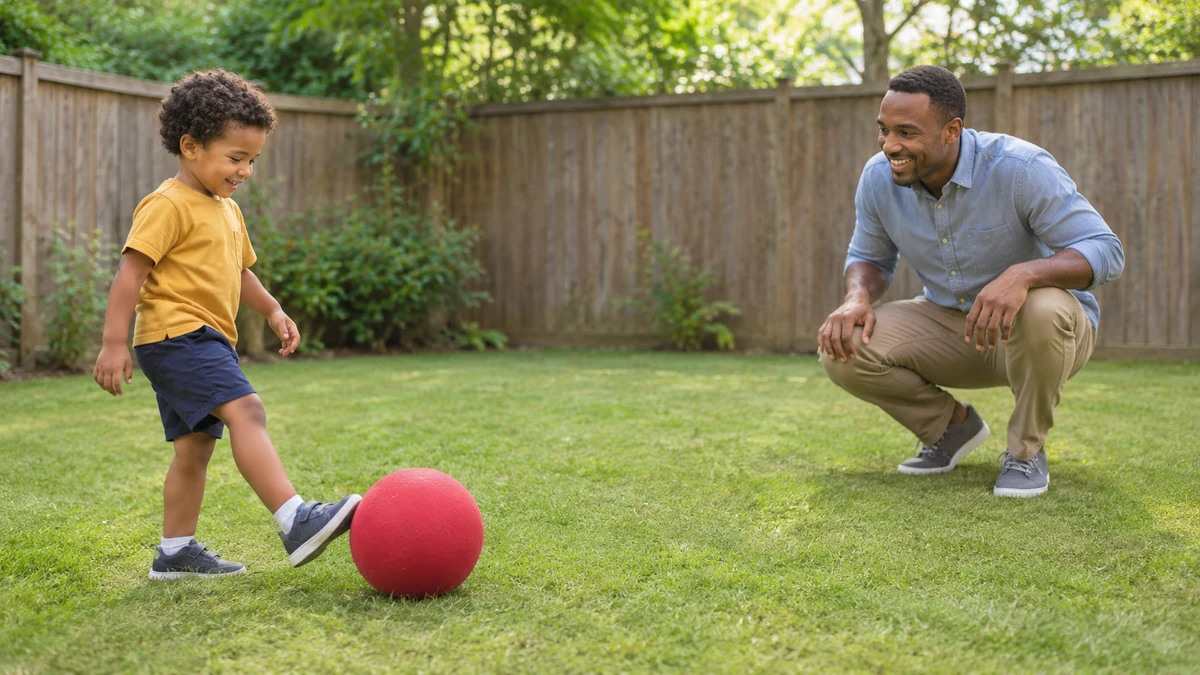
- These are population activity and sleep ranges, not diagnostic thresholds, a compulsory workout or predictions of individual outcomes. Screen recommendations cited are the World Health Organization’s 2019 guidance. The older practical page was cross-checked against newer official activity guidance. The generated image illustrates outdoor play, not a complete safety protocol or a verified age.
📚 Sources
- World Health Organization — global health agency — To grow up healthy, children need to sit less and play more
- National Health Service — public health service in England — Physical activity guidelines for children (under 5 years)
- Department of Health and Social Care — United Kingdom health and social care department — Physical activity for early years: birth to 5 years (text of the infographic)
- National Health Service — public health service in England — How to keep your baby or toddler active
Sources checked on: 16 November 2026