



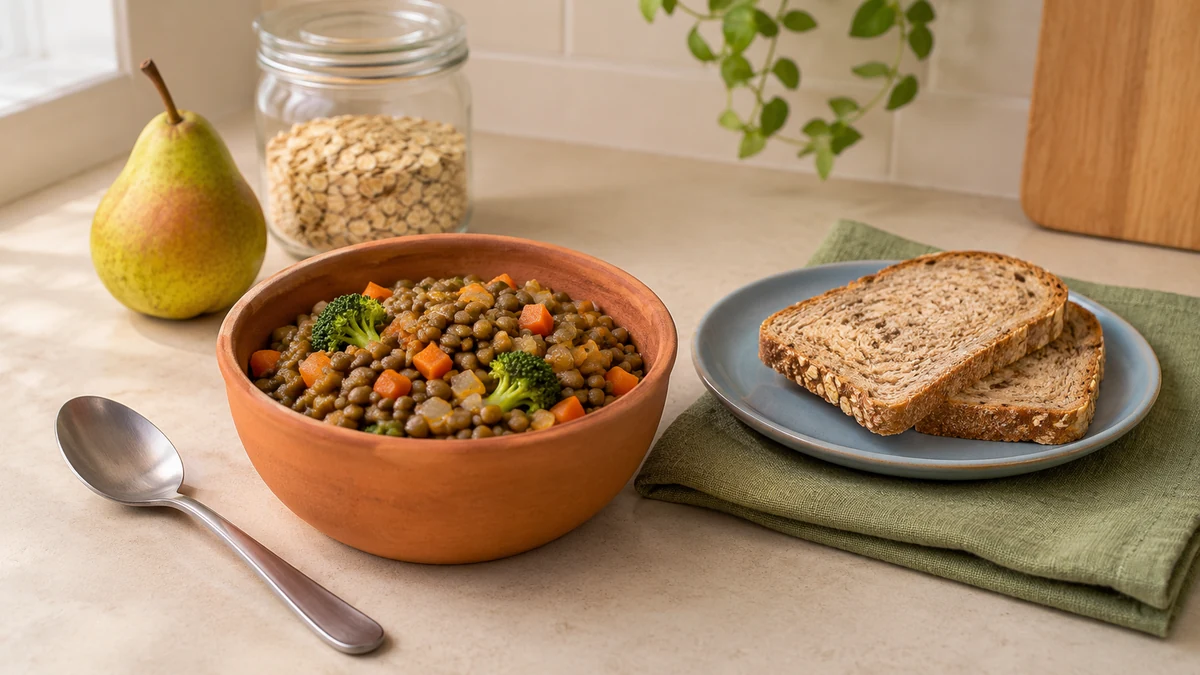
Why fiber matters and how to add it to meals
Fiber is part of plant foods that your body does not digest the way it digests sugars or starches. Some fiber helps make stools easier to pass. Gut bacteria also use certain types of fiber. Eating a variety of plant foods gives you a mix of different fibers.
Where to start
The World Health Organization recommends that adults get at least 25 grams of fiber a day from foods that naturally contain it. That is a population guideline. Whole grains, beans, fruits, vegetables and nuts can all contribute. Add a fiber-rich food to something you already eat, so you can make progress without changing your whole diet.
The WHO figure is a minimum reference. Mayo Clinic’s patient guide suggests 30–40 grams for many healthy adults; needs vary. Increase gradually and seek advice suited to your health.
Three chances to add fiber
At breakfast, try oats with whole fruit. At lunch, add chickpeas to a soup or lentils to a salad. If you eat bread, try swapping refined bread for whole-grain bread. Start with one switch you can repeat. Rotating different foods is a practical way to add variety across the week.
Build up gradually
Adding a lot of fiber at once can cause bloating or gas. Spread the changes out over time and drink enough for your needs. If you have been prescribed a low-fiber diet or have ongoing bowel symptoms, ask the professional caring for you which changes are appropriate.
How different fibers work
Some soluble fibers absorb water and form a gel. Oats and beans provide examples. These fibers can help lower LDL cholesterol (often called ‘bad’ cholesterol) and slow the absorption of sugar. Insoluble fibers add bulk to stool and help it move through the gut. Wheat bran and many vegetables supply this type. Most plant foods contain a mix, which gives you a reason to rotate your sources.
Fiber-rich foods can be filling. Studies link high-fiber diets with less colorectal cancer; that does not prove any single food prevents it.
What a serving contributes
Mayo Clinic lists about 15.5 grams of fiber in a cup of cooked lentils. Even half a cup stirred into soup adds about 8 grams. For packaged foods, compare the grams of fiber in equal amounts of food, then look at how much you actually eat. Serving sizes can differ from one label to the next. A piece of fruit also provides the edible pulp and skin that may be left behind when making juice.
For example, if a label lists 6 grams of fiber per 100 grams, a 60-gram portion provides 3.6 grams: 6 × 60 ÷ 100. These are illustrative numbers, not the values of a particular product.
Adjust the pace to your gut
If your usual diet is low in fiber, try adding one serving at a time and give your gut a few days to adjust before adding more. Getting enough fluid helps fiber do its job. If constipation keeps coming back, ask a healthcare professional whether fiber is the right first step for you. A fiber supplement can serve a specific purpose, while beans, fruit, and whole grains also bring other nutrients into the meal. Ask for individual advice before increasing fiber if you have a narrowed intestine, are recovering from bowel surgery, or have an inflammatory bowel disease flare.
Content details
- Study design
- Adults making everyday food choices.
- Population and context
- Adults making everyday food choices.
- Evidence limitations
- General guidance. Individual nutritional needs can vary.