



Pregnancy week 19: growth, sleep and pelvic comfort
Growth beneath the skin
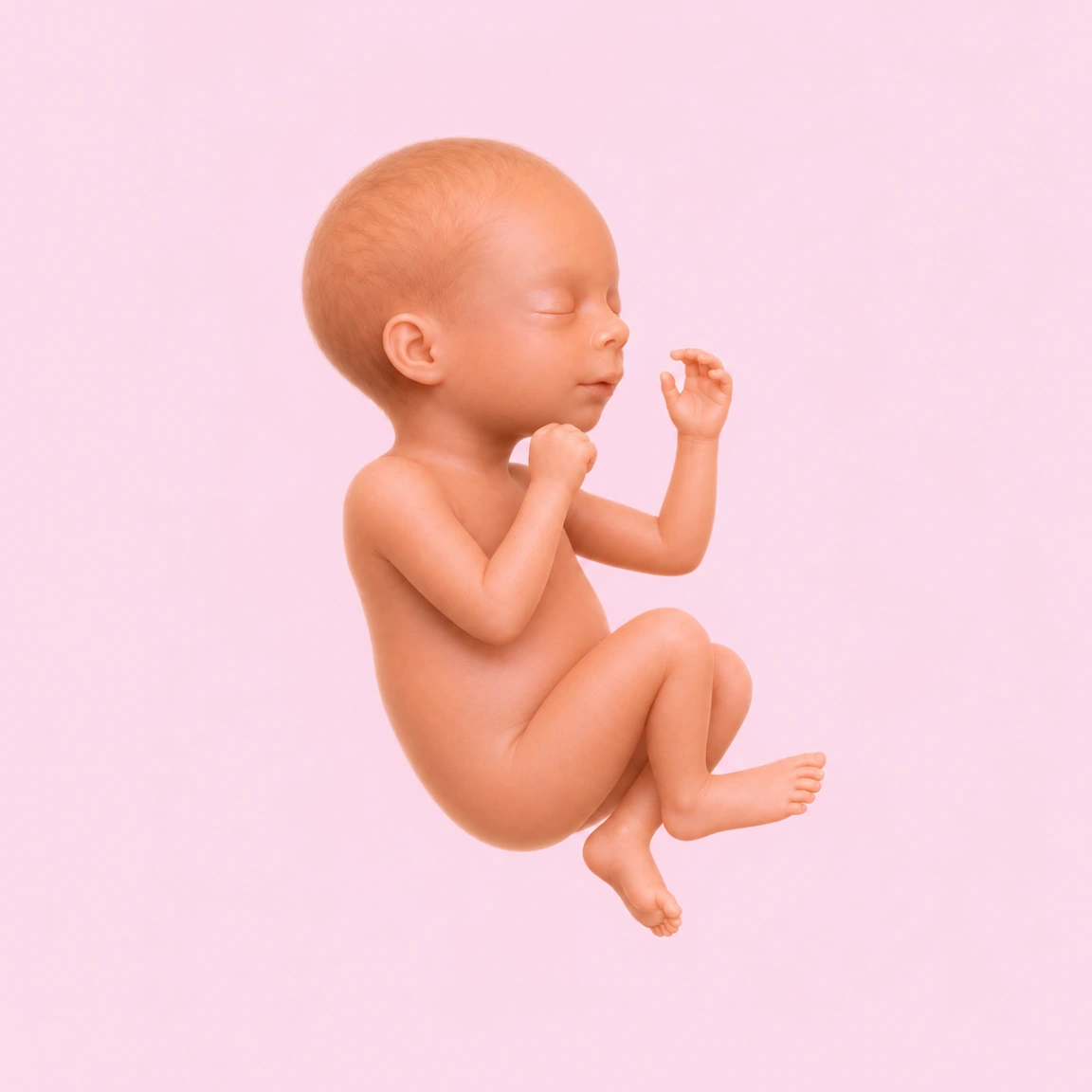
At 19 weeks counted from the last period, fertilization was usually about seventeen weeks ago. The National Health Service gives around 15.3 cm from head to bottom, roughly a large beef tomato. The extended legs are not included. The body gains weight but still has little fat. The nervous system and tooth buds within the jaws continue developing. Around this stage, a pale greasy coating called vernix begins protecting the skin from the surrounding fluid. Development is gradual, not a change that every fetus completes on one day.
Cord and placenta are omitted to show the complete isolated fetus.
First movements and what they can tell you
A flutter or rolling feeling may become easier to recognize. First movements are usually noticed between 16 and 24 weeks, sometimes after 20 in a first pregnancy. Tell the team if you have felt none by 24 weeks. Once you recognize the usual pattern, reduced or changed movement needs immediate advice, without waiting until tomorrow. A home heartbeat device cannot rule out a problem. Hearing is developing, but a reaction to your voice is not a reliable test of health.
Rest and sleep without extra worry
A calm bedtime routine, gentle relaxation and pillows supporting your abdomen or between your knees may help. Avoid caffeine late in the day. From 28 weeks, settle to sleep on either side; if you wake on your back, simply turn onto your side. There is no need to panic about changing position during sleep. Vivid dreams can happen during pregnancy and do not predict events. We cannot infer that a fetus is dreaming or assign every baby a fixed twenty-hour sleep schedule.
When tiredness needs checking
Tiredness can have several causes, including poor sleep or anemia, when the blood cannot carry oxygen as well as it should. Discuss persistent exhaustion, a racing heartbeat, paler-than-usual skin or breathlessness. Blood tests can check for anemia and help identify the cause; tiredness alone does not prove iron deficiency. Iron-rich foods may help, and supplements are sometimes prescribed. Do not start high doses or stop prescribed iron on your own. Ask about constipation or other side effects. Sudden or severe breathlessness, chest pain or fainting needs urgent care.
Abdominal and pelvic discomfort
A brief mild pulling pain at the side of the lower abdomen can come from stretching ligaments. Persistent or severe pain should not be dismissed as growth. Pelvic girdle pain can affect the pubic area, lower back or thighs, especially when walking, using stairs or turning in bed. Tell your team if movement is painful. Early advice and suitable physiotherapy can help. Try supportive shoes, sit to dress and avoid movements or heavy loads that worsen pain. A support belt may suit some people; it does not guarantee prevention of back pain or stretch marks.
Skin, sweat and everyday comfort
Hormonal changes can cause more sweating, darker nipples or a dark abdominal line. Dark facial patches may appear too. Protect your skin from strong sun. Loose breathable clothes and a supportive, comfortable bra may help. Mention itching, unusual discharge or urinary pain rather than assuming every change is harmless. Moisturizer can ease dryness, but no product guarantees that stretch marks will not form. Rest, enjoyable gentle activity and talking with someone you trust can support wellbeing; they are not a substitute for care when symptoms persist.
Your next appointment and warning signs
Check the detailed ultrasound appointment. In the English National Health Service pathway it is usually offered at 18–21 weeks; local schedules vary. It looks at development but cannot detect every condition or always show the baby’s sex. Ask for explanations and support if findings are uncertain. Seek prompt assessment for bleeding, leaking fluid, fever, repeated tightenings or persistent abdominal pain, especially with back pain or urinary symptoms. Severe pain, heavy bleeding, fainting, severe headache, vision changes or sudden swelling needs urgent advice. Speak up if something does not feel right.
How to read the size comparison
The food gives a rough sense of size. Its length and shape can vary. The photo is for comparison, and the number is an approximate length for this week of pregnancy. Growth and timing vary from one pregnancy to another.
Content details
- Study design
- Public clinical guidance on second-trimester pregnancy with an original AI-assisted educational illustration.
- Population and context
- Adults around 19 weeks pregnant.
- Evidence limitations
- The food gives a rough sense of size. Its length and shape can vary. The photo is for comparison, and the number is an approximate length for this week of pregnancy. Growth and timing vary from one pregnancy to another.
📚 Sources
- National Health Service — United Kingdom public health service — Best Start in Life — Week 19
- National Library of Medicine — MedlinePlus — Fetal development
- Health Service Executive — 17 to 20 weeks pregnant
- National Health Service — United Kingdom public health service — Your baby's movements
- National Health Service — United Kingdom public health service — Tiredness and sleep problems in pregnancy
- National Health Service — United Kingdom public health service — Iron deficiency anaemia
- National Health Service — United Kingdom public health service — Pelvic pain in pregnancy
- Royal College of Obstetricians and Gynaecologists — Pelvic girdle pain and pregnancy
- National Health Service — United Kingdom public health service — Stomach pain in pregnancy
- National Health Service — United Kingdom public health service — Common health problems in pregnancy
- National Health Service — United Kingdom public health service — 20-week screening scan
- National Health Service — United Kingdom public health service — Exercise in pregnancy
- National Health Service — United Kingdom public health service — Mental health in pregnancy
- National Health Service — United Kingdom public health service — Stretch marks in pregnancy
Sources checked on: 6 November 2026