



Pregnancy week 16: first movements, checks and travel
Growing muscles, bones and movements
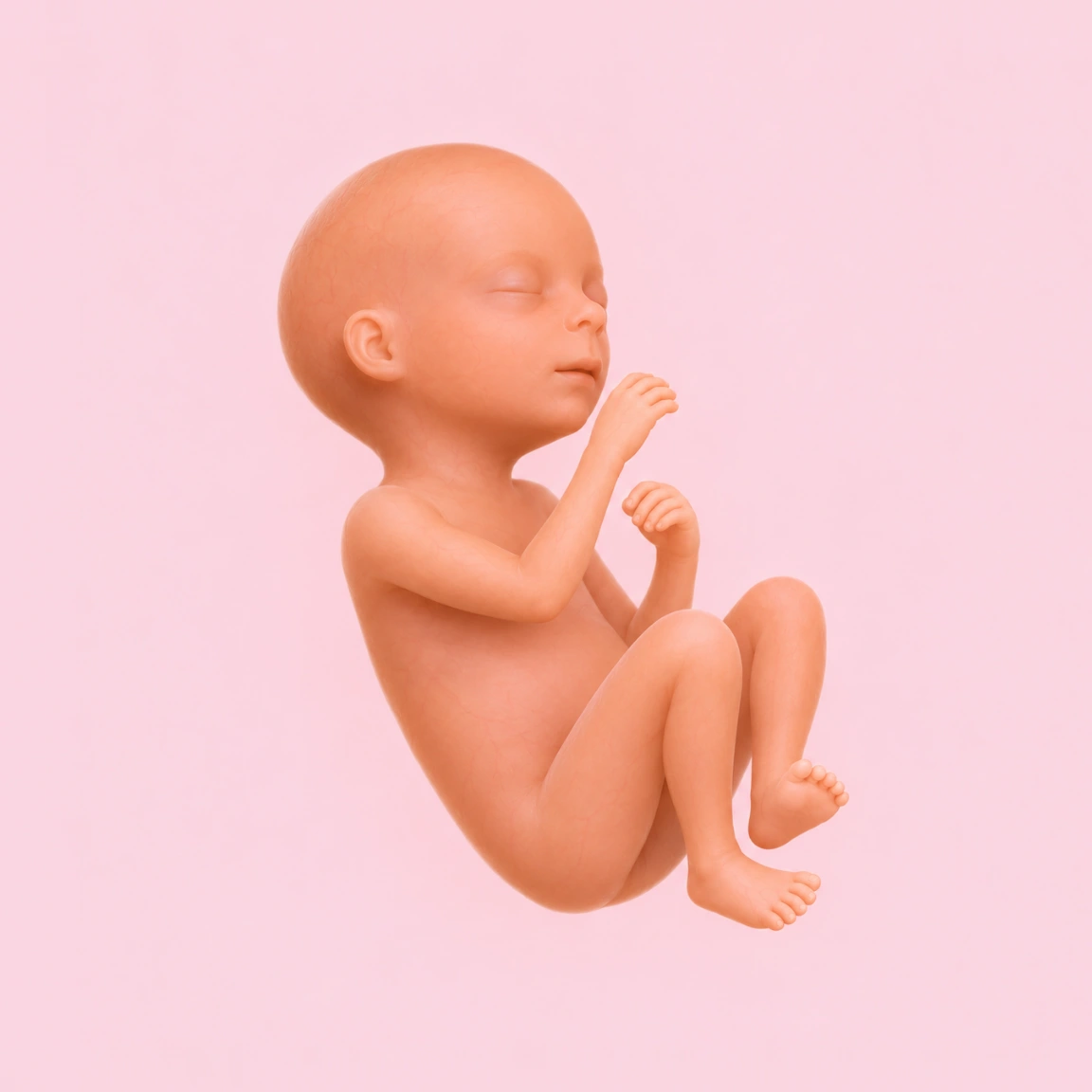
At 16 weeks from the first day of the last period, about fourteen weeks have passed since fertilization. The National Health Service gives about 11.6 cm from head to bottom, roughly an avocado. This does not include straightened legs. Muscles, bones and the nervous system keep developing. The baby stretches, moves the limbs and can make fists. Skin remains thin, and facial movements are developing. These are developmental movements, not proof of a particular emotion.
Cord and placenta are omitted to show the complete isolated fetus.
When will you feel the baby?
You may notice a flutter, swirl or small kick. First movements are usually felt between 16 and 24 weeks; in a first pregnancy it may be after 20 weeks. Not feeling movement at 16 weeks does not by itself mean something is wrong. If you have felt none by 24 weeks, tell your care team. Once you recognize your baby’s usual pattern, reduced or changed movement needs immediate advice rather than waiting until tomorrow. Do not use a home heartbeat device for reassurance.
What to discuss at your appointment
A visit around now can review blood-test and screening results, your symptoms, blood pressure and urine. In the English National Health Service pathway, early infection screening includes HIV, hepatitis B and syphilis; a positive result needs a care plan, not blame. Blood pressure and urine checks help detect problems that may have no obvious symptoms. Pre-eclampsia, a condition involving high blood pressure, is most likely from 20 weeks onward. Follow your local schedule. If amniocentesis has been offered, discuss its benefits, limits, miscarriage risk and your choice; it is not compulsory because of your age.
Constipation and changes in your skin
For constipation, try whole grains, fruit, vegetables, beans or lentils, enough water and suitable activity. Ask about medicines if this is not enough. If prescribed iron worsens symptoms, discuss a different plan; do not stop it on your own. Skin, hair and pigmentation can change. Stretch marks are common and are not a failure of skin care. Moisturizer may make dry skin more comfortable, but oils and creams are not guaranteed to prevent stretch marks. Their timing and appearance vary.
Carbon monoxide: a risk you cannot smell
Carbon monoxide is a poisonous gas with no smell or color. Tobacco smoke and faulty fuel-burning appliances can expose you to it. Keep suitable alarms working and arrange qualified appliance maintenance. Never use a barbecue, camping stove or generator indoors. If you suspect exposure, go outside and get medical advice promptly; do not re-enter until advised. Breathing difficulty, chest pain, sudden confusion or fainting needs emergency help. A breath test may be offered during pregnancy care; a raised reading needs discussion even if you do not smoke.
Planning a journey
An uncomplicated pregnancy often allows travel, but consider your health, the destination’s care facilities and insurance. There is no universal “eighth-month” flight ban. The Royal College of Obstetricians and Gynaecologists advises flying before 37 weeks with one baby and before 32 weeks with uncomplicated twins; airline limits may be earlier. Check the outward and return dates and required documents directly with the airline. Long sitting can increase clot risk. Move regularly, drink water and ask about properly fitted compression stockings or other measures for your own risk. Carry pregnancy records.
Food and movement without rigid rules
Choose varied meals with protein, iron-containing foods and suitable calcium sources. You do not need to eat for two. Energy and supplement needs depend on your circumstances; do not add iron, calcium or high doses simply because you reached week 16. Comfortable regular activity can help wellbeing and bowel function. Start gently and adapt it to your health. Ask about any restrictions, and tell the team if symptoms or worries make everyday life difficult.
Symptoms that need prompt help
Seek advice for bleeding, leaking fluid, persistent abdominal pain, repeated tightenings, fever or vomiting that prevents drinking. Heavy bleeding, severe pain, fainting, chest pain or difficulty breathing needs urgent care. A severe persistent headache, visual changes, pain below the ribs or sudden swelling of the face or hands also needs immediate assessment, even before 20 weeks. Do not dismiss these symptoms as ordinary pregnancy changes.
How to read the size comparison
The food gives a rough sense of size. Its length and shape can vary. The photo is for comparison, and the number is an approximate length for this week of pregnancy. Growth and timing vary from one pregnancy to another.
Content details
- Study design
- Public clinical guidance on second-trimester pregnancy with an original AI-assisted educational illustration.
- Population and context
- Adults around 16 weeks pregnant.
- Evidence limitations
- The food gives a rough sense of size. Its length and shape can vary. The photo is for comparison, and the number is an approximate length for this week of pregnancy. Growth and timing vary from one pregnancy to another.
📚 Sources
- National Health Service — United Kingdom public health service — Best Start in Life — Week 16
- National Library of Medicine — MedlinePlus — Fetal development
- National Health Service — United Kingdom public health service — Your baby's movements
- National Health Service — United Kingdom public health service — Your antenatal care and appointments
- National Health Service — United Kingdom public health service — Pre-eclampsia
- National Health Service — United Kingdom public health service — Carbon monoxide poisoning
- Tommy’s — Carbon monoxide testing in pregnancy
- Royal College of Obstetricians and Gynaecologists — Air travel and pregnancy
- National Health Service — United Kingdom public health service — Stretch marks in pregnancy
- National Health Service — United Kingdom public health service — Amniocentesis
- National Health Service — United Kingdom public health service — Healthy eating in pregnancy
- National Health Service — United Kingdom public health service — Exercise in pregnancy
Sources checked on: 6 November 2026