



Pregnancy week 10: growth, movements and questions for your visit
How development is changing
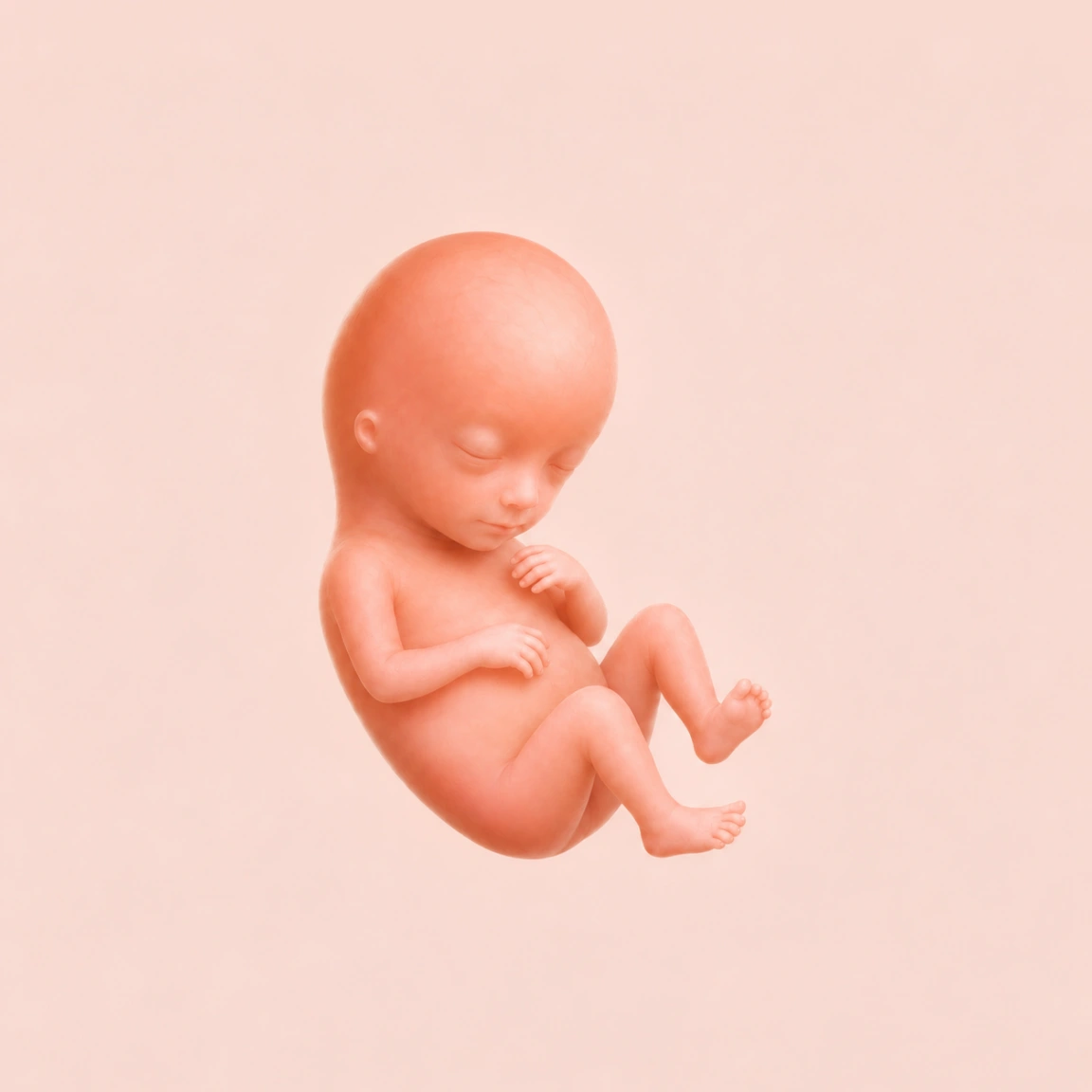
At 10 weeks by obstetric dating, about eight weeks have passed since fertilization. The National Health Service gives around 30 mm from head to bottom as a rough size, comparable to a small apricot. This is not the length from head to heel. The head is still large compared with the body. The face, outer ears and eyelids become more distinct, while the organs continue to develop. Toward the end of week 10, the developing baby is called a fetus rather than an embryo. This change in name does not mean the organs are mature.
The illustration shows a typical shape for this early stage. It is enlarged and the timing of each change varies.
Tiredness, nausea and digestion
Small movements may be seen on ultrasound, but you are not expected to feel them yet. They are usually first felt between 16 and 24 weeks. Nausea, tiredness, sore breasts, bloating and changes in appetite can continue. The number or strength of symptoms cannot tell you whether the pregnancy is healthy. For mild heartburn, try smaller meals, sit upright after eating and avoid meals within three hours of bedtime. Notice which foods make your symptoms worse. Ask your care team if these changes do not help.
Medicines and supplements
Review prescription medicines, products bought without a prescription and supplements with a doctor, midwife or pharmacist. Do not stop a prescribed medicine on your own. In the United Kingdom, the National Health Service recommends 400 micrograms of folic acid daily through 12 weeks. Your own clinician should confirm the dose and local recommendations for you. Avoid supplements containing vitamin A as retinol. If you need treatment for heartburn, tell the pharmacist you are pregnant: some products are unsuitable. Antacids should be taken at least two hours apart from folic acid or iron. Antacids are medicines that neutralize stomach acid.
Preparing for your next appointment
If prenatal care is not arranged, contact a local service. Bring your medical history, a list of medicines and any questions. Ask which blood tests and ultrasound scans are offered, when they should happen and how results are explained. Screening estimates the chance of certain conditions; it is not a definite diagnosis. Discuss the possible next steps and your choices before agreeing to a test. Appointment schedules differ between countries and pregnancies. You can ask for explanations in words you understand and for support if worry or low mood is affecting daily life.
When to ask for help
Contact your care team for bleeding, pain that does not settle, or vomiting that makes drinking difficult. Severe abdominal pain, heavy bleeding, fainting, or shoulder-tip pain with abdominal pain or bleeding need urgent medical assessment. Do not wait for a routine appointment. This guide and its images cannot diagnose your pregnancy.
MyMedNest / OpenAI — Original 3D educational illustration created with AI. Medical references for developmental anatomy are listed in Sources.
Content details
- Study design
- Public clinical guidance on early pregnancy and a documented human embryo model.
- Population and context
- Adults around 10 weeks pregnant.
- Evidence limitations
- The measurements are rough comparisons. Symptoms and illustrations cannot diagnose an individual pregnancy.
📚 Sources
- National Health Service — United Kingdom public health service — Best Start in Life — Week 10
- National Library of Medicine — MedlinePlus — Fetal development
- National Health Service — United Kingdom public health service — Vomiting and morning sickness
- Society of Radiologists in Ultrasound — A Lexicon for First-Trimester US: Society of Radiologists in Ultrasound Consensus Conference Recommendations
- National Health Service — United Kingdom public health service — Ectopic pregnancy: Symptoms
- National Health Service — United Kingdom public health service — Your antenatal care and appointments
- National Health Service — United Kingdom public health service — Medicines in pregnancy
- National Health Service — United Kingdom public health service — Indigestion and heartburn in pregnancy
- National Health Service — United Kingdom public health service — Screening tests in pregnancy
- National Health Service — United Kingdom public health service — Vitamins and supplements in pregnancy
- National Health Service — United Kingdom public health service — Your baby's movements
- National Institutes of Health 3D — Carnegie Human Embryo Stage 23
Sources checked on: 5 November 2026