



Eating well without extremes: what a balanced diet looks like in practice
A balanced diet does not depend on one exceptional food or a perfect menu. What matters is the pattern you repeat: enough nourishment, variety across food groups, appropriate portions and moderation of ingredients that can harm health in excess. Food safety matters too.
Build the meal before banning ingredients
Start with vegetables and fruit, whole grains and varied protein sources such as beans, lentils, fish, eggs or suitable lean meats. Nuts, seeds and unsaturated oils can add useful nutrients; dairy or appropriate alternatives can also fit. Choose options that suit your culture, budget and health needs. The Dietary Approaches to Stop Hypertension eating plan is designed to help lower high blood pressure. The National Institutes of Health describes it as flexible: it uses ordinary foods and adapts amounts to your energy needs. It is one option, not the only acceptable way to eat.
Make fiber easier to find
For adults, the World Health Organization recommends at least 400 grams of fruit and vegetables and at least 25 grams of naturally occurring dietary fiber a day. Whole grains, pulses, vegetables and whole fruit help meet those goals. Frozen or canned produce can be useful too when it has no added sugar or excess sodium. Increase variety rather than relying on a single fruit or a product advertised as healthy.
A practical starting point could be oats and fruit at breakfast, then a meal containing lentils, vegetables and a whole grain. This is an example of combining food groups, not a complete daily prescription; portions and additional foods depend on your needs.
Watch free sugars and the salt already in food
The World Health Organization advises keeping free sugars below 10% of daily energy; reducing them to 5% or less may offer further benefits. Free sugars include added sugar and sugars in honey, syrups and fruit juice, even juice without added sugar. They are not the same category as sugars within whole fruit. Water instead of sugary drinks is a practical change. At 2,000 calories a day, 10% corresponds to 50 grams of free sugars. That example explains the percentage; it is not a personal calorie prescription or a target to use up.
For adults, its salt target is less than 5 grams a day, equivalent to 2 grams of sodium, counting all sources. Bread, sauces, ready meals and processed meats can contribute before you add table salt. Compare labels using the same quantity of food and season with herbs or spices. National and personal targets differ: this article identifies the World Health Organization reference rather than treating every guideline as identical.
Fat quality and personal needs matter
Favor unsaturated fats, such as olive oil, nuts and fish, over frequent large amounts of butter or fatty meats. Coconut and palm oils are also high in saturated fat. The World Health Organization recommends no more than 10% of daily energy from saturated fat and 1% from trans fat; industrially produced trans fats should be avoided. Replacing butter with olive oil is a practical example. Nutritious foods still provide energy, so portions matter. Do not automatically switch to potassium-based salt substitutes if you have kidney disease or another reason to restrict potassium; seek professional advice.
Turn the guidance into everyday choices
Whole-grain bread, oats, brown rice and beans provide carbohydrates, a source of energy. A balanced diet does not require everyone to cut out this whole group. Vary protein sources too: beans, lentils and tofu can share a place with eggs, fish or lean meats. Needs differ, so a high-protein diet is not a universal goal.
When shopping, compare similar products for the same serving size. Unsweetened oats, plain frozen vegetables and no-salt-added beans offer convenient starting points. Cooking at home more often lets you control sauces, salt and fats. For dairy, lower-fat options can help reduce saturated fat; choose suitable alternatives when needed.
Alcohol is not needed for a healthy heart. If you do not drink, do not start for that reason. If you do drink, discuss the amount with your healthcare professional, especially if you have a condition or take medicine that makes alcohol unsafe.
Do I need a rigid diet?
A sustainable pattern is more useful than a short, extreme overhaul. If you have a condition requiring dietary treatment, unexplained weight changes or difficulty meeting nutritional needs, ask a qualified healthcare professional or dietitian for an individual plan. General advice complements care and cannot replace it.
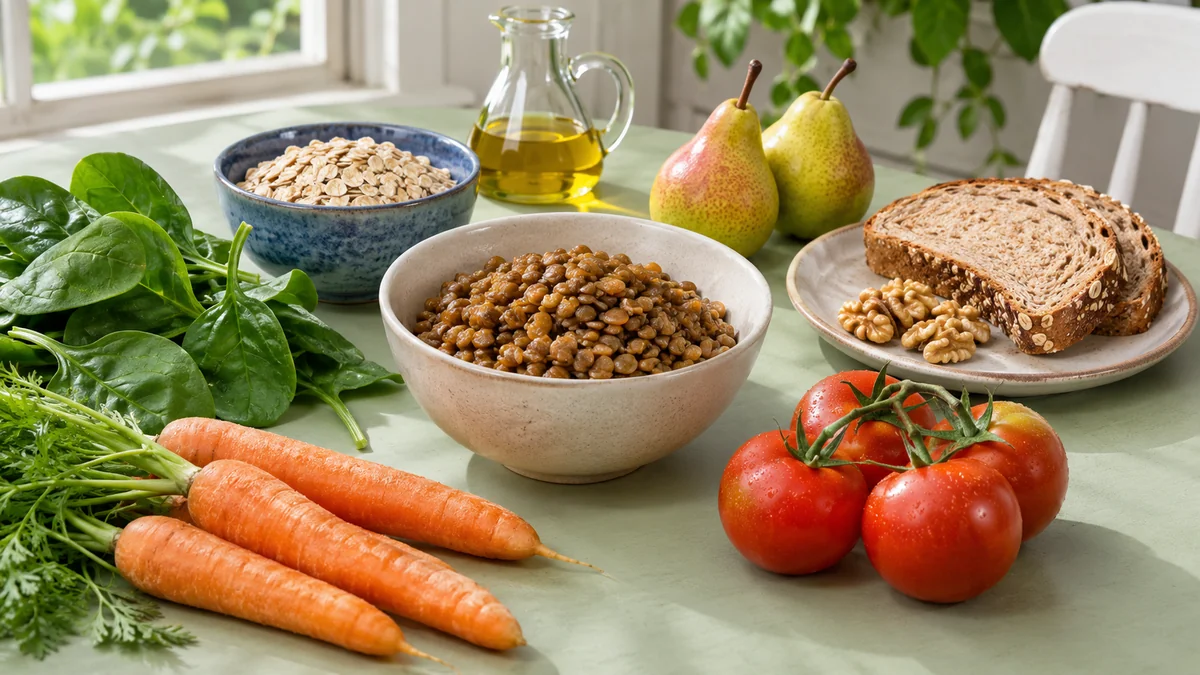
Image: an independent AI-generated still life of lentils, oats, bread, nuts, vegetables, pears and olive oil. It is an illustrative selection, not a complete meal or portion plan.
Content details
- Study design
- Public nutrition and patient guidance, not a clinical trial. World Health Organization: January 26, 2026; National Heart, Lung, and Blood Institute: December 10, 2025; NIH News in Health: February 2021. Complete main pages read; linked guidelines and recipes not separately reviewed. Adult scope; child-feeding and population policy sections are not reproduced.
- Population and context
- General adult nutrition. Children, pregnancy, allergies and medical conditions can require different quantities or individualized advice.
- Evidence limitations
- Population guidance, not a personal meal plan or a guarantee of disease prevention. Energy needs and national nutrient targets differ; clinical dietary restrictions take priority.
📚 Sources
- World Health Organization — global public health agency — Healthy diet
- National Heart, Lung, and Blood Institute — Heart-Healthy Living — Choose Heart-Healthy Foods
- National Institutes of Health — United States medical research agency — NIH News in Health — Eating Plan for a Healthy Heart
Sources checked on: 17 November 2026