




Responsive parenting: noticing your child’s signals in everyday life
Your baby makes a sound, you answer, then wait for their next response. This small exchange captures responsive parenting: noticing a child’s signals, trying to understand them and responding appropriately. It is a relationship built through everyday moments, not a performance that requires perfect attention every second.
Notice, respond and leave room for a reply
Signals can include a look, a gesture, a sound, crying or turning away. Consider what is happening: is the child seeking interaction, needing comfort or ready for a break? Respond with a calm voice, words, a smile or appropriate comforting contact, then give them time. Harvard University’s Center on the Developing Child calls these back-and-forth exchanges ‘serve and return’. The child contributes too; the adult does not have to direct every moment.
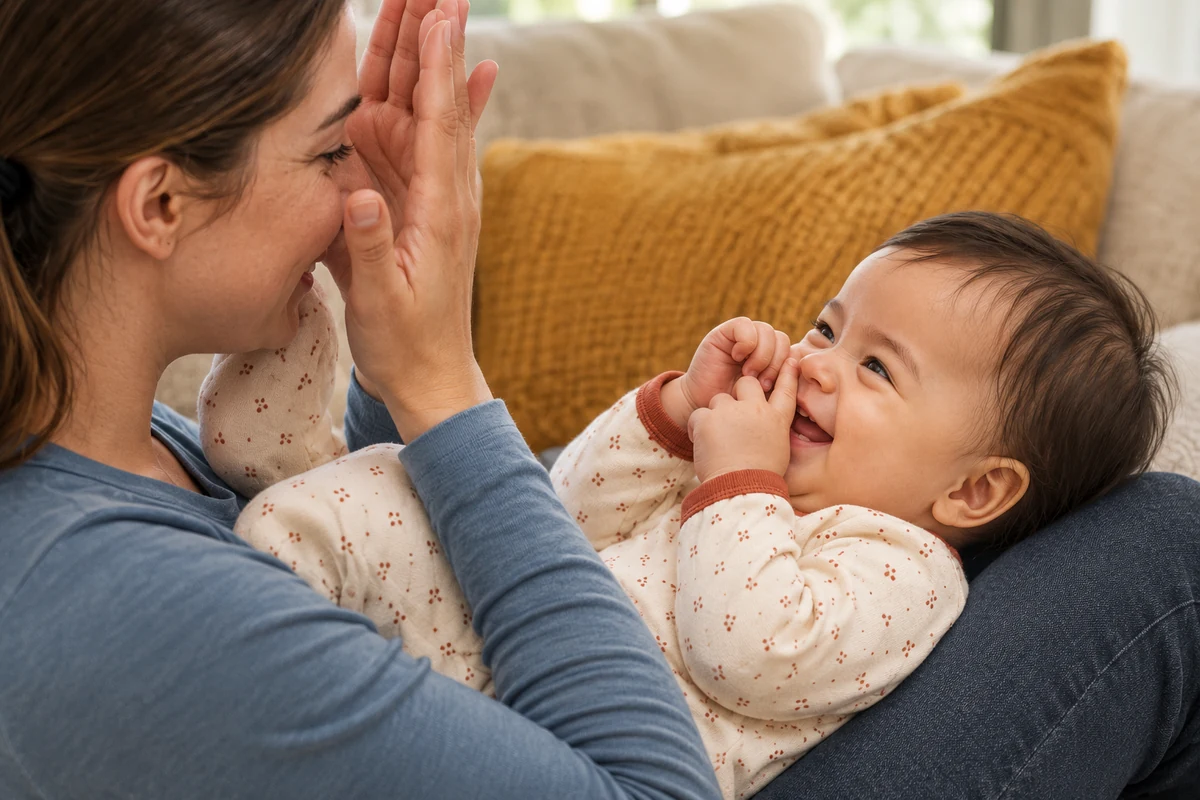
If a baby babbles, echo a sound and pause. If a toddler points at a cup, name it and respond to what they are communicating. When peekaboo is enjoyable, follow their interest; when they turn away or become upset, pause and offer comfort. These are examples, not a test or a fixed sequence that every child must follow. Different children communicate differently.
Use ordinary routines, not constant lessons
Conversations during dressing, a shared picture book, singing or safe play can create opportunities to learn. During meals, paying attention to hunger and fullness is part of responsive care; it does not replace nutrition advice or assessment of feeding problems. Choose activities suited to the child’s abilities and needs. Children with disabilities or health conditions also benefit from responsive relationships, with communication and activities adapted with professional support when needed.
What recommendations and research actually say
The World Health Organization’s 2020 guideline recommends responsive care and early learning opportunities during the first three years, support for caregivers, integration with nutrition services and psychosocial support for maternal mental health. Its recommendations are strong, with moderate-quality evidence. The focus on early childhood does not mean development stops at three or that later help is pointless.
A 2021 systematic review combined 102 randomized trials across 33 countries. Parenting programmes improved several child development outcomes, attachment, behaviour and parent–child interactions on average. They did not significantly reduce parental depressive symptoms overall. Programmes, measures and study quality varied substantially, most programmes focused on mothers, and longer-term effects remained uncertain. These findings support access to good programmes; they do not prove that a particular game guarantees intelligence, earlier milestones or an individual outcome.
Caregivers need care as well
Financial pressure, isolation, illness and exhaustion can make responding harder. This is a reason to offer practical help, accessible services and emotional support, rather than blame a parent. Share care with trusted adults where possible and ask healthcare or community services about support that fits your circumstances. The United Nations Children’s Fund’s Care for Child Development approach includes coaching caregivers through play and communication; support can be learned and practised.
A missed exchange during a busy day is not the same as a persistently absent or harmful relationship. Aim for repeated opportunities to reconnect rather than constant stimulation. Persistent sadness, anxiety or difficulty coping deserve professional attention; playing more is not a treatment for depression. Maternal mental health support is a specific part of the World Health Organization’s recommendations, not an optional reward for parenting well.
When to ask for individual advice
Ask your child’s healthcare professional about activities and communication that suit them, especially if feeding, hearing, vision or development concerns make interaction difficult. Share changes or lost skills rather than trying to solve every concern through play. Responsive care complements appropriate screening, assessment and treatment. The useful next step is often a supported conversation about what the child and caregiver each need.
Content details
- Study design
- World Health Organization guideline and summary, March 5, 2020; Joshua Jeong and colleagues, systematic review and meta-analysis, PLOS Medicine, May 10, 2021, search through November 15, 2020. United Nations Children’s Fund resource page and Harvard University overview are undated. No new trial is reported.
- Population and context
- Parents and other caregivers, with a focus on the first three years. Activities and communication require adaptation to each child’s abilities, disability or health needs and the local support available.
- Evidence limitations
- Average programme effects do not predict an individual child’s development. Heterogeneity, variable measures and study quality, limited father participation and uncertain long-term effects constrain conclusions. General parenting support does not replace targeted depression care. The image is a generated illustration of awake, supervised play, not a clinical case.
📚 Sources
- World Health Organization — global health agency — Improving early childhood development
- World Health Organization — global health agency — Improving early childhood development: WHO guideline — Summary
- United Nations Children’s Fund — United Nations agency for children — Care for Child Development
- Center on the Developing Child at Harvard University — Harvard University child development research centre, United States — Serve and Return
- Joshua Jeong and colleagues — PLOS Medicine — Parenting interventions to promote early child development in the first three years of life: A global systematic review and meta-analysis
Sources checked on: 2 November 2026