



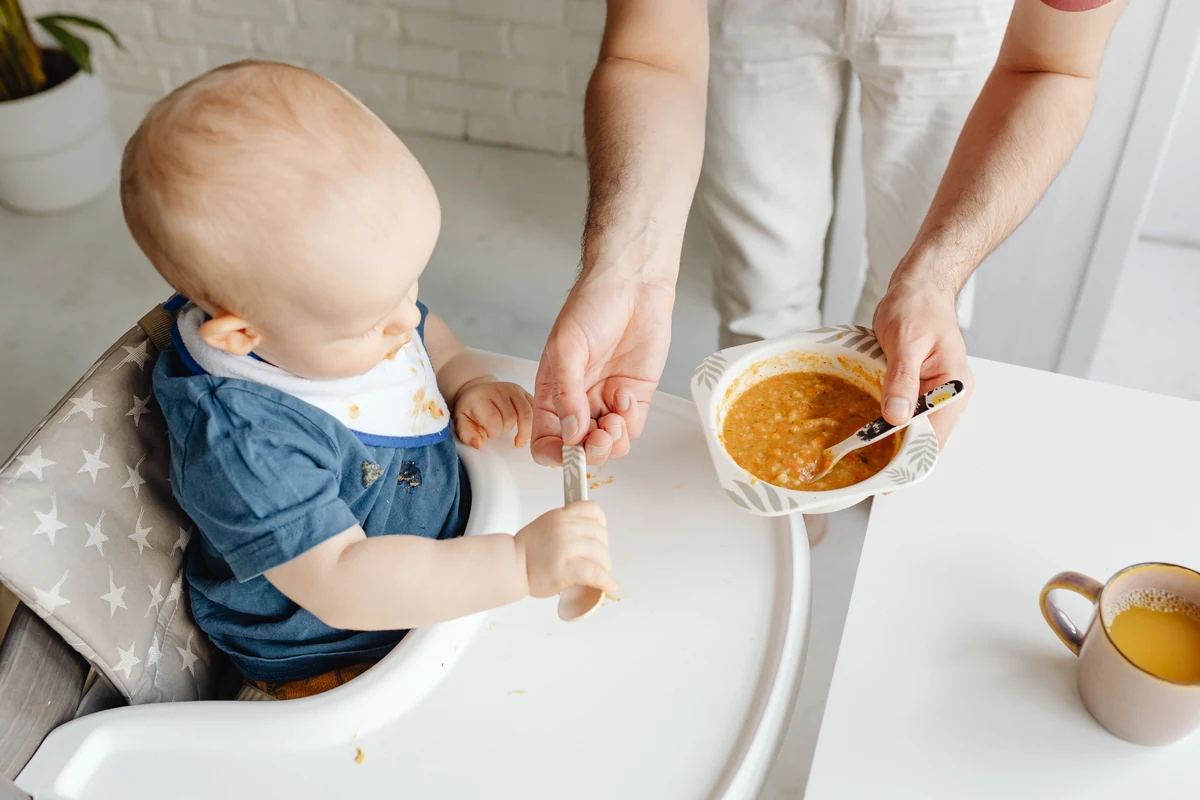
Starting solids around six months: readiness, first foods and safety
Starting solids means adding food to milk, not suddenly replacing milk feeds. Around six months, babies begin to need complementary foods for nutrition and to practice eating. The World Health Organization recommends continuing breastfeeding to two years or beyond alongside these foods. Premature babies and children with medical or feeding difficulties need an individual plan.
Look for readiness, not just a birthday
Around six months, look for a stable sitting position with good head control, coordination to bring food toward the mouth, and the ability to swallow rather than push food straight out. Wanting more milk, chewing fists or waking at night does not by itself show readiness. Solids do not guarantee longer sleep. The Centers for Disease Control and Prevention advises against introduction before four months; discuss timing with your clinician if development or growth is a concern.
Begin small and build variety
Start with a few teaspoons or soft pieces rather than a target number of full meals. Offer vegetables, fruit, grains and protein foods, including iron sources such as suitably prepared meat, beans, lentils or iron-fortified infant cereal. There is no required order of first foods. Vary cereals instead of relying only on rice cereal, which can increase arsenic exposure if it is the only cereal offered. Let your baby explore and stop when they turn away or close their mouth. Never force a spoon into a closed mouth.
Match texture to skills and keep milk feeds
Smooth purées, mashed foods and appropriately soft finger foods can all have a place. Progress to more texture as your baby can manage it; cook hard foods until easily mashed with a fork. Spoon feeding and self-feeding can be combined. Under American and English guidance, breast milk or infant formula remains the main milk drink during the first year; cow’s milk and plant drinks should not replace it before 12 months. From around six months, offer small sips of water with meals from a suitable cup. Never add cereal or food to a bottle.
Introduce allergens thoughtfully
Egg, peanut, wheat, fish and other allergenic foods can be introduced in baby-safe forms alongside other foods around six months. Introduce allergens one at a time in small amounts, and keep tolerated foods in the usual diet. The American guidance suggests waiting 3–5 days between new single-ingredient foods; local advice may differ. Eczema, especially if severe, egg allergy, an existing food allergy or an important family allergy history warrants professional advice before introduction, particularly for peanut. Do not delay allergens for months or remove major food groups without a clinical reason.
Prepare for safer meals
Seat your baby upright in a safely secured high chair and stay close and attentive throughout the meal. Avoid feeding in a moving car or stroller. Remove bones and hard pits; soften hard fruit and vegetables, and cut small round foods such as grapes lengthwise into quarters. Whole nuts, popcorn, hard raw pieces and thick spoonfuls of nut butter can block the airway. Use nuts only finely ground and mixed into food, or suitable thinly spread or thinned nut butter. Wash hands and surfaces, cool hot food, choose pasteurized dairy and cook meat and eggs thoroughly. Avoid honey before 12 months and do not add salt or sugar.
Know when help is needed
Gagging can occur while learning, but difficulty breathing, an ineffective or silent cough, or inability to make sounds requires immediate help. Call local emergency services and follow the dispatcher’s age-appropriate instructions; never blindly sweep the mouth with your fingers. Learn infant first aid before you need it. Breathing trouble or swelling of the tongue or throat after food may be anaphylaxis, also an emergency. Seek professional assessment for repeated feeding difficulties or suspected allergy rather than experimenting with restrictive diets.
Content details
- Study design
- Public health guidance, not a new trial. Centers for Disease Control and Prevention: first foods, April 14, 2026; choking, March 11, 2026. National Health Service: first foods, February 19, 2026; foods to avoid, February 18, 2026; allergies, October 22, 2024; choking first aid, October 28, 2024. World Health Organization: August 4, 2026.
- Population and context
- Families starting complementary feeding around six months. Prematurity, developmental, growth or swallowing concerns and allergy risk need individual professional advice.
- Evidence limitations
- General guidance cannot assess swallowing, growth or allergy. American and English recommendations are attributed rather than presented as universal local schedules. The photograph illustrates a meal, not a verified age or clinical technique. This article does not replace infant first-aid training.
📚 Sources
- Centers for Disease Control and Prevention — United States public health agency — When, What, and How to Introduce Solid Foods
- National Health Service — public health service in England — Your baby's first solid foods
- National Health Service — public health service in England — Foods to avoid giving babies and young children
- Centers for Disease Control and Prevention — United States public health agency — Choking Hazards
- National Health Service — public health service in England — Food allergies in babies and young children
- World Health Organization — global health agency — Infant and young child feeding
- National Health Service — public health service in England — How to stop a child from choking
Sources checked on: 2 November 2026