



Preeclampsia: warning signs, pregnancy checks and care after birth
Preeclampsia is a pregnancy-related blood-pressure disorder that can affect several organs and the placenta. It usually develops after 20 weeks, but it can first appear after birth. Some people initially feel well. That is why routine checks matter, and why a severe headache or visual problem should not be dismissed as an ordinary pregnancy discomfort. The World Health Organization’s October 2026 fact sheet estimates that it affects 3–8% of women who give birth worldwide; this population estimate does not predict one person’s risk.
Symptoms that need immediate attention
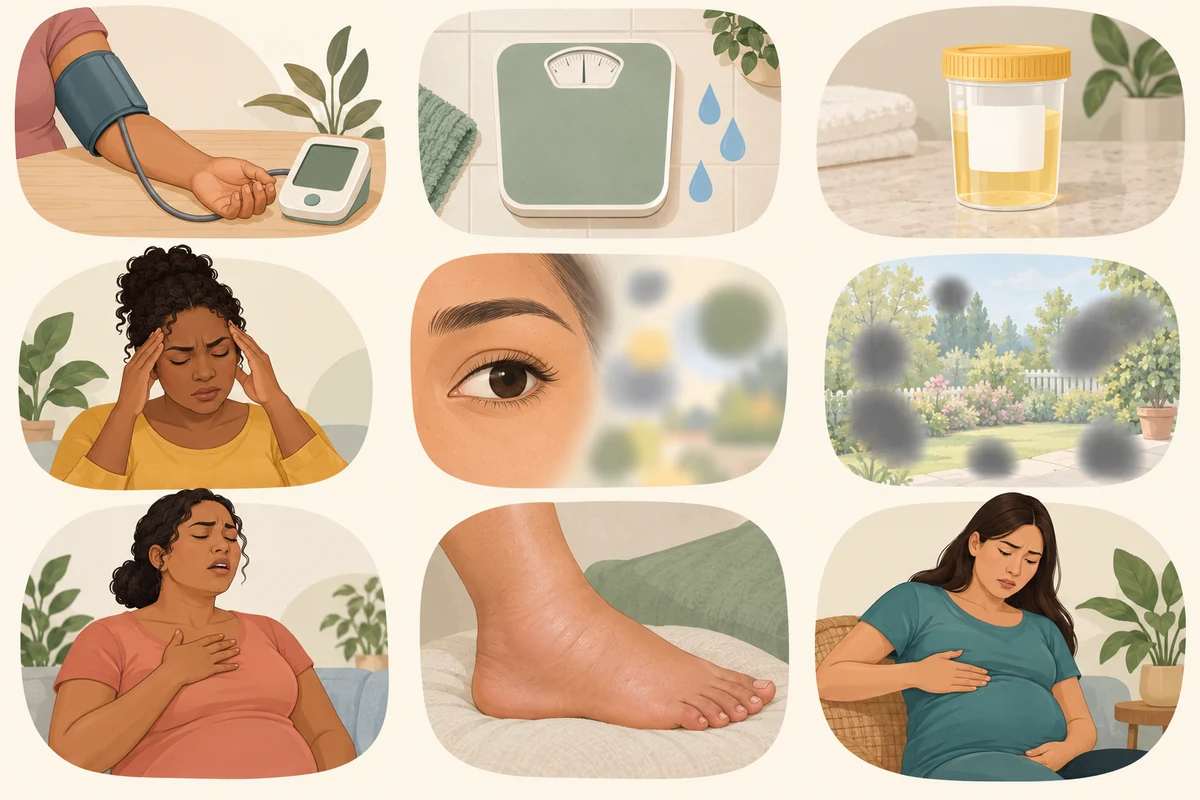
Contact your maternity service urgently for a severe or persistent headache, blurred vision, flashing lights or dark visual spots, severe pain below the ribs or in the upper abdomen, heartburn that does not respond to usual treatment, rapidly increasing swelling of the face, hands or feet, vomiting or feeling very unwell. These symptoms need assessment during pregnancy and in the weeks after birth. Do not wait for the next appointment or for several symptoms to appear together. Call local emergency services for a seizure, collapse, serious breathing difficulty, chest pain or stroke-like symptoms such as one-sided weakness or difficulty speaking. Tell staff you are pregnant or recently gave birth.
Diagnosis requires more than a symptom list
Clinicians assess new high blood pressure, commonly a systolic reading of at least 140 mmHg or a diastolic reading of at least 90 mmHg, alongside protein in urine or other evidence of organ or placental dysfunction. Protein in urine is not essential in every case. Severe readings include systolic pressure of at least 160 mmHg or diastolic pressure of at least 110 mmHg and need urgent care. These are clinical thresholds, not a complete home diagnosis. Do not wait hours to repeat a severe reading or collect urine before seeking urgent advice.
Assessment may include repeat blood-pressure measurements, urine protein testing, blood tests for platelets and liver and kidney function, and ultrasound or fetal-heart monitoring according to the situation. High blood pressure and proteinuria may be detected before you notice anything wrong. Ordinary ankle swelling alone is common, but sudden swelling with other warning signs deserves prompt assessment. Symptoms and tests must be interpreted together.
Risk assessment and prevention are individual
Risk factors include previous preeclampsia, chronic hypertension, kidney disease, diabetes, lupus or antiphospholipid syndrome. A first pregnancy, twins or more, family history, higher body mass index and older age can also influence the assessment. Risk is not certainty or a measure of personal fault. Eligible patients may be prescribed low-dose aspirin. As an English example, National Institute for Health and Care Excellence guidance specifies 75–150 mg daily from 12 weeks until birth for defined risk groups. Other local protocols may differ. Do not start aspirin or calcium supplements yourself. The World Health Organization recommends calcium supplementation where dietary calcium intake is low. No lifestyle measure guarantees prevention; restricting salt solely to prevent preeclampsia is not recommended by the English guideline.
Treatment protects both parent and baby
Preeclampsia can impair fetal growth or cause placental abruption and premature birth. Severe complications include organ damage, stroke, eclampsia with seizures, and HELLP syndrome: breakdown of red blood cells, raised liver enzymes and a low platelet count. These complications can be life-threatening. Treatment depends on severity and gestational age. Blood-pressure medicines reduce risks; injectable magnesium sulfate, when indicated and monitored by clinicians, prevents or treats seizures. The World Health Organization reports that it can more than halve the risk of eclampsia in women with preeclampsia. That is a relative reduction, not a guarantee, and is not achieved by taking an oral magnesium supplement.
The team also decides when birth is safest, balancing maternal and fetal health with prematurity. Birth is often planned around 37 weeks, or earlier if the condition is severe or worsening. Corticosteroids may be offered for fetal lung development when preterm birth is expected. A caesarean is not automatic; vaginal birth may be appropriate. Ask about monitoring, medicines, warning signs and the reasons for the proposed birth plan.
Follow-up continues after delivery
Birth does not immediately remove every risk. Symptoms can persist or begin after delivery, and blood-pressure treatment and checks may continue for weeks. Follow the discharge plan; urgent symptoms should not wait for a routine review. English guidance includes a medical review at 6–8 weeks, alongside earlier checks according to need. A history of preeclampsia is associated with greater later risk of hypertension, heart disease, stroke and kidney disease. Tell your primary-care clinician and discuss long-term health and planning for any future pregnancy.
Content details
- Study design
- Institutional guidance, not an original study: World Health Organization fact sheet October 6, 2026; American Heart Association March 20, 2026; National Health Service reviewed March 23, 2026; Royal College of Obstetricians and Gynaecologists patient guidance updated May 2026; National Institute for Health and Care Excellence guideline updated April 17, 2023; Cleveland Clinic updated May 28, 2024.
- Population and context
- General information during pregnancy and after birth. English aspirin doses and review timing are attributed to that pathway; eligibility and local protocols may differ.
- Evidence limitations
- Symptoms and a single home reading do not establish the full diagnosis. Proteinuria is not required in every case. Population estimates and relative treatment benefits do not predict individual outcomes. Prevention and treatment require clinical assessment.
📚 Sources
- World Health Organization — United Nations health agency — Pre-eclampsia
- National Health Service — public health service, England — Pre-eclampsia
- National Institute for Health and Care Excellence — health guidance body, England — Hypertension in pregnancy: diagnosis and management (NG133): Recommendations
- Royal College of Obstetricians and Gynaecologists — medical professional college, United Kingdom — Pre-eclampsia
- American Heart Association — cardiovascular health organization, United States — Preeclampsia, High Blood Pressure and Maternal Health
- Cleveland Clinic — nonprofit academic medical center, United States — Preeclampsia
Sources checked on: 30 October 2026