



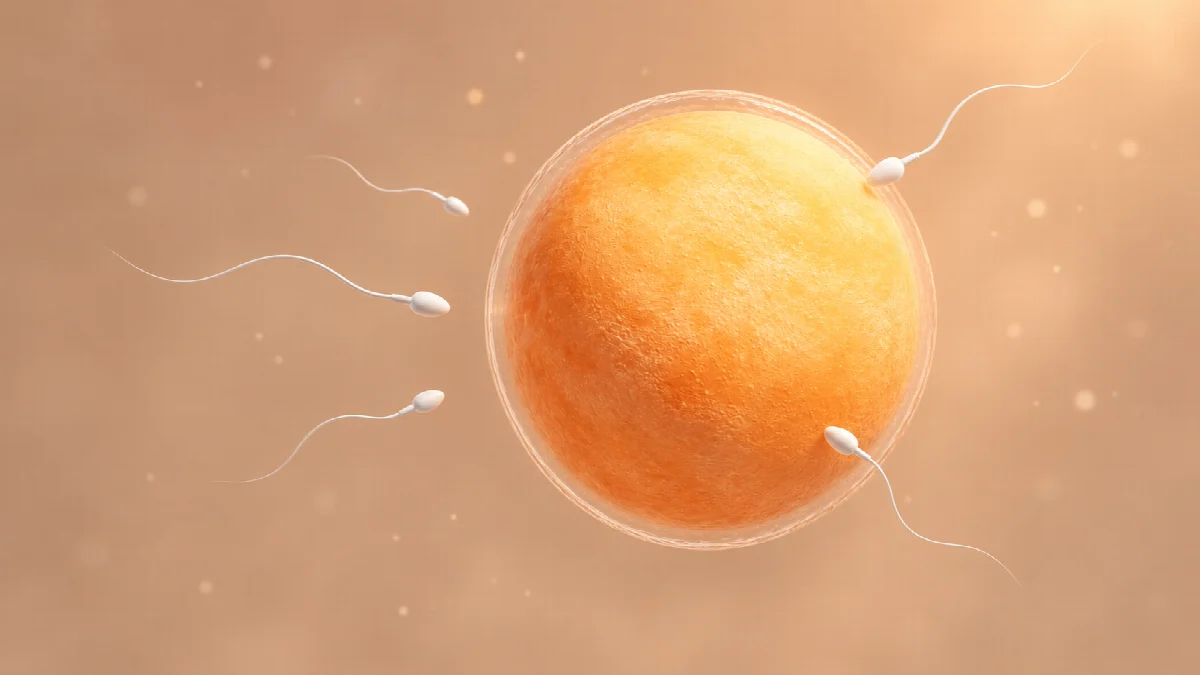
How conception happens, from ovulation to implantation
Fertilization and implantation are two separate steps. Fertilization usually happens in a fallopian tube, a passage between an ovary and the uterus. Implantation happens a few days later in the lining of the uterus.
When can fertilization happen?
During ovulation, an ovary releases an egg. The egg can usually be fertilized for about 12–24 hours. Sperm can live in the female reproductive tract for about 3–5 days. That’s why sex in the days before ovulation can lead to pregnancy. The day you ovulate can vary from one cycle to the next.
What happens between fertilization and implantation?
Sperm first meet the cells around the egg, then a protective layer called the zona pellucida. The tip of a sperm cell helps it get through these layers. Usually only one sperm fuses with the egg. The resulting cell is called a zygote. Over the next few days it divides as it travels toward the uterus. It forms a tiny group of cells called a blastocyst, which can attach to the uterine lining. That’s implantation.
Can you tell right away?
How you feel can’t confirm fertilization or implantation. A pregnancy test detects a hormone called hCG. You can take most tests from the first day of a missed period. If you don’t know when your period is due, wait at least 21 days after you last had sex without birth control. If the result is negative and you still think you might be pregnant, test again in a few days. If the second test is negative and your period still hasn’t started, talk to a healthcare professional.
Content details
- Study design
- Patient education sources and anatomy textbook
- Population and context
- Adults looking for information on natural conception and pregnancy tests.
- Evidence limitations
- Timing is approximate and varies by person and cycle.