




Exercise with osteoporosis. Which activities can help and which need care
An osteoporosis diagnosis can make you think twice about walking, gardening or going to the gym. Your bones are more fragile, especially in the hip and spine. A plan that fits your health can help you build strength, improve balance and keep moving with more confidence.
What to check before you start
Ask a healthcare professional or physical therapist which activities need changes. Tell them about any previous fracture, especially a spinal fracture, and any pain or falls. They may review your bone density and how well you move. Pick an activity you enjoy and can keep doing. That matters more than choosing something that sounds good on paper.
Strength work and exercise on your feet
Strength exercises can use light weights, resistance bands or your own body weight. A program can work several muscle groups, including the upper back muscles that support posture. Ask for help with your form and with adjusting equipment without twisting your back. Choose a starting weight with your care team.
During weight-bearing activities, your bones support your body as you move. Walking, low-impact dancing and gardening are examples. These activities work the bones in the legs, hips and lower spine while helping your heart and circulation. Swimming and cycling can build fitness, but they put less weight on your bones. If you like those activities, ask how to add strength exercises and some movement on your feet.
Flexibility and balance
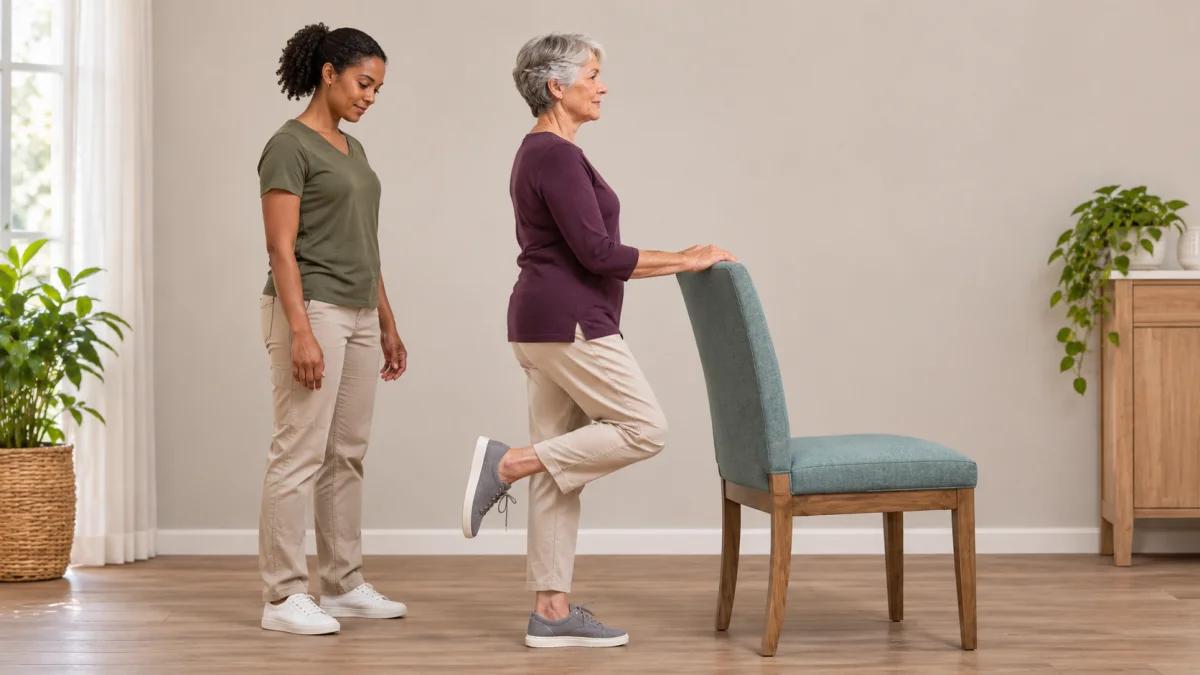
Stretch after your muscles have warmed up. Move gently and skip bouncing or folding forward at the spine. For balance, you might start near a sturdy support with an exercise that matches your ability. Tai chi is another way to practice balance. If you feel unsteady, get a demonstration before you try an exercise alone.
Moves to discuss with your care team
Jumping, running and quick, jerky movements may put too much stress on fragile bones. Deep forward bends and strong twists, including some sit-ups, can be hard on the spine. Bring a list of the activities you want to keep doing. Ask which movements you can adapt and how to work the same muscles more safely.
How to notice progress
Strength and balance can change with practice. You may notice it when getting up from a chair feels easier or when you feel steadier while turning. Ask a physical therapist to pick one or two tasks you can revisit. Strength work can also help maintain bone density. Regular activity may ease pain for some people. If you develop new pain, check in before increasing the weight or difficulty.
A professional can show you how to keep your back steady and move through a range that suits you. You might stretch at the end of the session or after warming up first. If you prefer moving on your feet, ask whether an elliptical machine, a low-impact exercise class or a few stairs are a good fit.
What a balance program can look like
In the Otago program described by the CDC, a professional picks leg-strengthening activities, balance exercises and a walking plan for each person. The exercises change as the person gains skill and confidence. A sturdy support and someone standing nearby can help at first, as shown in the cover image. The example can be adapted for someone who has had fractures or tends to fall. Bring up everyday movements that worry you at the next visit, such as bending down or lifting something.
Content details
- Population and context
- Adults living with osteoporosis who want to stay active.
- Evidence limitations
- Exercise choices, loads and movement limits depend on individual fracture risk.
📚 Sources
- Mayo Clinic News Network — Mayo Clinic Q and A: Osteoporosis and exercise
- Mayo Clinic — Exercising with osteoporosis: Stay active the safe way
- Centers for Disease Control and Prevention — A CDC Compendium of Effective Fall Interventions, The Otago Exercise Program (p. 8)
Sources checked on: 9 November 2026