



How to make your home safer and lower the risk of falls
To keep moving around your home independently, notice where you step around obstacles, struggle to see or reach for support. Start with routes you use every day. A light that is easy to switch on or a clearer walkway can take away a common trip hazard.
From bed to bathroom
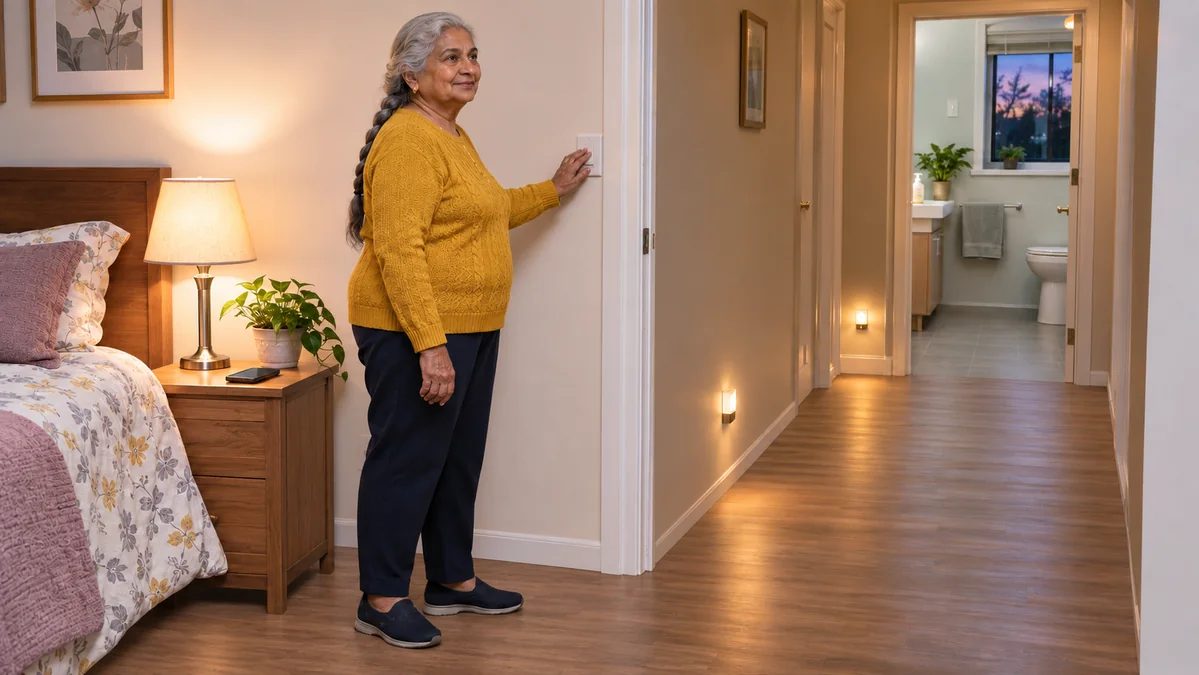
Check the route you take at night. Keep a light near the bed and put a nightlight in the hall. Move cords, shoes and other items out of the way. Remove small rugs that slip or secure the edges of rugs that need to stay. Use nonslip surfaces where the bathroom floor gets wet.
Where you need support
Check that stairs are well lit and the handrail is solid. Install properly mounted grab bars by the shower and toilet where needed. A towel rack can give way under your weight. Store items you use often where you can reach them without climbing on a chair. Include lighting at both the top and bottom of the stairs, and ask about securely fitted handrails on both sides.
If a fall has just happened
Call the local emergency number immediately if the person cannot get up or may have injured their head, back, neck or hip. Do not try to lift someone who has fallen by yourself. If they are in pain, injured or unwell, seek urgent medical advice. The prevention check below does not replace that immediate help.
What to bring up after a fall
Talk with a health professional after a fall or even a near-fall, or if you feel dizzy when you get up. Mention medications and changes in vision. You do not have to wait for it to happen repeatedly. If you are unsure where to start, ask whether a home safety assessment is available.
Keep everyday support within reach
A sturdy chair in the bedroom lets you sit while getting dressed. When you sit on the edge of the bed, your feet should reach the floor; ask about a suitable height if they do not. Keep glasses and a bedside light easy to reach. Carry a phone or personal alarm when moving between rooms, so it is available if you need help.
Walk through your home the way you use it
Start at the entrance, then follow your usual routes to the kitchen, bathroom, and bedroom. Check for raised thresholds, rug edges, and light switches you can reach before entering a dark stretch. Keep stair treads clear and make sure the handrail is within reach along the flight. Put everyday items between waist and shoulder height so you have fewer reasons to stretch or climb.
Set up support before you need it
A suitable shower seat can help if standing is difficult. Ask for advice on the model and where to anchor grab bars if you are unsure. Check the footwear you use at home. Secure shoes that fit and grip the floor can offer more stability than socks on a smooth surface. If you use a cane or walker, have someone qualified check the fit and show you how to use it.
Look at strength, balance, and medicines too
Hazards at home are one part of fall risk. If you feel unsteady, a healthcare professional can assess strength and balance and suggest suitable exercises. Bring a list of medicines and mention dizziness, changes in vision, or times you almost fell. Note where it happened and what you were doing. You can start with your most-used route today and plan any work that needs professional installation. Include medicines bought without a prescription when asking your doctor or pharmacist to review anything that may make you dizzy or sleepy.
Content details
- Study design
- Public safety and patient guidance, not a clinical trial. NCOA: September 4, 2026; MedlinePlus: April 9, 2026; NIA one-page PDF has no printed date; CDC: January 27, 2026; NHS: March 6, 2025. Complete main pages and PDF read; linked studies and additional checklists not separately reviewed.
- Population and context
- Older adults and people helping them make their home safer.
- Evidence limitations
- Fall risk also depends on individual factors. Changes should suit the actual home.
📚 Sources
- National Council on Aging — How to Prevent Falls at Home: Home Safety Tips for Older Adults
- U.S. National Library of Medicine, MedlinePlus — Preventing falls
- National Institute on Aging — Home safety tips for older adults
- Centers for Disease Control and Prevention — Preventing Falls and Hip Fractures
- National Health Service — Falls
Sources checked on: 17 November 2026