



Pregnancy week 18: movements and the detailed ultrasound
Growth and developing skills
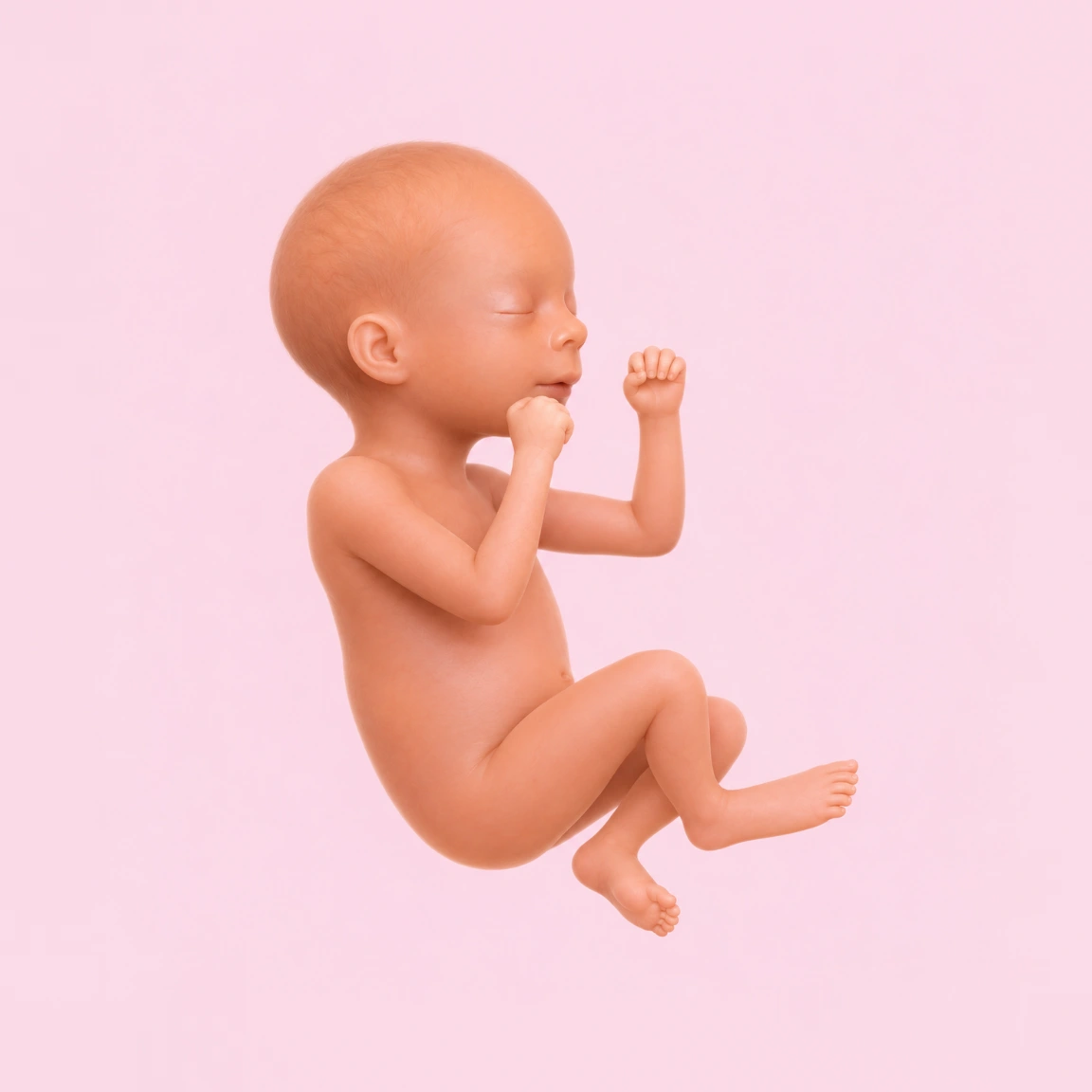
At 18 weeks from the last menstrual period, about sixteen weeks have usually passed since fertilization. The National Health Service gives around 14.2 cm from head to bottom, roughly a bell pepper. This excludes the extended legs. Arms and legs move, bones continue hardening, and swallowing and sucking skills develop. Skin remains thin. Hearing develops gradually; this is not a promise that every baby recognizes voices now.
Cord and placenta are omitted to show the complete isolated fetus.
Feeling movement: what to expect
First movements may feel like bubbles, fluttering or a small roll. They are usually noticed between 16 and 24 weeks; in a first pregnancy, sometimes after 20. Not feeling them yet at 18 weeks is not by itself a diagnosis. Tell your care team if you have felt none by 24 weeks. Once you recognize the usual pattern, less or changed movement needs immediate advice. Do not use a home heartbeat device, a sweet drink or herbal tea as a substitute for assessment.
Preparing for the detailed ultrasound
In the English National Health Service pathway, the detailed screening ultrasound is usually offered at 18–21 weeks; follow your local schedule. It examines structures such as the brain, spine, heart, face, kidneys and abdomen, and checks growth and the placenta. It cannot find every condition. A repeat visit may be needed if the views are unclear. Ask about preparation, including whether a full bladder is needed. You may be able to learn the baby’s sex, but this is not guaranteed or the scan’s main purpose. Tell the team if you do not want to know. An unexpected finding may lead to specialist review and optional further tests.
Cordocentesis is a specialist test
Cordocentesis means taking fetal blood, usually from the umbilical cord, with ultrasound guidance. Reaching week 18 does not mean you need it. It is reserved for particular concerns, such as suspected severe fetal anemia, when the benefit justifies the risks and lower-risk tests are unsuitable. Timing depends on the indication and center. Discuss bleeding, changes in heart rate, infection and pregnancy-loss risks with the specialist. It is different from a routine ultrasound or amniocentesis.
Body changes and dizziness
Your growing abdomen can affect balance; breasts, skin pigmentation and comfort may change. A darker line on the abdomen often fades after birth. Weight gain varies with your starting circumstances and pregnancy; a fixed 4–6 kg target does not fit everyone. If you feel faint, sit down and, if it does not pass, lie on your side and seek advice. Get up slowly. Persistent dizziness, a collapse or severe symptoms need assessment rather than an assumption of low blood pressure.
Constipation and hemorrhoids
Hemorrhoids are swollen blood vessels around the anus or lower rectum. They can itch, hurt or bleed after a bowel movement. To reduce straining, try fiber-rich foods, enough water and suitable activity. Clean gently and avoid prolonged sitting or standing. Ask a clinician or pharmacist about pregnancy-safe treatment before using creams or medicines. Have new or persistent rectal bleeding checked; do not automatically blame hemorrhoids. If you cannot tell whether blood is vaginal or rectal, seek advice.
Swelling: what should be checked
Mild swelling in both ankles can occur. Comfortable shoes, movement and raising the feet may help. Sudden swelling, especially of the face or hands, or swelling with a severe headache, vision changes or pain below the ribs needs immediate advice. One painful, warm, swollen or discolored leg needs prompt assessment for a blood clot. Sudden breathlessness, chest pain, coughing blood or collapse is an emergency.
Daily care and warning signs
Choose varied meals and comfortable regular activity; you do not need to eat for two. Ask about pelvic floor exercises and relax the muscles fully between squeezes. Moisturizer may soothe dry skin, but no cream guarantees prevention of stretch marks. Arrange support when tiredness or worry makes daily life difficult. Seek prompt care for bleeding, leaking fluid, fever, persistent abdominal pain or repeated tightenings. Severe pain, heavy bleeding or fainting needs urgent help.
How to read the size comparison
The food gives a rough sense of size. Its length and shape can vary. The photo is for comparison, and the number is an approximate length for this week of pregnancy. Growth and timing vary from one pregnancy to another.
Content details
- Study design
- Public clinical guidance on second-trimester pregnancy with an original AI-assisted educational illustration.
- Population and context
- Adults around 18 weeks pregnant.
- Evidence limitations
- The food gives a rough sense of size. Its length and shape can vary. The photo is for comparison, and the number is an approximate length for this week of pregnancy. Growth and timing vary from one pregnancy to another.
📚 Sources
- National Health Service — United Kingdom public health service — Best Start in Life — Week 18
- National Library of Medicine — MedlinePlus — Fetal development
- National Health Service — United Kingdom public health service — Your baby's movements
- National Health Service — United Kingdom public health service — 20-week screening scan
- University Hospital Southampton National Health Service Foundation Trust — Tests and treatment you may be offered (fetal medicine)
- Society for Maternal-Fetal Medicine — Clinical Guideline #6: Fetal blood sampling — reaffirmed 2024
- National Health Service — United Kingdom public health service — Piles in pregnancy
- National Health Service — United Kingdom public health service — Common health problems in pregnancy
- National Health Service — United Kingdom public health service — Swollen ankles, feet and fingers in pregnancy
- Centers for Disease Control and Prevention — United States public health agency — Understanding Your Risk for Blood Clots with Pregnancy
- National Health Service — United Kingdom public health service — Stretch marks in pregnancy
- National Health Service — United Kingdom public health service — Healthy eating in pregnancy
- National Health Service — United Kingdom public health service — Exercise in pregnancy
- Tommy’s — A guide to pelvic floor exercises
Sources checked on: 6 November 2026