



Pregnancy week 17: growth, leg cramps and preparing for birth
A growing baby, not a miniature newborn
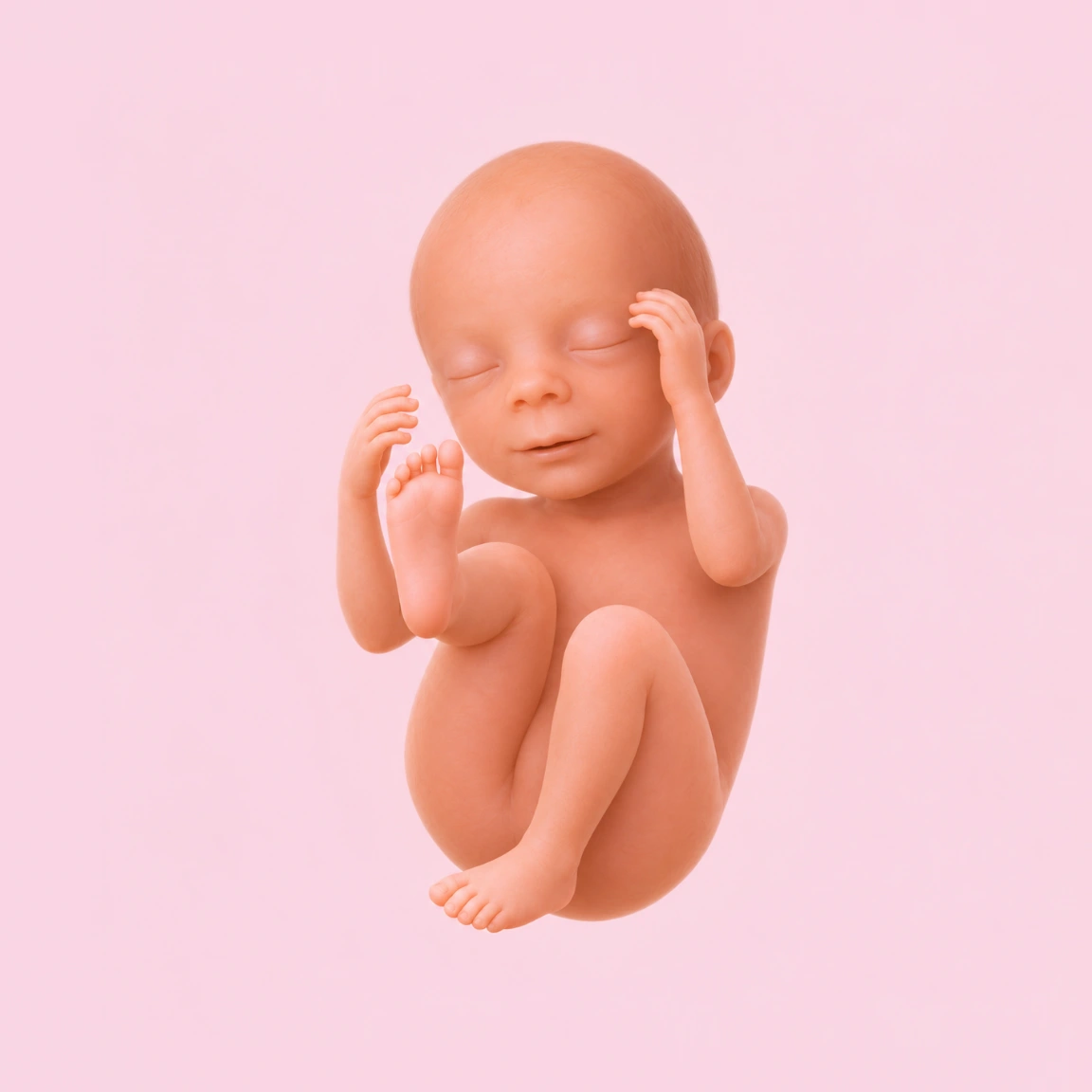
At 17 weeks counted from the last menstrual period, fertilization was usually about fifteen weeks ago. The National Health Service gives a length of about 12 cm from head to bottom, roughly a pomegranate. This excludes the extended legs. Muscles, bones and the nervous system keep developing. The eyelids remain closed while the mouth and limbs move. Skin is still thin. Nails and the patterns that become fingerprints are developing.
Cord and placenta are omitted to show the complete isolated fetus.
Flutters and first movements
You may feel a small flutter or rolling sensation, or nothing yet. First movements are usually noticed between 16 and 24 weeks, sometimes after 20 in a first pregnancy. Tell your care team if you have felt none by 24 weeks. Once you know the usual pattern, reduced or changed movement needs immediate advice. Do not wait until tomorrow or rely on a home heartbeat device. Developing hearing does not mean that sounds can reliably test wellbeing at week 17.
Cramps, veins and restless legs
Night cramps often affect the calf or foot. Gentle regular activity and ankle movements may help. Varicose veins are swollen veins, often in the legs or vulva; changing position, raising your legs and suitable compression stockings can ease discomfort. Ask about the right fit. A strong urge to move the legs while resting may be restless legs syndrome, which can disturb sleep. Discuss persistent symptoms and possible iron deficiency; do not start iron or medicines on your own. One painful, swollen, warm or discolored leg needs prompt assessment for a blood clot.
Your back, skin and everyday comfort
Support your back while sitting, bend your knees when lifting and avoid heavy loads. Ask about pregnancy physiotherapy for troublesome pain. Sweat, nasal congestion, discharge and skin changes can occur, but they do not by themselves diagnose high blood pressure. Stretch marks may fade after birth; no cream guarantees prevention. If you feel faint, sit down; if it does not pass, lie on your side and get advice. Stand up slowly. Do not assume sweets treat every dizzy spell. Mention unusual discharge, itching or pain when urinating.
Emotional wellbeing deserves care too
You do not have to feel cheerful all the time. Ongoing worry, low mood or poor sleep that affects daily life deserves support. Speak honestly with your midwife or doctor. Talking therapy and, when needed, carefully chosen medicines can help. Do not stop prescribed treatment without discussing it. Gentle activity, regular meals, rest and support from someone you trust can help, alongside professional care.
Planning your next checks and birth setting
Check that the next ultrasound is arranged. In the English National Health Service pathway, the detailed screening scan is usually offered at 18–21 weeks; local schedules vary. It looks at development but cannot find every condition. You can also discuss birth locations: hospital, a midwife-led unit or home where available and suitable. Personal risks, specialist care, pain relief and transfer arrangements matter. You can revisit the plan. Ask about classes, varied meals and pelvic floor exercises, including fully relaxing the muscles between squeezes.
Helping an older child prepare
If you have another child, use simple words, books or family photos to explain the coming change. Reassure them that your love will not decrease. Excitement, worry or mixed feelings are understandable. Invite small tasks without forcing interest, and plan who will care for them during the birth. Try to avoid several big changes at once. You do not need to buy special products to start this conversation.
When to seek help
Seek prompt care for bleeding, leaking fluid, fever, repeated abdominal tightenings or persistent pain. Back pain with fever, painful urination or bleeding also needs assessment. Loss of feeling in the legs, buttocks or genital area is an emergency. Sudden breathlessness, chest pain, coughing blood or collapse needs emergency help. Severe headache, visual changes or sudden swelling of the face or hands needs immediate advice. Do not dismiss a new severe symptom as simply part of pregnancy.
How to read the size comparison
The food gives a rough sense of size. Its length and shape can vary. The photo is for comparison, and the number is an approximate length for this week of pregnancy. Growth and timing vary from one pregnancy to another.
Content details
- Study design
- Public clinical guidance on second-trimester pregnancy with an original AI-assisted educational illustration.
- Population and context
- Adults around 17 weeks pregnant.
- Evidence limitations
- The food gives a rough sense of size. Its length and shape can vary. The photo is for comparison, and the number is an approximate length for this week of pregnancy. Growth and timing vary from one pregnancy to another.
📚 Sources
- National Health Service — United Kingdom public health service — Best Start in Life — Week 17
- National Library of Medicine — MedlinePlus — Fetal development
- National Health Service — United Kingdom public health service — Your baby's movements
- National Health Service — United Kingdom public health service — Common health problems in pregnancy
- National Health Service — United Kingdom public health service — Restless legs syndrome
- National Health Service — United Kingdom public health service — Back pain in pregnancy
- Centers for Disease Control and Prevention — United States public health agency — Understanding Your Risk for Blood Clots with Pregnancy
- National Health Service — United Kingdom public health service — Mental health in pregnancy
- National Health Service — United Kingdom public health service — Where to give birth: the options
- National Health Service — United Kingdom public health service — 20-week screening scan
- East of England Community Health and Care National Health Service Trust — Just One Norfolk — Introducing Your Children To Your New Baby
- Tommy’s — A guide to pelvic floor exercises
- National Health Service — United Kingdom public health service — Stretch marks in pregnancy
- National Health Service — United Kingdom public health service — Healthy eating in pregnancy
- National Health Service — United Kingdom public health service — Exercise in pregnancy
- National Health Service — United Kingdom public health service — Swollen ankles, feet and fingers in pregnancy
Sources checked on: 6 November 2026