



Pregnancy week 8: developing organs and checking your medicines
The embryo’s development
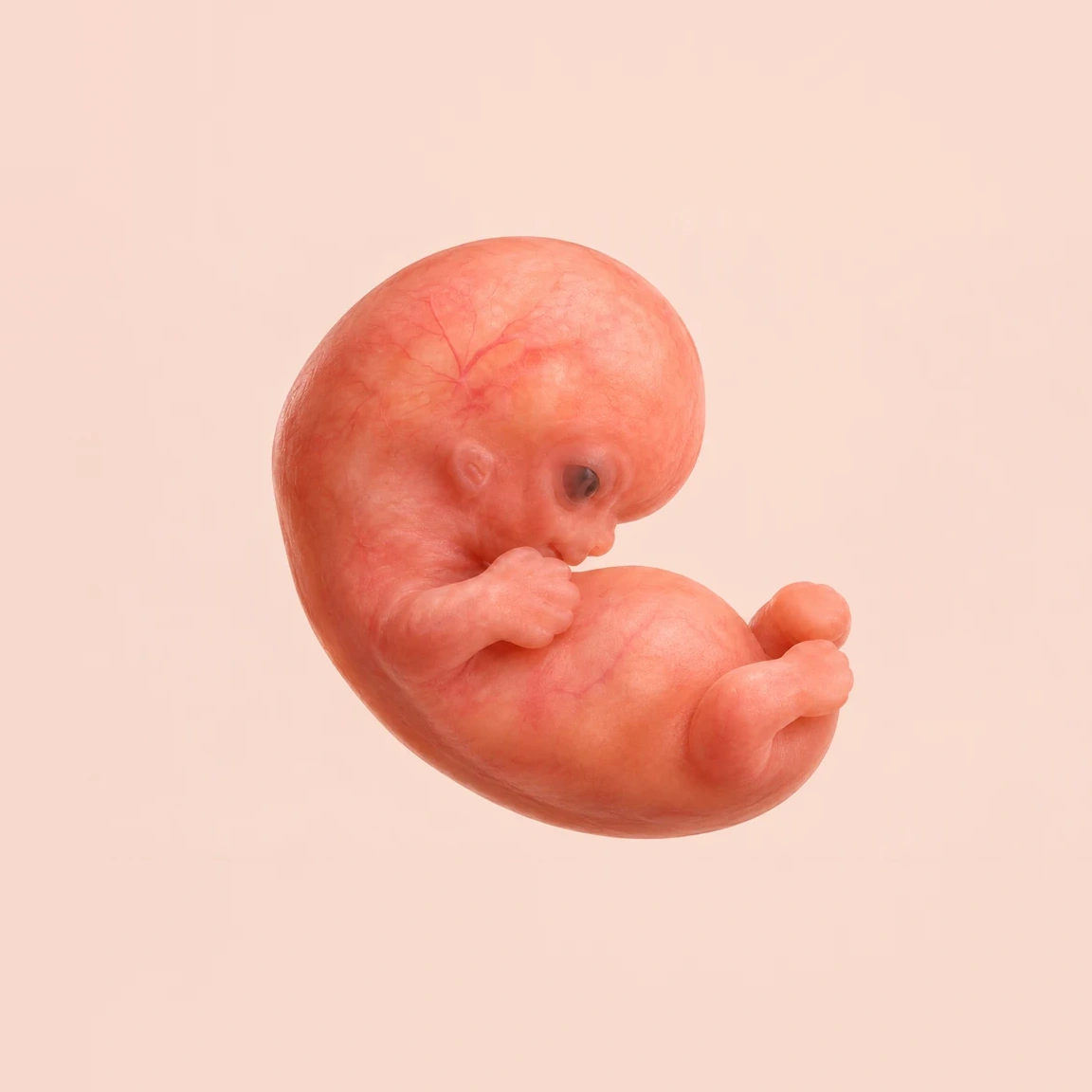
Around week 8, the arms and legs are lengthening. The head is still large compared with the body, and the face is taking shape. Inside, the major organs continue to develop. Having an organ beginning to form does not mean it is mature or ready to work as it will after birth. The National Health Service gives around 16 mm as a rough size, comparable to a raspberry.
The illustration shows a typical shape for this early stage. It is enlarged and the timing of each change varies.
Changes you might notice
Tiredness, nausea, breast tenderness and bloating may continue. You may need to urinate more often. Some people also feel more anxious or emotional. Tell someone you trust how you are feeling. If worry or low mood is making everyday life hard, contact your care team rather than waiting for the next routine visit.
Appointments and practical steps
Make a list of your prescription medicines, products bought without a prescription, supplements and herbal remedies. Ask a doctor, midwife or pharmacist to check them. A product described as natural is not automatically safe in pregnancy. Do not stop a prescribed medicine on your own, because untreated illness can also be harmful. If you have not arranged prenatal care yet, contact a local service.
When to get help
Ask for medical advice if you have bleeding, pain that does not settle, or vomiting that makes it hard to keep fluids down. Severe abdominal pain, heavy bleeding, fainting, or shoulder-tip pain with abdominal pain or bleeding need urgent help. Do not use an illustration or symptoms to decide whether a pregnancy is healthy.
MyMedNest / OpenAI — Original 3D educational illustration created with AI. Medical references for developmental anatomy are listed in Sources.
Content details
- Study design
- Public clinical guidance on early pregnancy and a documented human embryo model.
- Population and context
- Adults around eight weeks pregnant.
- Evidence limitations
- The measurements are rough comparisons. Symptoms and illustrations cannot diagnose an individual pregnancy.
📚 Sources
- National Health Service — United Kingdom public health service — Best Start in Life — Week 8
- National Library of Medicine — MedlinePlus — Fetal development
- National Health Service — United Kingdom public health service — Vomiting and morning sickness
- Society of Radiologists in Ultrasound — A Lexicon for First-Trimester US: Society of Radiologists in Ultrasound Consensus Conference Recommendations
- National Health Service — United Kingdom public health service — Ectopic pregnancy: Symptoms
- National Health Service — United Kingdom public health service — Your antenatal care and appointments
- National Health Service — United Kingdom public health service — Medicines in pregnancy
- National Institutes of Health 3D — Carnegie Human Embryo Stage 18
- University of Michigan — Multi-dimensional Human Embryo — Carnegie Stage 18
Sources checked on: 5 November 2026