



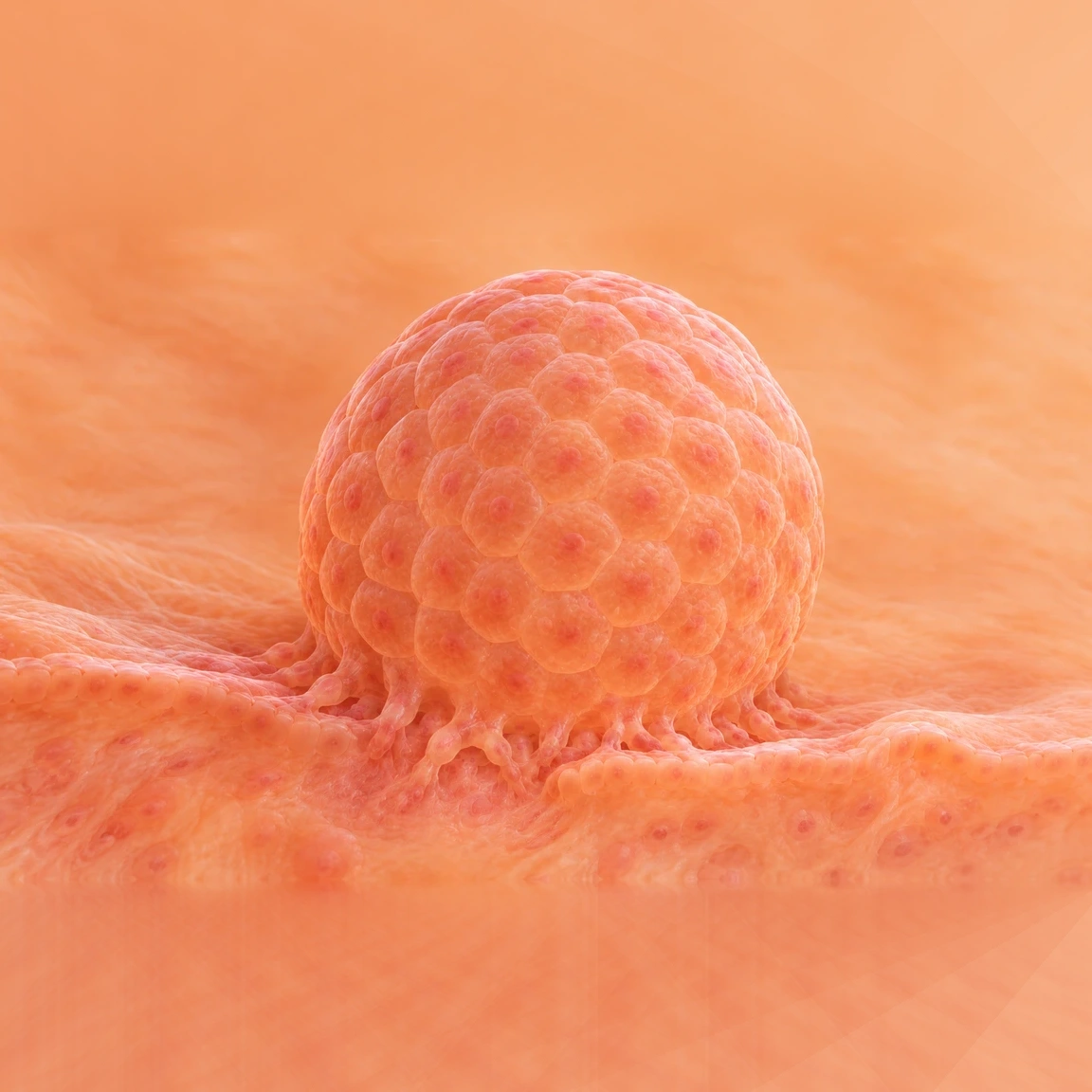
Pregnancy week 3: from one cell to a blastocyst
The first cell of a new embryo
When a sperm joins an egg, fertilization forms a zygote: the first cell of a new embryo. Genetic material from both parents contributes to this cell. In the usual pregnancy timeline, this beginning is described around week 3. The count still starts from the last menstrual period, not from the moment of fertilization.
More cells, not a miniature baby
The zygote divides while travelling along a fallopian tube toward the uterus. One cell becomes two, then more cells. A compact group of cells is called a morula. At this stage, there are no arms, legs or recognizable facial features. Development is happening at a cellular level.
A fluid-filled space appears
The cell group develops into a blastocyst, with a fluid-filled cavity, an inner group of cells and an outer layer. The inner group will form the embryo. The outer layer contributes to the developing placenta. These are different roles within the same early developmental process.
The next step is implantation
The blastocyst reaches the uterus and begins the process of attaching to and entering its lining. This is implantation. It follows fertilization rather than happening at the same instant. The steps extend across the early weeks, and their timing varies. Not every fertilized egg implants. The illustration shows a typical shape for this early stage. It is enlarged and the timing of each change varies.
MyMedNest / OpenAI — Original 3D educational illustration created with AI. Medical references for developmental anatomy are listed in Sources.
Content details
- Study design
- Original developmental guide based on the listed medical and embryology references.
- Population and context
- Adults following development before birth, week by week.
- Evidence limitations
- Developmental timing varies. The numbered guide and enlarged image do not date or diagnose an individual pregnancy.
📚 Sources
- National Library of Medicine — MedlinePlus — Fetal development
- University of New South Wales — Embryology — Blastocyst Development
- University of New South Wales — Embryology — Fertilization
- Philips — Centro assistenza di Gravidanza+ — Perché la gravidanza si misura dal primo giorno dell’ultima mestruazione?
Sources checked on: 6 November 2026