



Staying independent after 65: why walking alone is not the whole plan
Healthy aging is also about being able to carry shopping, get out of a chair and move around with confidence. A daily walk can help, but it does not cover every need. For people aged 65 and older, public health recommendations bring together three elements: aerobic movement, muscle strengthening and balance.
The weekly foundation
The Centers for Disease Control and Prevention recommend at least 150 minutes of moderate aerobic activity each week, or 75 minutes of vigorous activity, or an equivalent combination. Add muscle-strengthening activities on at least two days and activities that improve balance. These are complementary parts of the plan, not three ways of describing the same target.
Moderate activity makes breathing faster while still allowing conversation, but not singing. At vigorous intensity, speaking more than a few words becomes difficult. Effort is relative: the same walk can be easy for one person and demanding for another. Vigorous exercise is not compulsory to meet the recommendations.
The World Health Organization describes a weekly range of 150–300 minutes of moderate aerobic activity, or 75–150 minutes of vigorous activity, or an equivalent mix. It also recommends varied activities emphasizing balance and strength at moderate or greater intensity on at least three days a week for older adults. A suitable session can work on more than one element; these are not three separate 150-minute targets. Start at a level that fits your abilities.
Give muscles and balance their own place
Strength work should involve the major muscle groups, including legs, hips, back, abdomen, chest, shoulders and arms. Resistance bands, weights or suitable body-weight movements are possible options. Technique and appropriate resistance matter more than copying someone else’s load. The CDC describes 8–12 repetitions, meaning complete movements, as one set, with at least one set per activity and possible extra benefit from two or three sets. This is general guidance, not a starting dose for everyone: adapt the movement, resistance and number of repetitions to your health and abilities.
Balance activities help reduce falls and related injuries. A suitable tai chi class or guided exercises may combine balance and strength. People who feel unsteady should ask about safe support or supervision, rather than trying a difficult balance challenge alone. Water aerobics is one aerobic option; it does not automatically replace the rest of the program.
Start from what you can do
If you are inactive, begin with manageable periods and build gradually. For someone able to reach the target, five 30-minute moderate sessions are one possible weekly pattern, alongside strength and balance work. Shorter bouts also count. Choose activities you enjoy and can realistically repeat.
Disability or a chronic condition does not automatically rule out activity. Walking, wheelchair rolling, water exercise and adapted strengthening offer different routes. A healthcare professional or qualified activity specialist can help choose suitable types and amounts. If the full target is not currently possible, activity within your abilities is still worthwhile.
Is exercise a guarantee of living longer?
No program can promise a particular lifespan or reverse aging. Regular activity supports physical function, independence and several aspects of health, and can reduce the risk of falls. The World Health Organization also advises limiting sedentary time: one exercise session does not make the rest of the day irrelevant. Aim for a sustainable routine, not a perfect score.
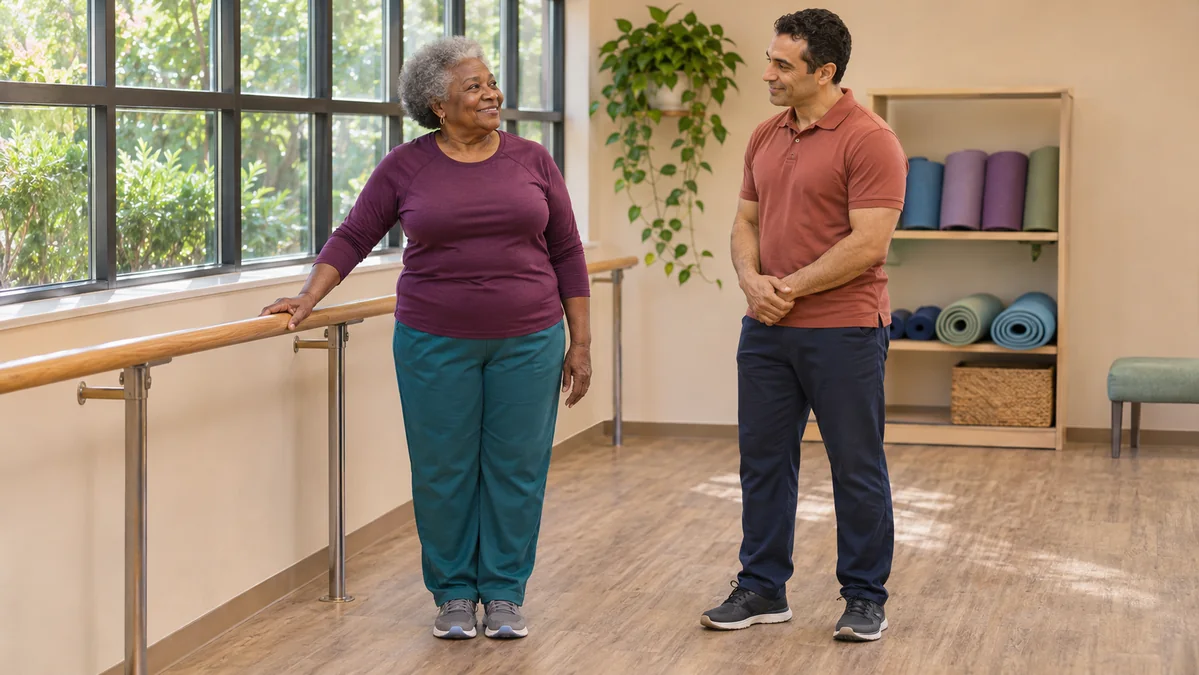
Image: an original AI-generated illustration of an older woman beside a fixed support rail with an activity instructor. It is a fictional scene, not a personalized exercise demonstration or a guarantee of balance.
Content details
- Study design
- Public health recommendations, not a clinical trial or individual exercise plan. CDC pages: December 4, 2025. WHO global overview: November 4, 2026; WHO Europe recommendations: September 1, 2021. Main pages read; linked full guideline PDFs not reviewed.
- Population and context
- Adults aged 65 and older, with activity adapted to fitness, disability, chronic conditions and personal circumstances.
- Evidence limitations
- Population recommendations, not a personalized exercise prescription or a promise of longer life. Benefits and safe starting levels vary; chronic conditions and disabilities may require professional adaptation.
📚 Sources
- Centers for Disease Control and Prevention — United States public health agency — Older Adult Activity: An Overview
- Centers for Disease Control and Prevention — United States public health agency — What Counts as Physical Activity for Older Adults
- Centers for Disease Control and Prevention — United States public health agency — Chronic Conditions & Disabilities Activity
- World Health Organization — global public health agency — Physical activity
- World Health Organization Regional Office for Europe — Physical activity
Sources checked on: 17 November 2026