


Adrenocortical carcinoma: symptoms, tests and treatment
The adrenal glands sit above your kidneys. A lump in one of these glands may be benign. Adrenocortical carcinoma is a rare cancer that starts in the outer layer of the gland. This guide explains the tests, treatment choices and questions to take to a specialist team.
MyMedNest editorial guide · Sources checked:
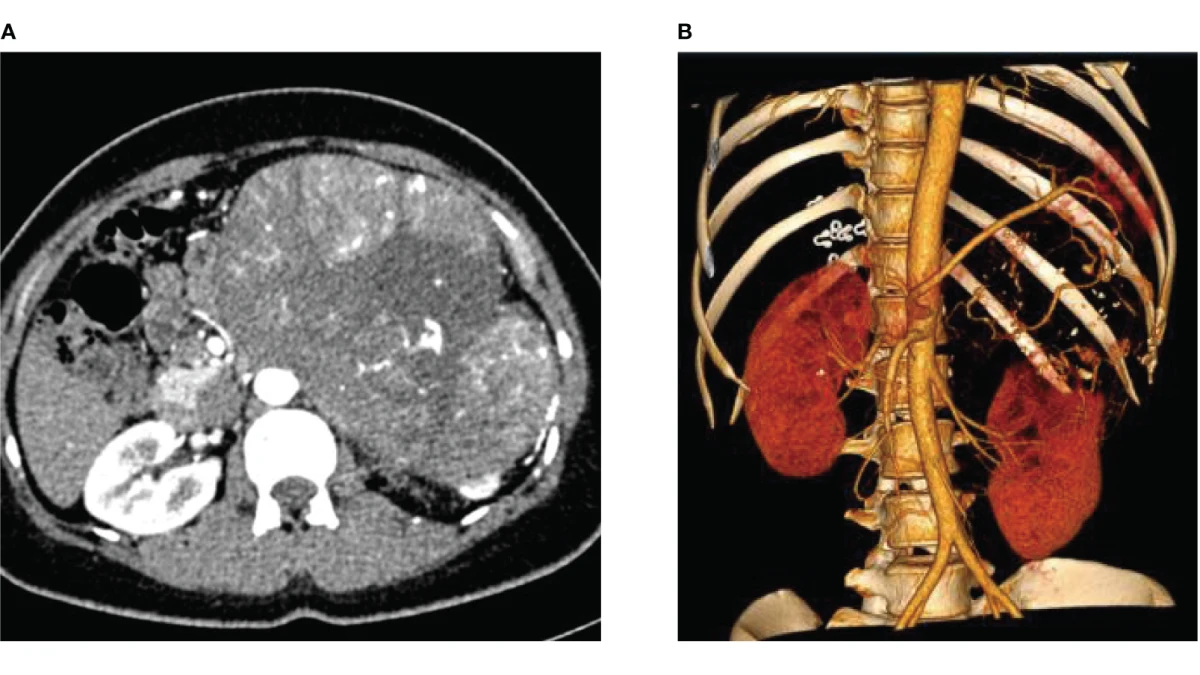
Image source and reuse details
Source: Long-term partial response in a patient with liver metastasis of primary adrenocortical carcinoma with adjuvant mitotane plus transcatheter arterial chemoembolization and microwave ablation: a case report — Figure 1, A–B. Original panels A and B shown in full and reduced in proportion.
In this guide
What an adrenal lump can mean
The outer layer of the adrenal gland is called the cortex. It makes hormones such as cortisol, which helps your body respond to stress, and aldosterone, which helps regulate salt and blood pressure. Cancer of the cortex differs from pheochromocytoma, which starts in the inner part of the gland.
Many lumps are found by chance on a scan done for a different reason. Often, they are benign growths called adenomas. Your doctor checks how the mass looks and whether it makes too much of any hormone. Finding a lump does not establish that you have cancer.
Source: National Cancer Institute — What Is Adrenocortical Carcinoma? · European Society of Endocrinology and European Network for the Study of Adrenal Tumors — European Society of Endocrinology clinical practice guidelines on the management of adrenal incidentalomas
Signs to discuss with your doctor
A mass can cause belly or side pain or a feeling of fullness. Too much cortisol can raise blood pressure or blood sugar and cause muscle weakness or easy bruising. Other hormones can cause thicker body hair or voice changes. Some people have no symptoms.
These signs can have other causes. If your report mentions an adrenal mass, ask when it should be checked and which tests you need. Bring earlier results if you have them, so the team can look for changes.
Source: National Cancer Institute — Symptoms of Adrenocortical Carcinoma · European Society of Endocrinology and European Network for the Study of Adrenal Tumors — European Society of Endocrinology clinical practice guidelines on the management of adrenal incidentalomas
From scans and hormone tests to a tissue report
Blood or urine tests can measure your hormones. A CT scan, which combines detailed X-ray images, or an MRI scan can show the mass and nearby tissue. If cancer is strongly suspected, the team also looks for signs that it has spread.
Doctors usually avoid a needle biopsy if a suspected adrenal cancer can be removed. They consider exceptions, such as when it has spread and testing a sample could change treatment. After surgery, a specialist looks at the tissue under a microscope. The report describes the margins, or edges of the removed tissue, and a measure called Ki-67 that shows how many cells are multiplying.
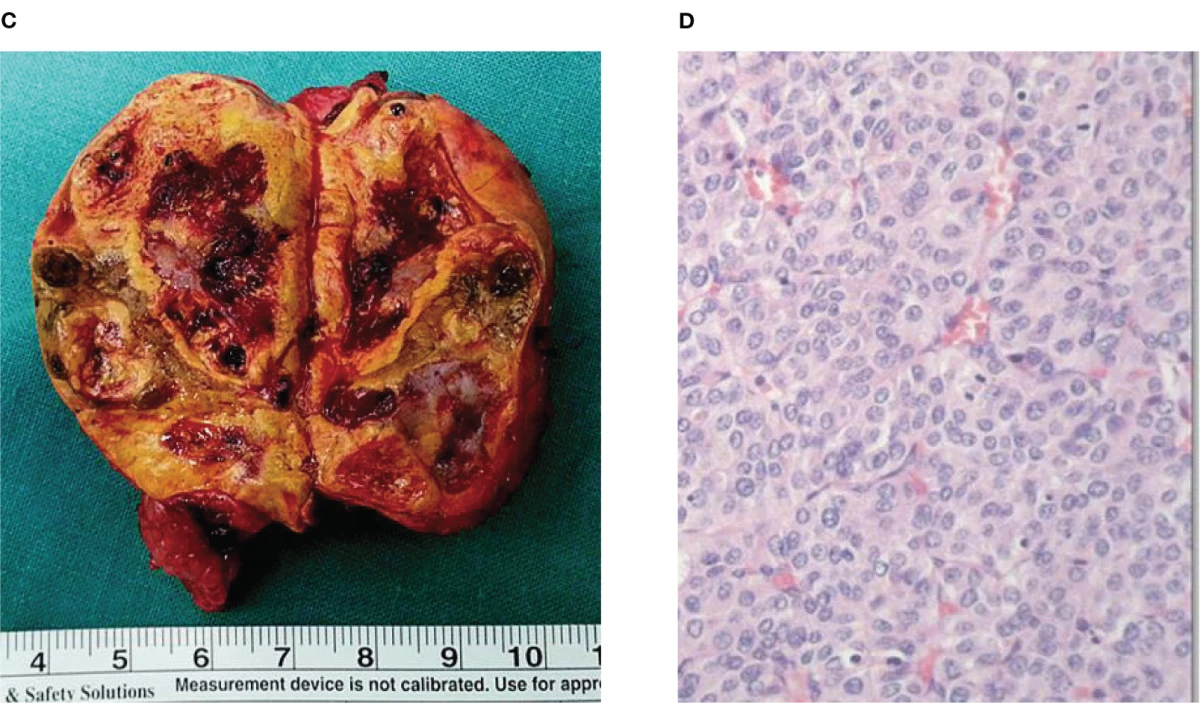
Image source and reuse details
Source: Long-term partial response in a patient with liver metastasis of primary adrenocortical carcinoma with adjuvant mitotane plus transcatheter arterial chemoembolization and microwave ablation: a case report — Figure 1, C–D. Original panels C and D shown in full and reduced in proportion.
Source: National Cancer Institute — Adrenocortical Carcinoma Diagnosis & Prognosis · European Society of Endocrinology and European Network for the Study of Adrenal Tumors — European Society of Endocrinology Clinical Practice Guidelines on the management of adrenocortical carcinoma in adults · Frontiers in Oncology — Long-term partial response in a patient with liver metastasis of primary adrenocortical carcinoma with adjuvant mitotane plus transcatheter arterial chemoembolization and microwave ablation: a case report
When surgery is an option
Surgery is the main treatment when the tumor can be removed. An experienced surgeon aims to remove it in one piece without breaking it. If it has grown into nearby tissue, part of that tissue may need to come out too.
The team plans surgery after studying your scan and hormone results. Your body may make too little cortisol after surgery if the tumor was making too much before. Your team decides whether to replace cortisol with medicine and when to check your levels again.
What happens after surgery
Stage describes how far the cancer has spread. Together with the margins and Ki-67, it helps estimate the chance the cancer will come back. After complete removal, a European guideline suggests scans every three months for two years, then every three to six months for three more years. Your team adjusts the schedule and decides how long to keep checking.
Your team may suggest mitotane if the chance the cancer will come back is high. In the ADIUVO trial, 45 adults were assigned to mitotane and 46 to monitoring alone after complete surgery for lower or intermediate risk cancer. The study ended early and found no clear benefit, so uncertainty remains. It does not answer the same question for high-risk cases.
Source: European Society of Endocrinology and European Network for the Study of Adrenal Tumors — European Society of Endocrinology Clinical Practice Guidelines on the management of adrenocortical carcinoma in adults · The Lancet Diabetes & Endocrinology — Adjuvant mitotane versus surveillance in low-grade, localised adrenocortical carcinoma (ADIUVO): an international, multicentre, open-label, randomised, phase 3 trial and observational study
Mitotane and treatment for advanced cancer
Mitotane is a medicine used in selected cases. In the United States, its indication covers inoperable disease whether or not the tumor makes hormones. In the European Union, it is authorized to treat symptoms of advanced disease. The European product information says its effect on tumors that do not make hormones is not established. The care team checks drug and hormone levels during treatment.
For some advanced cancers, the team can combine mitotane with etoposide, doxorubicin and cisplatin. In a study of 304 people, the combination kept the cancer from getting worse for longer than another treatment that also included mitotane. The study did not find a clear difference in overall survival. Some people may also be offered treatments for a specific tumor site and care to ease symptoms.
Source: United States National Library of Medicine — DailyMed: LYSODREN — mitotane tablet · European Medicines Agency — Lysodren: European public assessment report · The New England Journal of Medicine — Combination Chemotherapy in Advanced Adrenocortical Carcinoma · European Society of Endocrinology and European Network for the Study of Adrenal Tumors — European Society of Endocrinology Clinical Practice Guidelines on the management of adrenocortical carcinoma in adults
What researchers are testing
The phase 3 ADIUVO-2 trial, NCT03583710, compares mitotane alone with mitotane plus cisplatin and etoposide after surgery for people at high risk of the cancer returning. The trial registry lists it as recruiting. There are no results establishing a benefit from the combination in this setting.
If you are considering a trial, ask who can join, which hospitals take part, how many visits it requires and what care is available outside the study. Joining a trial does not guarantee that a treatment will help.
Medicines, food and staying active
Keep a list of your medicines and supplements. Mitotane can change the way other medicines work. Ask your care team before changing your diet or starting a supplement. If you are losing weight or getting weaker, ask about nutrition and activity support that fits this stage of treatment.
Ask for a written plan for fever, vomiting or a serious infection, especially if your body makes too little cortisol or you take medicine to replace it. If you have adrenal insufficiency and develop repeated vomiting, severe weakness, confusion or fainting, get urgent medical help and follow the emergency plan you have agreed on.
Source: United States National Library of Medicine — DailyMed: LYSODREN — mitotane tablet · National Institute of Diabetes and Digestive and Kidney Diseases — Definition & Facts of Adrenal Insufficiency & Addison’s Disease · National Cancer Institute — Popular Diets, Supplements, and Cancer
How to find an experienced team
Look for a team that can bring together a cancer doctor, a hormone specialist, an adrenal surgeon and experts in scans and tissue samples. Keep your scan reports, hormone test results and, if you have had surgery, your tissue report and discharge summary ready.
Use the directory to search by country, city or ZIP code. Ask the center whether it treats adrenocortical carcinoma, offers second opinions and has an official way for you to send your records.
Find specialist care for adrenocortical carcinoma →
Source: European Society of Endocrinology and European Network for the Study of Adrenal Tumors — European Society of Endocrinology Clinical Practice Guidelines on the management of adrenocortical carcinoma in adults · Fondazione Policlinico Universitario Agostino Gemelli IRCCS — Chirurgia Endocrina e Metabolica · Universitätsklinikum Würzburg — Center for Endocrine Tumors · The University of Texas MD Anderson Cancer Center — Endocrine Center
Questions to take to your appointment
- What suggests the lump is benign or cancerous?
- Is the mass making too much of a hormone?
- Who can review my scans and tissue report?
- What do my stage, margins and Ki-67 results tell us?
- After surgery, do I need monitoring, mitotane or another treatment?
- Who should I call if I have a fever, vomiting or trouble with my medicines?
Sources and verification
- National Cancer Institute — What Is Adrenocortical Carcinoma?
- National Cancer Institute — Symptoms of Adrenocortical Carcinoma
- National Cancer Institute — Adrenocortical Carcinoma Diagnosis & Prognosis
- European Society of Endocrinology and European Network for the Study of Adrenal Tumors — European Society of Endocrinology Clinical Practice Guidelines on the management of adrenocortical carcinoma in adults
- European Society of Endocrinology and European Network for the Study of Adrenal Tumors — European Society of Endocrinology clinical practice guidelines on the management of adrenal incidentalomas
- The Lancet Diabetes & Endocrinology — Adjuvant mitotane versus surveillance in low-grade, localised adrenocortical carcinoma (ADIUVO): an international, multicentre, open-label, randomised, phase 3 trial and observational study
- The New England Journal of Medicine — Combination Chemotherapy in Advanced Adrenocortical Carcinoma
- United States National Library of Medicine — DailyMed: LYSODREN — mitotane tablet
- European Medicines Agency — Lysodren: European public assessment report
- United States National Library of Medicine — ClinicalTrials.gov — Mitotane With or Without Cisplatin and Etoposide After Surgery in Treating Patients With Stage I-III Adrenocortical Cancer With High Risk of Recurrence
- National Institute of Diabetes and Digestive and Kidney Diseases — Definition & Facts of Adrenal Insufficiency & Addison’s Disease
- National Cancer Institute — Popular Diets, Supplements, and Cancer
- Frontiers in Oncology — Long-term partial response in a patient with liver metastasis of primary adrenocortical carcinoma with adjuvant mitotane plus transcatheter arterial chemoembolization and microwave ablation: a case report
- Fondazione Policlinico Universitario Agostino Gemelli IRCCS — Chirurgia Endocrina e Metabolica
- Universitätsklinikum Würzburg — Center for Endocrine Tumors
- The University of Texas MD Anderson Cancer Center — Endocrine Center
Sources checked: 2026-11-20