


Leukemia: identify the type and understand your care options
Leukemia is a group of blood cancers, not one disease with one treatment. The exact name on your laboratory report is the starting point. This guide explains the main adult pathways and when a specialist pediatric team is needed.
MyMedNest editorial guide · Sources checked:
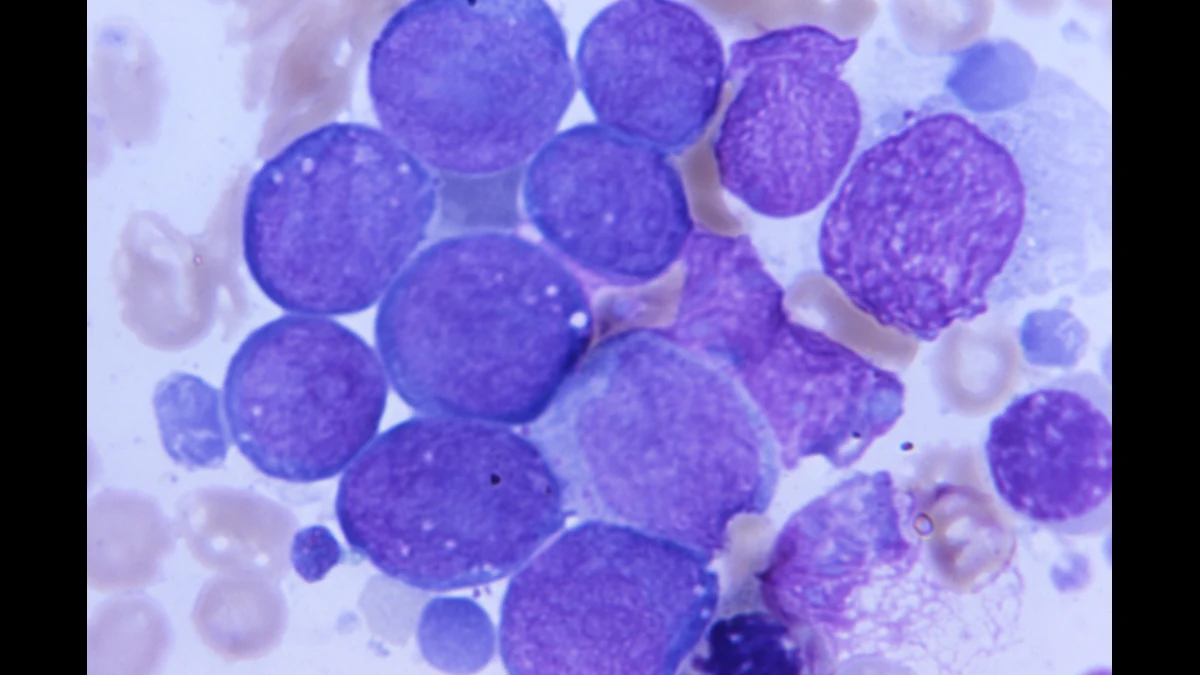
Image source and reuse details
Source: Public Health Image Library, image 19467 — pretreatment acute myeloid leukemia marrow specimen, 1969. Complete original proportionally reduced into a 1200 × 675 frame with black side padding. No clinical crop, recoloring, retouching or enlargement.
In this guide
Start with the full name of the leukemia
Blood cells develop in bone marrow, the tissue inside some bones. Bone marrow is different from the spinal cord. Leukemia disrupts this blood-cell production. Acute disease usually grows quickly; chronic disease often develops more slowly. Myeloid and lymphoid describe different cell families.
The four main groups are acute myeloid leukemia (AML), acute lymphoblastic leukemia (ALL), chronic lymphocytic leukemia (CLL) and chronic myeloid leukemia (CML). Each has further subtypes. A drug used for one group may be ineffective or unsafe for another. Keep a copy of the exact diagnosis. Most cases do not have a single identifiable cause. Smoking, benzene exposure, previous cytotoxic treatment or certain inherited conditions can increase AML risk; they do not explain every case or apply equally to all leukemias.
Source: National Cancer Institute — United States — Leukemia—Patient Version · National Cancer Institute — United States — Acute Myeloid Leukemia Treatment (PDQ®)–Health Professional Version · National Cancer Institute — United States — Acute Lymphoblastic Leukemia Treatment (PDQ®)–Health Professional Version · National Cancer Institute — United States — Chronic Lymphocytic Leukemia Treatment (PDQ®)–Health Professional Version · National Cancer Institute — United States — Chronic Myeloid Leukemia Treatment (PDQ®)–Health Professional Version
Symptoms and situations that need urgent help
Unexplained bruising, bleeding, marked tiredness, repeated infections, fever, bone pain or swollen lymph nodes need medical assessment. These symptoms also occur in many noncancerous conditions. A suspicious blood count can require same-day hospital assessment, particularly when acute leukemia is possible.
Severe breathlessness, confusion, uncontrolled bleeding or rapidly worsening illness need emergency help. During treatment, a temperature of 38 °C or higher requires immediate contact with the cancer team; follow a lower threshold if your team gave one. Do not wait for a routine appointment or for every genetic result.
Source: National Health Service — United Kingdom — Symptoms of acute myeloid leukaemia · National Cancer Institute — United States — Acute Myeloid Leukemia Treatment (PDQ®)–Health Professional Version · National Cancer Institute — United States — Infection and Neutropenia during Cancer Treatment
What blood and bone marrow tests establish
A complete blood count measures red cells, white cells and platelets. A blood smear lets a specialist examine their appearance. Leukemia can occur with high, normal or low total white-cell counts. A count alone cannot establish its precise type or rule it out in every situation.
Bone marrow aspiration and sometimes a tissue biopsy provide cells for closer study. Flow cytometry identifies cell markers. Chromosome and molecular tests look for changes that define the disease and guide care. Imaging and lumbar puncture are chosen for specific questions; they are not automatic tests for every leukemia.
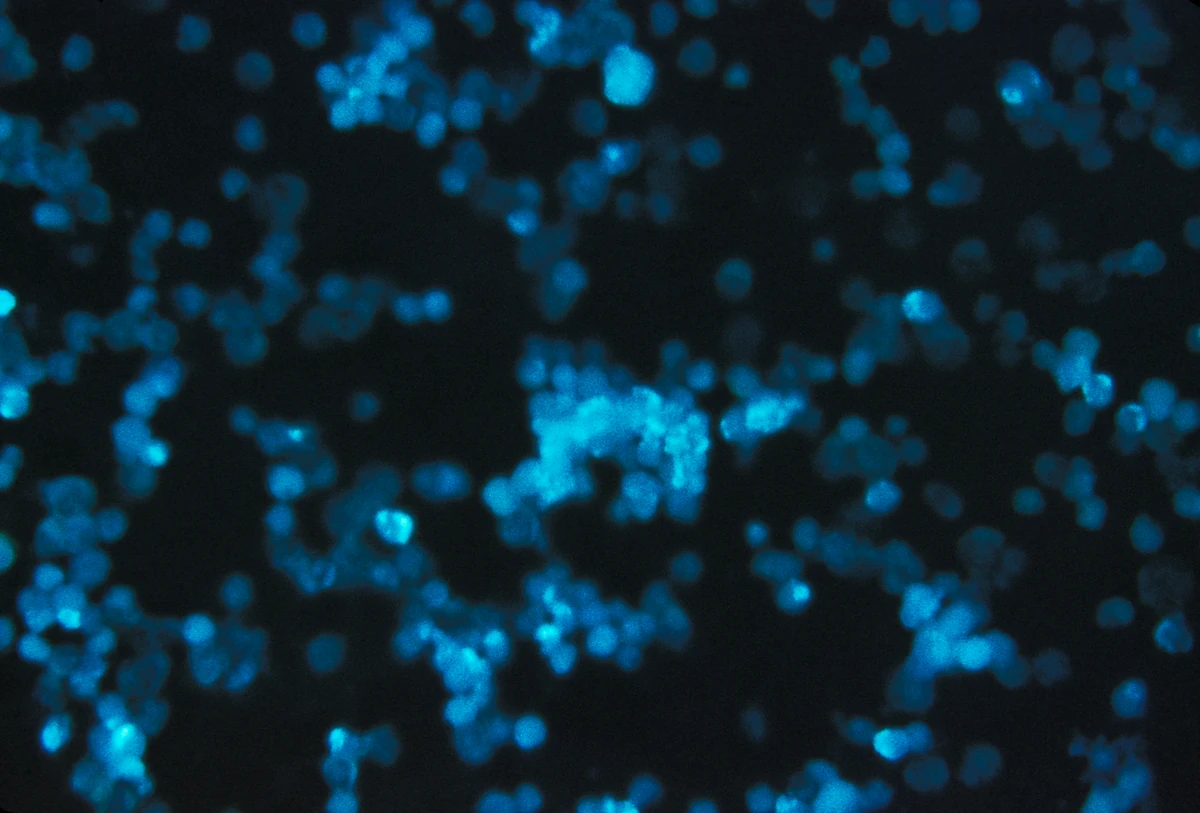
Image source and reuse details
Source: Public Health Image Library, image 2647 — leukemia cells with direct fluorescent antibody staining, 1972. Complete original proportionally reduced to 1200 × 813 and converted to WebP. No crop, recoloring, retouching or enlargement.
Source: National Cancer Institute — United States — Acute Myeloid Leukemia Treatment (PDQ®)–Health Professional Version · National Cancer Institute — United States — Acute Lymphoblastic Leukemia Treatment (PDQ®)–Health Professional Version · National Cancer Institute — United States — Chronic Lymphocytic Leukemia Treatment (PDQ®)–Health Professional Version · National Cancer Institute — United States — Chronic Myeloid Leukemia Treatment (PDQ®)–Health Professional Version
Which markers matter on the report
In AML, findings such as FLT3, NPM1 and IDH changes can affect classification, risk or treatment choices. In ALL, the team distinguishes B-cell from T-cell disease and checks for BCR::ABL1 when appropriate. This fusion is also the defining treatment target in CML.
Before CLL treatment, TP53 changes, deletion 17p and IGHV status help guide decisions. A change found in leukemia cells is not automatically inherited. Ask whether a separate genetics consultation is appropriate, especially with young onset or a strong family history. Do not interpret an isolated mutation without the full report.
Source: National Cancer Institute — United States — Acute Myeloid Leukemia Treatment (PDQ®)–Health Professional Version · National Cancer Institute — United States — Acute Lymphoblastic Leukemia Treatment (PDQ®)–Health Professional Version · National Cancer Institute — United States — Chronic Lymphocytic Leukemia Treatment (PDQ®)–Health Professional Version · National Cancer Institute — United States — Chronic Myeloid Leukemia Treatment (PDQ®)–Health Professional Version
Stage, remission and residual disease are different
There is no single stage system shared by all leukemias. Acute leukemias are assessed by subtype, risk and response rather than a general solid-tumor stage. CLL uses systems such as Rai or Binet. CML is assessed by disease phase and molecular response.
Remission means that defined signs of disease have decreased or disappeared. Sensitive tests may still find measurable residual disease (MRD), a small amount not seen by routine microscopy. A negative result depends on the sample and test sensitivity; it is not a promise that relapse is impossible.
Source: National Cancer Institute — United States — Acute Myeloid Leukemia Treatment (PDQ®)–Health Professional Version · National Cancer Institute — United States — Acute Lymphoblastic Leukemia Treatment (PDQ®)–Health Professional Version · National Cancer Institute — United States — Chronic Lymphocytic Leukemia Treatment (PDQ®)–Health Professional Version · National Cancer Institute — United States — Chronic Myeloid Leukemia Treatment (PDQ®)–Health Professional Version
AML: choosing treatment intensity
For a person able to tolerate intensive treatment, AML care may begin with induction chemotherapy and continue with consolidation or a donor stem-cell transplant. Fitness includes organ function, other illnesses and personal goals, not age alone. The leukemia's genetic features are part of the decision.
For some people who cannot tolerate intensive chemotherapy, options include a hypomethylating drug such as azacitidine or decitabine, often combined with venetoclax when appropriate. Less intensive does not mean harmless: low blood counts, infections and hospital visits remain important. Selected maintenance treatment may follow remission; it is not the same plan for everyone.
Targeted AML medicines and recent approvals
FLT3 or IDH changes can make particular targeted treatments relevant, but the drug, combination and timing depend on the exact indication. A mutation is not enough to choose a prescription. Prior treatment, resistance, other medicines and the country's authorization and funding rules all matter.
In the United States, the Food and Drug Administration approved revumenib on October 24, 2025, for eligible patients aged 1 year or older with relapsed or refractory AML carrying a susceptible NPM1 mutation and no satisfactory alternatives. Ziftomenib received an analogous adult indication on November 13, 2025. These are not approvals for all leukemias or proof of availability in another country.
Source: National Cancer Institute — United States — Acute Myeloid Leukemia Treatment (PDQ®)–Health Professional Version · Food and Drug Administration — United States — FDA approves revumenib for relapsed or refractory acute myeloid leukemia with a susceptible NPM1 mutation — October 24, 2025 · Food and Drug Administration — United States — FDA approves ziftomenib for relapsed or refractory acute myeloid leukemia with a NPM1 mutation — November 13, 2025
APL has its own emergency pathway
Acute promyelocytic leukemia (APL) is a particular AML subtype, commonly linked to PML::RARA. It can disturb clotting and cause dangerous bleeding. If the clinical team suspects APL, treatment and blood-product support may need to start before all confirmatory results are available.
Specialists use all-trans retinoic acid (ATRA, tretinoin) with arsenic trioxide or chemotherapy according to the risk and protocol. This is not a vitamin supplement regimen to attempt at home. Differentiation syndrome can cause fever, swelling and breathing problems and needs prompt treatment.
ALL: treatment includes protection of the nervous system
ALL treatment usually has several phases, with combinations chosen for age, fitness, cell type, genetic findings and response. A BCR::ABL1-positive result can add a tyrosine kinase inhibitor to the plan. Some adolescents and young adults are treated with pediatric-inspired protocols in experienced services.
Treatment also addresses leukemia cells that may reach the brain and spinal-fluid spaces. This often includes medicines delivered into spinal fluid, as well as systemic treatment. That preventive approach is a key difference from routine AML care. The team decides when lumbar puncture is safe and whether other measures are needed.
Source: National Cancer Institute — United States — Acute Lymphoblastic Leukemia Treatment (PDQ®)–Health Professional Version · National Cancer Institute — United States — Childhood Acute Lymphoblastic Leukemia Treatment (PDQ®)–Patient Version
Antibodies and CAR T cells are selected treatments
In selected B-cell ALL pathways, blinatumomab brings immune cells close to leukemia cells; inotuzumab ozogamicin carries a drug toward cells expressing CD22. Indications differ between initial treatment, residual disease and relapse. These options cannot simply be transferred to T-cell ALL or AML.
CAR T-cell therapy modifies immune cells to recognize a target. Eligibility depends on the leukemia, age, previous treatments, product and national rules. Cytokine-release syndrome, neurological complications and prolonged infections require an experienced center. A response can be important without guaranteeing cure or making a later transplant unnecessary.
Source: National Cancer Institute — United States — Acute Lymphoblastic Leukemia Treatment (PDQ®)–Health Professional Version · National Cancer Institute — United States — Blinatumomab · National Cancer Institute — United States — CAR T Cells: Engineering Patients’ Immune Cells to Treat Their Cancers
CLL: why observation can be appropriate
Some people with CLL feel well and do not need immediate treatment. Active observation means planned appointments, examination and blood tests, with clear instructions about new symptoms. It does not mean ignoring the disease. A high lymphocyte count by itself does not automatically mean treatment must begin.
Treatment becomes relevant with findings such as worsening disease-related anemia or low platelets, troublesome enlarging nodes or spleen, or significant symptoms. The team checks other causes first. Rapidly enlarging nodes, new persistent fever or marked deterioration may require assessment for a different problem, including Richter transformation into an aggressive lymphoma.
CLL: targeted options and practical trade-offs
When treatment is needed, options often include a Bruton tyrosine kinase (BTK) inhibitor or a venetoclax-based combination, sometimes with an anti-CD20 antibody. TP53, deletion 17p, IGHV, previous drugs and other illnesses affect selection. Some plans have a defined duration; others continue while effective and tolerated.
Discuss bleeding risk, heart rhythm problems, kidney function, interactions and the ability to attend monitoring visits. Venetoclax needs staged introduction and measures against tumor lysis, the release of cell contents when many cells break down. Do not change doses, stop treatment or add supplements without checking with the team.
CML: blocking BCR::ABL1
CML is associated with BCR::ABL1, often carried on the Philadelphia chromosome. Treatment usually starts at diagnosis with a tyrosine kinase inhibitor. Options include imatinib and other inhibitors selected for disease phase, resistance, other health problems and local access. Chronic does not mean treatment can be postponed indefinitely.
Take the medicine as agreed and report missed doses or difficult side effects. Interactions, absorption and adherence can affect response. If results are unsatisfactory, the team reviews these factors and may test resistance mutations before changing drugs. Advanced or resistant disease can need a different strategy, including transplant.
CML monitoring and stopping treatment safely
Quantitative molecular testing follows BCR::ABL1 over time. The direction and depth of the response help determine whether treatment is working. Ask which result is being measured, when the next test is due and what change would trigger another assessment.
Only selected people with a sustained deep molecular response may try treatment-free remission under a specialist plan. Frequent molecular testing and a clear restart threshold are essential. Leukemia may become detectable again even after a long response. Never stop a CML medicine because a report says undetectable or because you feel well.
Rare leukemias, children and young adults
Hairy cell leukemia, mixed-phenotype acute leukemia and other rare disorders require their own classification and care. They should not be forced into the treatment of the nearest-sounding common type. An expert blood-pathology review can be especially useful when the report is unclear or unusual.
Children need pediatric hematology-oncology services. Their protocols, doses, fertility discussions, school support and long-term monitoring differ from adult care. Young adults may need coordinated pediatric and adult expertise. The adult contacts below are not a promise that a service accepts children or every rare subtype.
Source: National Cancer Institute — United States — Leukemia—Patient Version · National Cancer Institute — United States — Childhood Acute Lymphoblastic Leukemia Treatment (PDQ®)–Patient Version
When a donor stem-cell transplant is considered
An allogeneic transplant uses blood-forming stem cells from a donor. It can offer a route to long-term control or cure in selected leukemias, but it is not necessary for everyone. Decisions depend on relapse risk, response, age, health, donor options and the alternatives.
Ask about the likely benefit and the risks of serious infection, organ injury, infertility and graft-versus-host disease, in which donor immune cells attack healthy tissues. Donor matching may begin early without committing you to transplantation. Transplant, CAR T cells and routine chemotherapy are different procedures.
Source: National Cancer Institute — United States — Stem Cell Transplants in Cancer Treatment · National Cancer Institute — United States — Acute Myeloid Leukemia Treatment (PDQ®)–Health Professional Version · National Cancer Institute — United States — Acute Lymphoblastic Leukemia Treatment (PDQ®)–Health Professional Version
Infection, transfusions and daily safety
Leukemia and treatment can reduce normal infection-fighting cells, red cells and platelets. Care may include transfusions and preventive or therapeutic anti-infective medicines. Ask for a written fever plan and an urgent contact number available outside office hours; the directory below is not an emergency service.
Hand hygiene, oral care, safe food handling and avoiding contact with people who are ill can help. Discuss vaccines and their timing, including whether live vaccines are unsuitable. Call promptly for fever, chills, new cough, burning urine or redness around a line, even when you do not feel very ill.
Source: National Cancer Institute — United States — Infection and Neutropenia during Cancer Treatment · National Cancer Institute — United States — Acute Myeloid Leukemia Treatment (PDQ®)–Health Professional Version
Side effects that need a treatment-specific plan
Tumor lysis can affect kidneys and blood chemistry when many leukemia cells break down. Prevention may include hydration, medicines and close blood tests. The setting and monitoring depend on the leukemia burden and drug. Do not replace that plan with drinking excessive water or taking an unprescribed remedy.
Some targeted drugs can disturb heart rhythm or interact with antifungal medicines. Menin inhibitors carry warnings for differentiation syndrome, QT prolongation and harm to an unborn baby. New breathlessness, swelling, fainting or severe symptoms need urgent contact. Ask which problems require stopping a drug under the team's instructions.
Source: National Cancer Institute — United States — Acute Myeloid Leukemia Treatment (PDQ®)–Health Professional Version · National Cancer Institute — United States — Chronic Lymphocytic Leukemia Treatment (PDQ®)–Health Professional Version · Food and Drug Administration — United States — FDA approves revumenib for relapsed or refractory acute myeloid leukemia with a susceptible NPM1 mutation — October 24, 2025 · Food and Drug Administration — United States — FDA approves ziftomenib for relapsed or refractory acute myeloid leukemia with a NPM1 mutation — November 13, 2025
Fertility, pregnancy and relationships
Before treatment, ask whether sperm, eggs or embryos can be preserved without an unsafe delay. Some therapies and transplant conditioning can affect fertility permanently. If pregnancy is possible or already present, tell the team immediately: risks and treatment choices differ by disease, drug and pregnancy stage.
Discuss contraception, sexual health and medicines that may harm a pregnancy. Fatigue, fear and physical changes can affect intimacy and family plans. These concerns deserve practical support, not blame. Urgent leukemia treatment must be coordinated with fertility or pregnancy specialists rather than postponed independently.
Source: National Cancer Institute — United States — Male Fertility and Cancer Treatment · National Cancer Institute — United States — Female Fertility and Cancer Treatment
Eating, movement and supplements
No diet or supplement has been shown to replace leukemia treatment. Aim to maintain nutrition and hydration with help for nausea, mouth pain or weight loss. A dietitian can adapt food to your symptoms and safety needs. Avoid restrictive anticancer diets that make it harder to eat enough.
Ask the team what activity is safe with your blood counts, infection risk and current treatment. Gentle movement may be more realistic than strenuous sport during difficult periods. Have every supplement, herbal product and over-the-counter medicine checked for interactions; natural does not mean harmless or effective against leukemia.
Source: National Cancer Institute — United States — Nutrition During Cancer Treatment · National Cancer Institute — United States — Complementary and Alternative Medicine · National Cancer Institute — United States — Infection and Neutropenia during Cancer Treatment
Clinical trials: what is being tested and when
Research tests combinations, new targets and ways to reduce relapse or toxicity. One example is the National Cancer Institute-sponsored MyeloMATCH screening study, NCT05564390, linking molecular tests in AML or myelodysplastic syndromes with possible treatment studies. Its registry update of November 2, 2026, lists recruiting; an individual site's status may differ.
The master protocol is a phase 2, open-label, single-group screening study, with estimated enrollment of 2000. Its estimated completion on May 15, 2029, is not a date when a medicine will be approved. Ask about the actual treatment protocol, alternatives, uncertain benefit, travel, costs and consent. Do not delay urgent care while searching for a trial.
Source: National Cancer Institute — United States — MyeloMATCH Precision Medicine Trials · United States National Library of Medicine — ClinicalTrials.gov — NCT05564390 — MyeloMATCH Master Screening and Reassessment Protocol; registry updated November 2, 2026 · National Cancer Institute — United States — Who Pays for Clinical Trials?
Choosing a service and preparing a second opinion
Look for hematology expertise in your exact leukemia, specialist laboratory testing and reliable emergency, transfusion and infection support. Transplant or cellular therapy requires the relevant service. There is no single best hospital for every patient; timely access and coordination with a local team matter.
Bring blood and marrow reports, flow cytometry, genetic results, previous treatment and the current medicine list. The selected contacts cover documented pathways, not every country or subtype. Confirm referral, pediatric eligibility, interpretation, costs and secure record transfer directly. A country filter does not calculate the closest hospital from a postal code.
Documented leukemia and hematology services →
Source: Fondazione IRCCS Istituto Nazionale dei Tumori — Italy — Ematologia — adult hematology service and outpatient appointment contacts · Universitätsspital Zürich — Switzerland — Leukemia treatment — specialist pathways and referring physicians · The University of Texas MD Anderson Cancer Center — United States — Leukemia Center — leukemia and blood disorders service · The University of Texas MD Anderson Cancer Center — United States — International Referrals — international appointment contact · Nationales Centrum für Tumorerkrankungen Heidelberg — Germany — Akute Leukämien (ALL/AML) — specialist appointment pathway
Outlook, relapse and supportive care
The outlook depends strongly on leukemia subtype, genetics, age, health and response. A survival percentage from another group is not an individual forecast. Ask whether treatment aims at cure, long-term control, a bridge to transplant or relief of symptoms, and what evidence supports that goal.
If disease returns or does not respond, fresh sampling and molecular tests may change the options. A second opinion or trial can be useful, but no experimental treatment guarantees benefit. Palliative care can address pain, fatigue, worry and practical needs alongside active treatment; it does not mean that all treatment has stopped.
Source: National Cancer Institute — United States — Acute Myeloid Leukemia Treatment (PDQ®)–Health Professional Version · National Cancer Institute — United States — Acute Lymphoblastic Leukemia Treatment (PDQ®)–Health Professional Version · National Cancer Institute — United States — Chronic Lymphocytic Leukemia Treatment (PDQ®)–Health Professional Version · National Cancer Institute — United States — Chronic Myeloid Leukemia Treatment (PDQ®)–Health Professional Version · National Cancer Institute — United States — Palliative Care in Cancer
Leave the appointment with a clear plan
Write down the full diagnosis, pending tests, proposed treatment and the next review date. Ask who checks results, what to do about missed doses, and which symptoms need an immediate call. Follow-up may include blood counts, marrow or molecular tests; schedules differ between leukemia types and treatment stages.
After treatment, monitoring can also address late heart, hormone, fertility, infection or emotional problems. Children and young adults need an age-appropriate survivorship plan. Keep copies of treatment summaries. New symptoms deserve assessment even when previous tests were reassuring, and the follow-up plan can change over time.
Source: National Cancer Institute — United States — Acute Myeloid Leukemia Treatment (PDQ®)–Health Professional Version · National Cancer Institute — United States — Acute Lymphoblastic Leukemia Treatment (PDQ®)–Health Professional Version · National Cancer Institute — United States — Chronic Lymphocytic Leukemia Treatment (PDQ®)–Health Professional Version · National Cancer Institute — United States — Chronic Myeloid Leukemia Treatment (PDQ®)–Health Professional Version · National Cancer Institute — United States — Childhood Acute Lymphoblastic Leukemia Treatment (PDQ®)–Patient Version
Questions to take to your appointment
- Is leukemia always visible as a very high white-cell count? No. The count can be high, normal or low. Diagnosis uses the pattern of cells, specialist tests and sometimes bone marrow findings.
- Does every leukemia need immediate chemotherapy? No. Acute disease needs urgent assessment, while some asymptomatic CLL is monitored. CML usually requires a targeted drug at diagnosis. The exact type is essential.
- Is bone marrow the same as the spinal cord? No. Bone marrow makes blood cells inside bones. The spinal cord is nervous tissue. Marrow sampling and a lumbar puncture examine different things.
- Can a negative MRD result prove permanent cure? No. It is encouraging in the right setting, but depends on test sensitivity and does not eliminate the possibility of relapse.
- Can I get a drug because it was approved in another country? Not automatically. The precise indication, local authorization, funding and your medical eligibility must be checked by the treating team.
- Are the directory contacts emergency numbers? No. They are selected institutional referral or appointment contacts. For a medical emergency use your local emergency system or your treatment team's urgent line.
Sources and verification
- National Cancer Institute — United States — Leukemia—Patient Version
- National Cancer Institute — United States — Acute Myeloid Leukemia Treatment (PDQ®)–Health Professional Version
- National Cancer Institute — United States — Acute Lymphoblastic Leukemia Treatment (PDQ®)–Health Professional Version
- National Cancer Institute — United States — Chronic Lymphocytic Leukemia Treatment (PDQ®)–Health Professional Version
- National Cancer Institute — United States — Chronic Myeloid Leukemia Treatment (PDQ®)–Health Professional Version
- National Cancer Institute — United States — Childhood Acute Lymphoblastic Leukemia Treatment (PDQ®)–Patient Version
- National Cancer Institute — United States — Advances in Leukemia Research — research directions; dated regulator and registry documents prevail for current status
- Food and Drug Administration — United States — FDA approves revumenib for relapsed or refractory acute myeloid leukemia with a susceptible NPM1 mutation — October 24, 2025
- Food and Drug Administration — United States — FDA approves ziftomenib for relapsed or refractory acute myeloid leukemia with a NPM1 mutation — November 13, 2025
- Centers for Disease Control and Prevention — United States — Public Health Image Library, image 19467 — pretreatment acute myeloid leukemia marrow specimen, 1969
- Nationales Centrum für Tumorerkrankungen Heidelberg — Germany — Akute Leukämien (ALL/AML) — specialist appointment pathway
- Centers for Disease Control and Prevention — United States — Public Health Image Library, image 2647 — leukemia cells with direct fluorescent antibody staining, 1972
- Fondazione IRCCS Istituto Nazionale dei Tumori — Italy — Ematologia — adult hematology service and outpatient appointment contacts
- Universitätsspital Zürich — Switzerland — Leukemia treatment — specialist pathways and referring physicians
- The University of Texas MD Anderson Cancer Center — United States — Leukemia Center — leukemia and blood disorders service
- The University of Texas MD Anderson Cancer Center — United States — International Referrals — international appointment contact
- National Health Service — United Kingdom — Symptoms of acute myeloid leukaemia
- National Cancer Institute — United States — MyeloMATCH Precision Medicine Trials
- National Cancer Institute — United States — CAR T Cells: Engineering Patients’ Immune Cells to Treat Their Cancers
- National Cancer Institute — United States — Blinatumomab
- United States National Library of Medicine — ClinicalTrials.gov — NCT05564390 — MyeloMATCH Master Screening and Reassessment Protocol; registry updated November 2, 2026
- Centers for Disease Control and Prevention — United States — Use of Agency Materials
- National Cancer Institute — United States — Female Fertility and Cancer Treatment
- National Cancer Institute — United States — Stem Cell Transplants in Cancer Treatment
- National Cancer Institute — United States — Palliative Care in Cancer
- National Cancer Institute — United States — Male Fertility and Cancer Treatment
- National Cancer Institute — United States — Infection and Neutropenia during Cancer Treatment
- National Cancer Institute — United States — Nutrition During Cancer Treatment
- National Cancer Institute — United States — Complementary and Alternative Medicine
- National Cancer Institute — United States — Who Pays for Clinical Trials?
Sources checked: 2026-11-19