


Prostate cancer: diagnosis, treatment and specialist care
A prostate cancer diagnosis does not lead to the same treatment for everyone. This guide explains the results that matter, when monitoring can be reasonable, how treatments differ and what to ask a specialist team.
MyMedNest editorial guide · Sources checked:
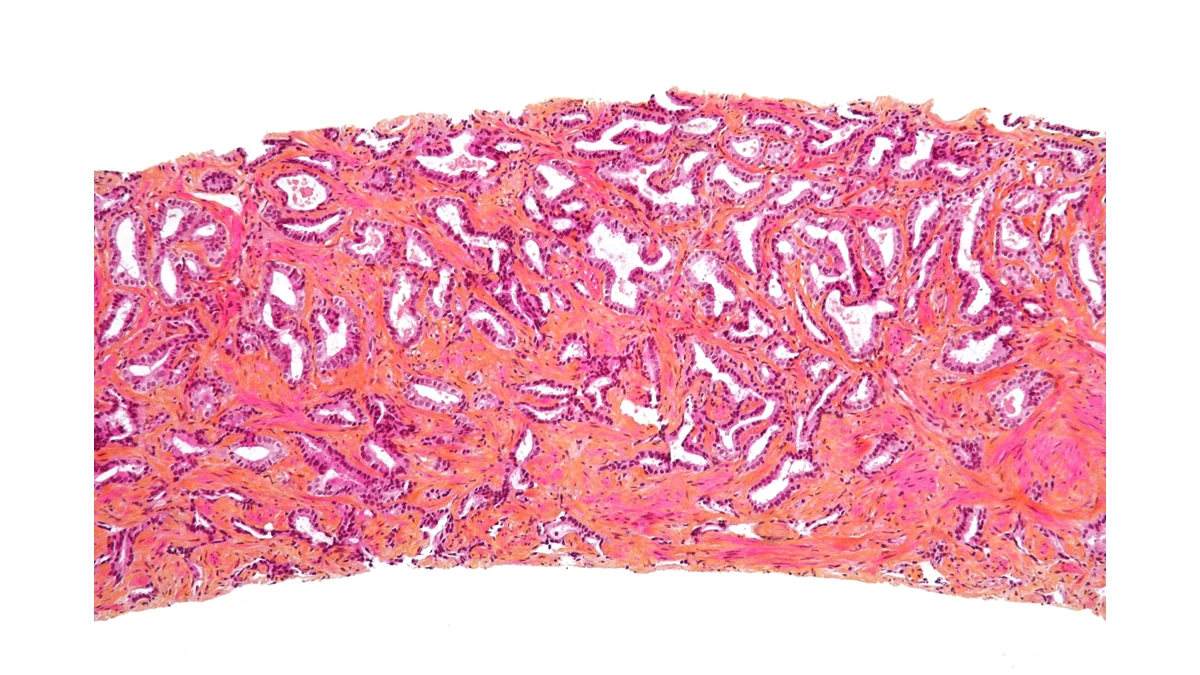
Image source and reuse details
Source: Prostate adenocarcinoma intermed mag hps.jpg. Proportional reduction, white side margins and WebP conversion only. No tissue or diagnostic detail removed. This image remains available under CC BY-SA 3.0.
In this guide
What to establish after a diagnosis
Start with three documents: the biopsy report, the PSA blood-test results over time and any imaging reports. Ask the team to explain whether the cancer is confined to the prostate, has reached nearby tissues or lymph nodes, or has spread farther away. A high PSA alone does not prove cancer, and a scan alone does not describe every feature of a tumour.
Many prostate cancers grow slowly, while others need prompt treatment. The choice depends on the cancer's behaviour, your general health and what matters to you. A discussion involving urology, radiation oncology and medical oncology can help compare reasonable options before making an irreversible decision.
Source: National Cancer Institute — United States — Prostate Cancer Treatment (PDQ®) — Patient Version · National Health Service — United Kingdom — Tests and next steps for prostate cancer
Type, Gleason score, Grade Group and stage
Most prostate cancers are adenocarcinomas, arising from gland cells. Rare types, including small-cell or neuroendocrine cancers, may behave differently and need a different pathway. An enlarged benign prostate and prostatitis are not the same diagnosis as prostate cancer, although they may also affect urination or PSA.
The Gleason score describes patterns seen under the microscope. The Grade Group runs from 1 to 5; a higher group generally signals more aggressive disease. Gleason 3+4 and 4+3 both total 7 but do not mean the same risk. Stage describes where the cancer is; risk assessment combines stage, PSA, grade and other findings. Ask for these terms in writing rather than interpreting one number in isolation.
Source: National Cancer Institute — United States — Prostate Cancer Treatment (PDQ®) — Patient Version · European Association of Urology — EAU Guidelines on Prostate Cancer — Diagnostic Evaluation
PSA, MRI, biopsy and staging scans
An MRI can identify suspicious areas and help decide whether and where to take biopsy samples. PI-RADS is an MRI assessment of suspicion, not a confirmed cancer stage. Diagnosis normally requires a pathologist to examine tissue. MRI-targeted and additional systematic samples may be combined according to the findings; a reassuring MRI cannot exclude every significant cancer.
Ask how the biopsy will be performed, which pain relief is planned and what bleeding, infection or urinary problems to watch for. European Association of Urology guidance favours the transperineal route, through the skin between the scrotum and anus, because of infection risk and antibiotic stewardship. Further CT, bone imaging or PSMA PET is selected according to risk and the decision it could change; not everyone needs every scan.
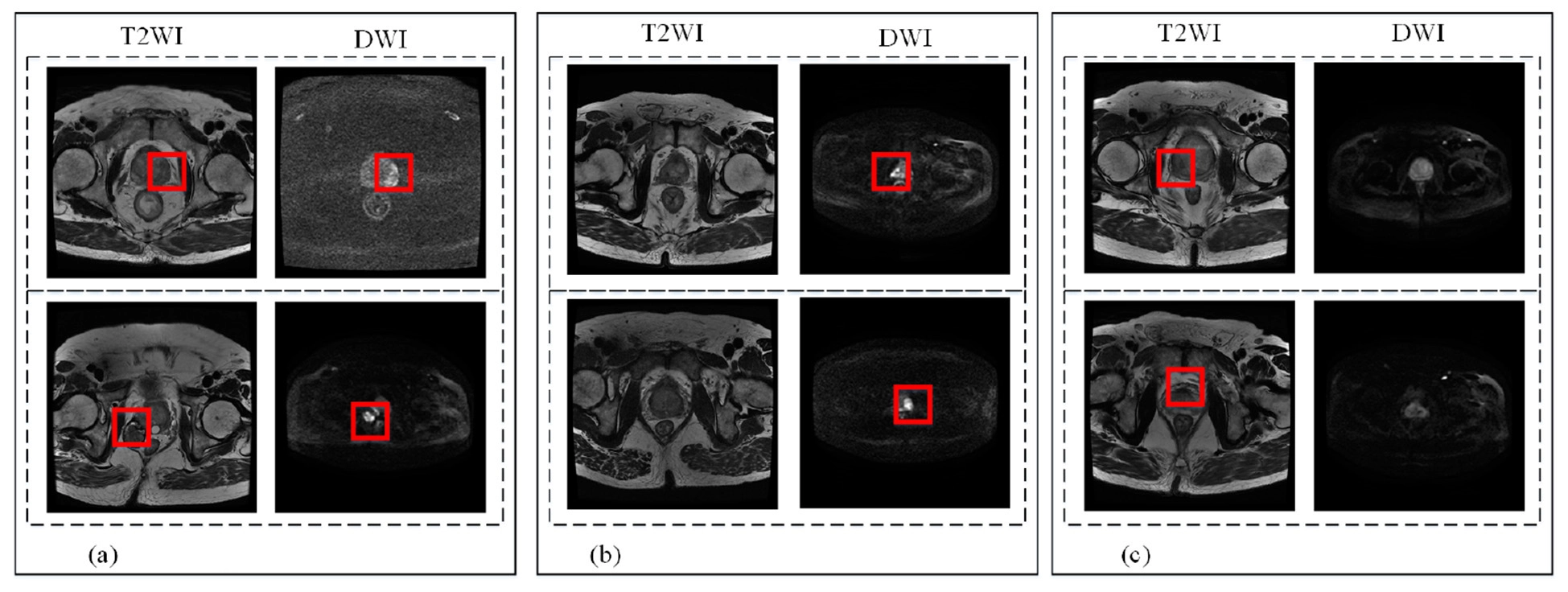
Image source and reuse details
Source: Automatic segmentation and PI-RADS grading of prostate cancer for biparametric MRI — Figure 1. Original published WebP copied without pixel changes.
Source: National Health Service — United Kingdom — Tests and next steps for prostate cancer · European Association of Urology — EAU Guidelines on Prostate Cancer — Diagnostic Evaluation
Active surveillance is different from watchful waiting
For low-risk disease and some carefully selected intermediate-risk cancers, active surveillance may defer treatment while retaining the aim of cure if the cancer changes. It involves a planned programme of PSA tests, clinical review, MRI and sometimes repeat biopsy. Agree which findings would trigger another test or a treatment discussion, and how to obtain help between appointments.
Watchful waiting usually has a different aim: avoiding treatment burdens when a cancer is unlikely to affect a person's remaining life, with treatment directed at symptoms if needed. Neither approach means ignoring the diagnosis. Age alone is not enough to choose between them; other illnesses, life expectancy, risk and personal preferences matter.
Source: European Association of Urology — EAU Guidelines on Prostate Cancer — Treatment · National Health Service — United Kingdom — Treatment for prostate cancer
Surgery, radiotherapy and focal treatments
Radical prostatectomy removes the prostate and usually the seminal vesicles; lymph-node assessment may also be appropriate. Radiotherapy treats cancer using radiation from outside the body or, in selected cases, a source placed inside the prostate, called brachytherapy. Hormone treatment may be combined with radiotherapy for particular risk groups. The appropriate dose, technique and duration require an individual plan.
Surgery and radiotherapy can both affect urinary and sexual function; radiotherapy may also cause bowel problems. Discuss likely outcomes for someone with your starting function and health, rather than a centre's best result. Robot-assisted surgery is a surgical technique, not a guarantee of cure or preserved erections. Focal treatments such as focused ultrasound or freezing require careful selection; long-term comparative evidence is less established than for standard surgery or radiotherapy.
Source: National Health Service — United Kingdom — Treatment for prostate cancer · European Association of Urology — EAU Guidelines on Prostate Cancer — Treatment
When cancer has spread or returns
Advanced prostate cancer can often be treated for a meaningful period, but widespread disease is generally managed with control rather than a promise of cure. Hormone-sensitive disease responds to lowering or blocking androgen signals, including testosterone. Castration-resistant disease progresses despite testosterone being kept very low; it does not mean that all further treatments have stopped working.
Treatment may combine androgen-deprivation therapy with drugs such as abiraterone, enzalutamide, apalutamide or darolutamide, and sometimes chemotherapy such as docetaxel. Later options can include cabazitaxel, biomarker-directed medicines or radiopharmaceuticals. These are examples, not interchangeable prescriptions. Previous treatment, symptoms, scan findings, bone marrow and organ function determine the sequence. Pain relief and palliative care can be provided alongside cancer treatment, not only at the end of life.
Source: National Cancer Institute — United States — Prostate Cancer Treatment (PDQ®) — Patient Version · National Cancer Institute — United States — Drugs Approved for Prostate Cancer · National Cancer Institute — United States — Advances in Prostate Cancer Research
Inherited tests and tests on the tumour
A tumour test looks for changes acquired by cancer cells. A germline test, often using blood or saliva, looks for inherited changes that may also matter to relatives. They answer different questions. Ask whether your stage, family history or treatment options make testing useful, and arrange genetic counselling when inherited testing is considered.
Changes involving DNA repair, including BRCA genes, can make some patients eligible for PARP inhibitors under precise drug labels. Other uncommon features, such as deficient mismatch repair or high microsatellite instability, may open selected immunotherapy options. PTEN loss and PSMA expression are different markers used for other treatments. A positive marker does not guarantee a response; a negative test does not mean that no treatment is available.
Source: European Association of Urology — EAU Guidelines on Prostate Cancer — Diagnostic Evaluation · National Cancer Institute — United States — Advances in Prostate Cancer Research
Two US approval updates from 2026
On June 12, 2026, the United States Food and Drug Administration approved capivasertib with abiraterone and prednisone for adults with metastatic prostate cancer that is androgen-pathway-modulation naïve or sensitive and PTEN-deficient by an authorised test. In the 1,012-participant CAPItello-281 trial, median time without radiographic progression was 33.2 versus 25.7 months. Overall-survival results were not yet mature. Important risks include high blood sugar, diarrhoea and skin reactions.
On July 31, 2026, the same regulator approved lutetium Lu 177 vipivotide tetraxetan with an androgen-receptor-pathway inhibitor for selected adults with PSMA-positive metastatic androgen-pathway-modulation naïve or sensitive disease. The 1,144-participant PSMAddition trial found improved radiographic progression-free survival; overall-survival data were immature. Risks include radiation exposure, reduced blood-cell production and kidney toxicity. These US decisions do not establish approval, reimbursement or availability in your country, and neither result promises an individual period of benefit or cure.
Source: United States Food and Drug Administration — FDA approves capivasertib with abiraterone and prednisone for PTEN-deficient androgen pathway modulation-naïve or -sensitive prostate cancer · United States Food and Drug Administration — FDA approves lutetium Lu 177 vipivotide tetraxetan with androgen receptor pathway inhibitor therapy for metastatic androgen pathway modulation-naïve or -sensitive prostate cancer
Urination, sex, fertility, bones and metabolic health
Ask about urinary leakage, bowel irritation, erections, orgasm and fertility before treatment starts. Fertility preservation needs an early discussion if having biological children may matter to you. Pelvic-floor rehabilitation and sexual-health support may help manage treatment effects; ask who provides these services and when to start them.
Androgen-deprivation therapy can cause hot flushes, fatigue, reduced sexual desire, muscle loss, weight or metabolic changes and bone loss. The team may assess fracture risk, bone density, blood sugar, cholesterol and cardiovascular health. Calcium, vitamin D or bone-protecting medicines are used for particular needs, not automatically for everyone. Report side effects early; do not stop or change cancer medicines without speaking to the prescribing team.
Source: National Health Service — United Kingdom — Treatment for prostate cancer · European Association of Urology — EAU Guidelines on Prostate Cancer — Quality of Life Outcomes
How to read survival figures
The United States Surveillance, Epidemiology, and End Results programme reports five-year relative survival of 100.0% for localised disease, 100.0% for regional disease and 40.1% for distant disease, using 2016–2022 diagnoses. These are broad population categories, not a prediction for your particular stage or a worldwide comparison of hospitals.
Relative survival compares people with the cancer with a comparable population without it; it is not the percentage guaranteed to be cured. The 100.0% figures do not mean that recurrence or death is impossible. Grade, extent, response, other illnesses and access to newer treatment affect an individual outlook. Ask the oncologist to explain the aim of care and the uncertainty that remains in your case.
Clinical trials and realistic expectations
Trials may test new combinations, targeted medicines, immune treatments or ways to use imaging and radiopharmaceuticals. Some are open at diagnosis; others require a particular marker or previous treatment. Search an official registry and ask the listed study team about current recruitment, inclusion criteria, location, extra visits and which costs are covered.
A promising laboratory result is not proof that a treatment works in people. Early-phase trials mainly explore safety and dosing; later comparative trials investigate benefits and harms. Participation does not guarantee access to the experimental drug or a better outcome. An estimated completion date is not a date when a cure will become available. Do not delay indicated care while waiting for a headline treatment.
Source: National Cancer Institute — United States — Advances in Prostate Cancer Research · National Cancer Institute — United States — Prostate Cancer Treatment (PDQ®) — Patient Version
Food, supplements and safe activity
No food, juice or supplement has been shown to replace prostate cancer treatment. Products advertised for prostate health are not approved cancer medicines merely because they are sold as supplements. Discuss vitamins, herbs and concentrated extracts with your team: evidence is uncertain for many products, and interactions or adverse effects are possible. Treat a nutritional deficiency when advised rather than taking high doses in the hope of shrinking a tumour.
Aim for a diet you can maintain, with help from a dietitian if weight, appetite, treatment effects or another illness create problems. Adapt exercise to your abilities and treatment. Supervised aerobic and resistance activity can support strength and fatigue management, particularly during hormone therapy. Bone metastases or fracture risk require an individual activity plan. Avoid smoking, discuss alcohol and seek support for sleep, anxiety and relationships.
Source: National Cancer Institute — United States — Prostate Cancer, Nutrition, and Dietary Supplements (PDQ®) — Patient Version · European Association of Urology — EAU Guidelines on Prostate Cancer — Quality of Life Outcomes
Choosing a team and obtaining a second opinion
Look for a team that regularly manages your prostate cancer risk group and can discuss monitoring, surgery, radiotherapy and systemic treatment. Ask whether pathology review, PSMA imaging, genetic testing, clinical trials, continence rehabilitation and sexual-health support are available when relevant. A general cancer accreditation does not prove the same expertise in every procedure or rare subtype.
The directory below links documented prostate pathways and official contact routes. It is an initial selection, not a worldwide ranking. Confirm referral requirements, public or private access, waiting times, costs and whether remote review is possible. For a second opinion, ask which reports, slides and scan files are needed and transmit them only through the centre's official secure channel, not through MyMedNest.
Find documented prostate cancer pathways →
Source: The University of Texas MD Anderson Cancer Center — Prostate Cancer · Gustave Roussy — France — Cancer de la prostate
PSA follow-up and possible recurrence
Obtain a written follow-up plan, with who orders PSA tests and who reviews the results. PSA usually becomes very low after prostate removal; after radiotherapy, the prostate remains and the pattern is interpreted differently. A temporary PSA change is not automatically proof of relapse. A confirmed rise may prompt review of the trend, previous treatment and further imaging.
Treatment for a recurrence may still include a local approach in selected situations, while others need systemic treatment. Ask whether the objective is cure, longer control or symptom relief. The interval and type of follow-up depend on the treatment, risk and symptoms; do not use a single schedule found online as a substitute for your own team's plan.
Source: European Association of Urology — EAU Guidelines on Prostate Cancer — Follow Up
PSA screening before symptoms
Early prostate cancer often causes no symptoms. Screening someone without symptoms is a different decision from investigating urinary trouble, blood in the urine or bone pain. PSA can rise because of benign enlargement or inflammation as well as cancer. Screening can find important cancers earlier, but can also lead to unnecessary biopsies and treatment of disease that would never have caused harm.
Discuss the benefits, harms and timing with a clinician using the recommendations for your country and your risk. Age, family history, ancestry and inherited variants may change the discussion. Do not wait for a routine screening invitation if symptoms appear. This guide does not impose one age threshold or repeat-testing interval on every country and every person.
Source: European Association of Urology — EAU Guidelines on Prostate Cancer — Diagnostic Evaluation
Symptoms that need urgent help
If you have cancer and develop new or worsening back pain, particularly with leg weakness, numbness, difficulty walking, or loss of bladder or bowel control, seek urgent medical assessment. These may be signs of pressure on the spinal cord. Do not wait for the next routine appointment; explain the cancer diagnosis and the new symptoms to the emergency or oncology team.
An inability to pass urine also needs urgent assessment. During treatment that can weaken infection defences, fever of 38°C or higher, shaking chills or feeling acutely unwell warrants an urgent call following your team's instructions. Contact them before taking medicines that could hide a fever. Use the emergency services of the country you are in when symptoms are severe or you cannot obtain timely help.
Source: The Christie NHS Foundation Trust — United Kingdom — Spinal cord compression: What to look out for · National Cancer Institute — United States — Infection and Neutropenia during Cancer Treatment
Questions to take to your appointment
- What are my exact cancer type, Grade Group, stage and risk group?
- Do I need further scans, a pathology review or inherited/tumour genetic tests?
- Is active surveillance an option, and what would trigger treatment?
- What benefit can each option offer me, and what urinary, sexual, bowel or hormonal effects can it cause?
- Should fertility preservation, pelvic-floor rehabilitation, bone or heart health be addressed before treatment?
- Do I meet the exact biomarker and prior-treatment requirements for a targeted medicine or clinical trial in my country?
- Who coordinates my follow-up, and which symptoms require an urgent call?
Sources and verification
- National Cancer Institute — United States — Prostate Cancer Treatment (PDQ®) — Patient Version
- National Health Service — United Kingdom — Tests and next steps for prostate cancer
- National Health Service — United Kingdom — Treatment for prostate cancer
- European Association of Urology — EAU Guidelines on Prostate Cancer — Diagnostic Evaluation
- European Association of Urology — EAU Guidelines on Prostate Cancer — Treatment
- European Association of Urology — EAU Guidelines on Prostate Cancer — Quality of Life Outcomes
- European Association of Urology — EAU Guidelines on Prostate Cancer — Follow Up
- United States Food and Drug Administration — FDA approves capivasertib with abiraterone and prednisone for PTEN-deficient androgen pathway modulation-naïve or -sensitive prostate cancer
- United States Food and Drug Administration — FDA approves lutetium Lu 177 vipivotide tetraxetan with androgen receptor pathway inhibitor therapy for metastatic androgen pathway modulation-naïve or -sensitive prostate cancer
- National Cancer Institute — United States — Surveillance, Epidemiology, and End Results — Cancer Stat Facts: Prostate Cancer
- National Cancer Institute — United States — Advances in Prostate Cancer Research
- National Cancer Institute — United States — Prostate Cancer, Nutrition, and Dietary Supplements (PDQ®) — Patient Version
- National Cancer Institute — United States — Drugs Approved for Prostate Cancer
- National Cancer Institute — United States — Infection and Neutropenia during Cancer Treatment
- The Christie NHS Foundation Trust — United Kingdom — Spinal cord compression: What to look out for
- The University of Texas MD Anderson Cancer Center — Prostate Cancer
- Gustave Roussy — France — Cancer de la prostate
Sources checked: 2026-11-14