


Pancreatic cancer: tests, treatment and finding care
A practical guide to the decisions after a suspected or confirmed diagnosis: what to ask, which tests may help, what treatment can aim to do and how to find the right team.
MyMedNest editorial guide · Sources checked:
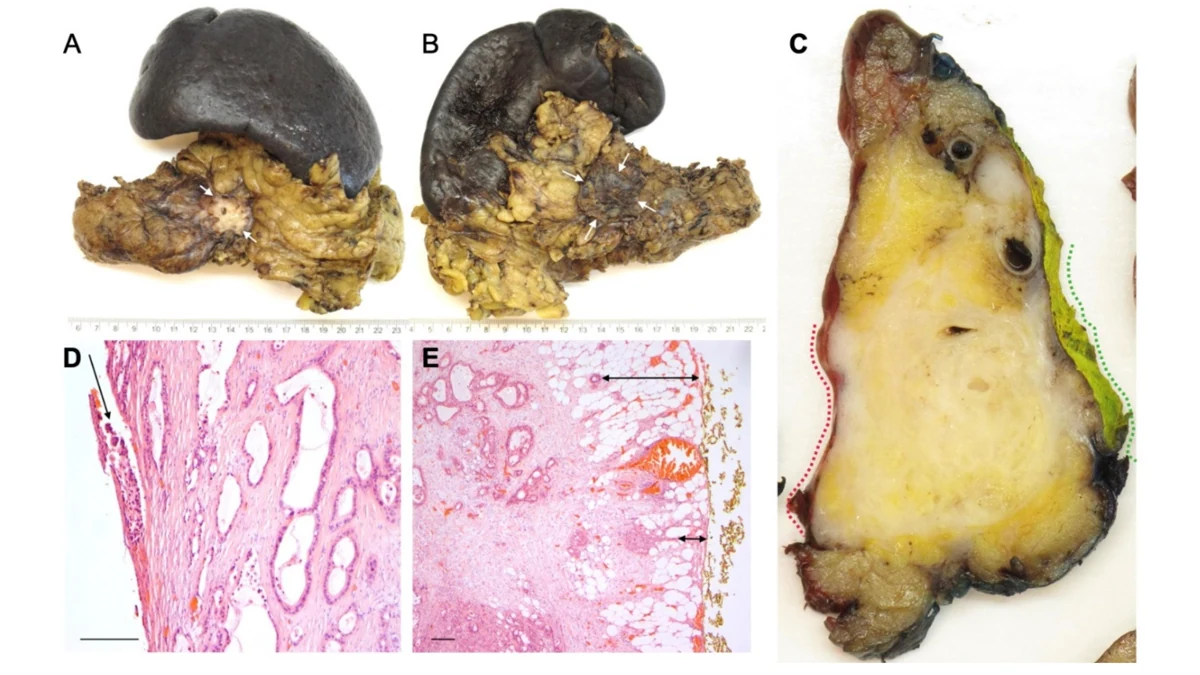
Image source and reuse details
Source: Prognostic Impact of Resection Margin Status on Distal Pancreatectomy for Ductal Adenocarcinoma — Figure 3. Proportional reduction, white side margins and WebP conversion; no clinical alteration.
In this guide
What to clarify first
If a report says “pancreatic cancer”, first ask for the exact cell type, whether the disease has spread, and whether surgery could remove it. These answers determine which specialists and treatments are relevant. A pancreatic neuroendocrine tumor follows a different pathway from the more common ductal adenocarcinoma.
Ask for a named contact in the care team, a written plan for the next tests and an explanation of the treatment goal. That goal may be cure, lowering the risk of recurrence, controlling the disease or relieving symptoms. A second opinion can help when the diagnosis or operability is uncertain.
Source: National Cancer Institute — What Is Pancreatic Cancer? · National Cancer Institute — Pancreatic Cancer Treatment by Extent of Disease
Which pancreatic disease is it?
The pancreas helps digest food and control blood sugar. Ductal adenocarcinoma begins in cells associated with its ducts. Neuroendocrine tumors arise from hormone-producing cells and need a separate assessment of their grade and other features. Do not transfer survival figures or drug lists from one type to the other.
A pancreatic cyst is not automatically cancer. Some cysts need monitoring; others may need further tests or surgery. The decision depends on the particular lesion and its risk features. This guide mainly concerns pancreatic ductal adenocarcinoma in adults; the institutional resources also provide a separate neuroendocrine pathway.
Source: National Cancer Institute — What Is Pancreatic Cancer? · National Cancer Institute — Pancreatic Cancer Treatment by Extent of Disease
Tests: what each one answers, and when
A CT scan using a pancreatic imaging protocol helps assess the pancreas, nearby blood vessels and possible spread. MRI can clarify particular findings and examine the ducts. Endoscopic ultrasound uses a thin tube passed through the mouth to examine the pancreas from close by; it can also guide tissue sampling. Not everyone needs every scan or a PET scan.
A biopsy provides cells or tissue for a pathologist to identify the disease. Ask whether a sample is needed before the proposed treatment and whether enough tissue is available for molecular tests. The blood marker CA 19-9 can help with assessment and monitoring, but cannot diagnose pancreatic cancer on its own and is not a general-population screening test.
There is no single timetable for everyone. Ask which test is urgent, what decision it will change, when the result is expected and who will explain it. Tell the team about worsening symptoms rather than waiting for the next scheduled test.
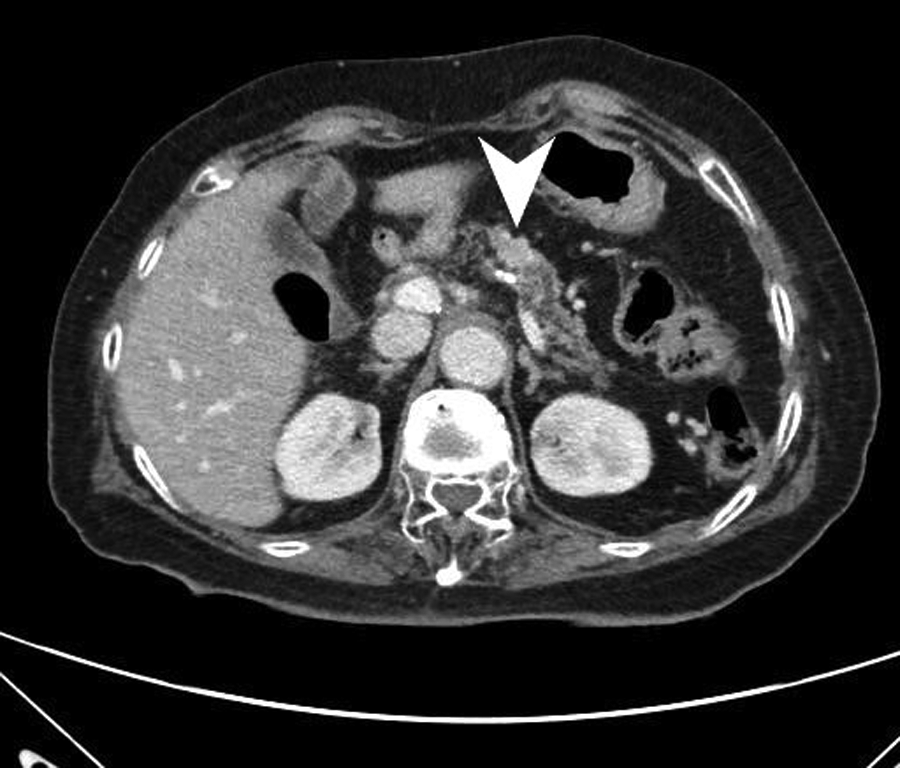
Image source and reuse details
Source: Metachronous pancreatic cancer 18 years after resection of common bile duct cancer: A case report — Figure 3. Original published WebP, unchanged.
Source: National Cancer Institute — Pancreatic Cancer Testing & Diagnosis · Mayo Clinic — Pancreatic cancer — Diagnosis and treatment
What does “operable” mean?
The stage describes how far cancer has spread. Resectability asks a different practical question: can surgery remove it? The team considers contact with important blood vessels, spread elsewhere and your ability to tolerate a major operation.
Resectable disease may be removed surgically. Borderline resectable disease may need drug treatment first, sometimes with radiotherapy, before another surgical assessment. Locally advanced disease cannot usually be fully removed at the initial assessment. Metastatic disease has spread to distant sites and generally needs treatment that acts throughout the body. These descriptions must come from the specialist team, not from a scan report read in isolation.
Ask for review by a team experienced in pancreatic surgery when operability is uncertain. A later operation is possible for some people after initial treatment, but tumor shrinkage does not guarantee this.
Source: National Cancer Institute — Pancreatic Cancer Treatment by Extent of Disease · Mayo Clinic — Pancreatic cancer — Diagnosis and treatment
Treatment options and their purpose
For cancer in the head of the pancreas, a Whipple operation removes the pancreatic head and connected structures, then reconstructs the digestive pathway. A distal pancreatectomy removes the body and tail, sometimes with the spleen. The operation depends on the tumor’s location; these are major procedures with risks such as bleeding, infection and difficult recovery.
Chemotherapy may be used before surgery, after it, or to control disease that cannot be removed. Regimens include FOLFIRINOX, NALIRIFOX and gemcitabine with nab-paclitaxel. They are examples, not interchangeable choices or prescriptions: previous treatment, fitness and side effects matter. Radiotherapy has a role in selected situations rather than for everyone.
A stent may open a blocked bile duct or digestive passage. This can relieve jaundice or vomiting without removing the cancer. Ask which parts of the plan aim to treat the tumor and which aim to prevent or relieve symptoms.
Source: National Cancer Institute — Pancreatic Cancer Treatment · National Cancer Institute — Pancreatic Cancer Treatment by Extent of Disease · National Cancer Institute — Advances in Pancreatic Cancer Research
Inherited genes, tumor tests and targeted treatment
An inherited genetic test looks for changes present from birth, often using blood or saliva. A tumor molecular test looks for features of the cancer that may guide treatment. They answer different questions. Ask early whether both are appropriate and whether genetic counseling is needed for you or your family.
Some gene changes or other biomarkers can open specific treatment options. For example, BRCA-related findings may affect choices, while immunotherapy is relevant only for selected tumors with particular features such as deficient DNA mismatch repair. A positive test does not guarantee that a drug is suitable, available or effective for you.
Source: National Cancer Institute — Pancreatic Cancer Testing & Diagnosis · National Cancer Institute — Pancreatic Cancer Treatment
A 2026 update: daraxonrasib in the United States
On August 26, 2026, the United States Food and Drug Administration approved Rasonque (daraxonrasib) for adults with metastatic pancreatic adenocarcinoma who have had at least one previous systemic therapy or are not candidates for multiagent systemic therapy. This is a defined US indication, not a treatment for every pancreatic tumor.
The agency reported a randomized, open-label trial of 500 adults with previously treated metastatic disease: median overall survival was 13.2 months with daraxonrasib versus 6.7 months with standard chemotherapy. A median describes a group, not an individual life expectancy. Common adverse effects include rash, diarrhea and inflammation or sores in the mouth.
US approval does not establish approval, supply or reimbursement in your country. Ask the oncologist to check the exact local indication and alternatives with the relevant medicines authority.
What can survival statistics tell you?
In the US Surveillance, Epidemiology, and End Results registry data for 2016–2022, five-year relative survival for pancreatic cancer was 13.7% overall: 43.6% for localized disease, 17.0% for regional disease and 3.4% for distant spread. Relative survival compares people with cancer with the general population. These are US groups and broad registry categories, not a prediction for a particular patient or a statistic to apply to a neuroendocrine tumor.
Your exact type, extent, ability to have surgery, health and response to treatment matter. Registry figures also lag behind recent therapies. Ask what outcomes are realistic for your own diagnosis, what uncertainty remains and whether the treatment aims at cure, longer control or symptom relief. A five-year figure is not a deadline.
Source: National Cancer Institute — Surveillance, Epidemiology, and End Results Program — Cancer Stat Facts: Pancreatic Cancer · National Cancer Institute — Pancreatic Cancer Survival Rates & Prognosis
Research, vaccines and the question “when?”
Researchers are studying combinations targeting RAS/KRAS, therapeutic vaccines and ways to make immunotherapy work for more pancreatic cancers. A therapeutic vaccine aims to treat an existing tumor; it is not a routine vaccine that prevents pancreatic cancer. Early immune responses or tumor shrinkage do not by themselves establish a survival benefit.
Before considering a trial, check its registration, phase, comparison treatment, eligibility, recruiting sites and current status with the study team. Ask about extra visits, risks, travel, costs and standard alternatives. A planned study completion date does not predict approval or availability. The linked institutional research pages and trial registries are starting points, not a guarantee of access.

Image source and reuse details
Source: Portrait: Dr. Steven Rosenberg — NCI Visuals Online 7247. Proportional reduction and WebP conversion only. National Cancer Institute — Combination immunotherapy shrank a variety of metastatic solid cancers.
Source: National Cancer Institute — Advances in Pancreatic Cancer Research
Food, enzymes, movement and supplements
Report weight loss, trouble eating, diarrhea or changes in blood sugar early. A dietitian experienced in pancreatic disease can help maintain nutrition during treatment. Some people need pancreatic enzyme replacement with meals because the pancreas is not providing enough digestive enzymes. This is a prescribed treatment, not an anticancer supplement.
Do not begin fasting or a restrictive “anticancer” diet while struggling to keep weight on. Ask the team about food adjustments and nutritional support for your actual symptoms. Agree on movement or rehabilitation suited to your strength, treatment and recovery.
Bring a list of all medicines, vitamins, herbs and supplements. Some can interfere with cancer treatments. None should replace prescribed oncology care; ask the oncology pharmacist before starting or changing a product. Pain relief, psychological support and palliative care can accompany treatment from an early stage.
Source: National Cancer Institute — Coping with Pancreatic Cancer · National Cancer Institute — Cancer Therapy Interactions With Foods and Dietary Supplements (PDQ®)–Patient Version
Where to go for tests, treatment or a second opinion
Look for a team that regularly manages your exact pancreatic disease and can discuss the case jointly across surgery, oncology, gastroenterology, radiology and pathology. Ask about experience with the proposed operation, access to tissue and molecular testing, nutrition, symptom care and clinical trials. A hospital’s general reputation does not answer all these questions.
The MyMedNest directory distinguishes checked pancreatic pathways from general oncology contacts. It includes official contact details and the office’s role, not a ranking or appointment guarantee. A country without a documented pancreatic pathway in the filter may still have suitable centers. Before travelling, confirm referral requirements, document transfer, costs, coverage and whether a remote second opinion is possible.
Find documented pancreatic pathways →
Source: Mayo Clinic — Pancreatic cancer — Diagnosis and treatment · National Cancer Institute — Pancreatic Cancer Testing & Diagnosis
Follow-up: ask for a written plan
Before each treatment phase ends, ask what comes next: visits, scans, blood tests, symptom checks and prescription renewals. The timing depends on treatment, findings and your condition, rather than a universal online calendar. Keep a treatment summary and copies of relevant images and pathology reports. Know whom to contact between visits; new symptoms should not wait for a routine appointment.
Source: National Cancer Institute — Coping with Pancreatic Cancer
Symptoms and screening are different questions
Pancreatic cancer may cause jaundice, unexplained weight loss, upper abdominal or back pain and digestive changes, but these symptoms can have other causes. New jaundice needs prompt medical assessment. A clinician decides the diagnostic route from the whole picture.
Routine pancreatic screening is not recommended for people at average risk. Certain inherited risks or family histories may justify specialist surveillance. If a cyst has been found incidentally, ask about its own follow-up plan instead of assuming either cancer or no risk. The method and interval of surveillance must be chosen with a specialist.
Source: National Health Service — Symptoms of pancreatic cancer · National Cancer Institute — Pancreatic Cancer Screening
When not to wait for an email
During cancer treatment, fever or other signs of infection may require urgent care. Follow the urgent-contact plan given by your team. Seek emergency care for severe or rapidly worsening symptoms rather than using an information website or a general hospital inbox. Ask the team in advance which temperature threshold, symptoms and phone number apply to your treatment. Medicines that reduce fever can hide signs of infection: ask before taking them.
Source: National Cancer Institute — Infection and Neutropenia during Cancer Treatment
Questions to take to your appointment
- What is my exact diagnosis and extent of disease?
- Which test is still needed, and what decision will it change?
- Has an experienced pancreatic team assessed surgery?
- What benefit and important risks are expected from the proposed treatment?
- Do inherited or tumor tests open any specific options?
- Is a trial suitable, and what are the standard alternatives?
- Who should I call urgently or between visits?
Sources and verification
- National Cancer Institute — What Is Pancreatic Cancer?
- National Cancer Institute — Pancreatic Cancer Testing & Diagnosis
- National Cancer Institute — Pancreatic Cancer Treatment by Extent of Disease
- National Cancer Institute — Pancreatic Cancer Treatment
- National Health Service — Symptoms of pancreatic cancer
- Mayo Clinic — Pancreatic cancer — Diagnosis and treatment
- National Cancer Institute — Pancreatic Cancer Screening
- United States Food and Drug Administration — FDA Approves First in Class Targeted Therapy for Metastatic Pancreatic Cancer
- National Cancer Institute — Surveillance, Epidemiology, and End Results Program — Cancer Stat Facts: Pancreatic Cancer
- National Cancer Institute — Pancreatic Cancer Survival Rates & Prognosis
- National Cancer Institute — Advances in Pancreatic Cancer Research
- National Cancer Institute — Coping with Pancreatic Cancer
- National Cancer Institute — Cancer Therapy Interactions With Foods and Dietary Supplements (PDQ®)–Patient Version
- National Cancer Institute — Infection and Neutropenia during Cancer Treatment
Sources checked: 2026-11-14